
Clinical Benefits
Clinical Benefits
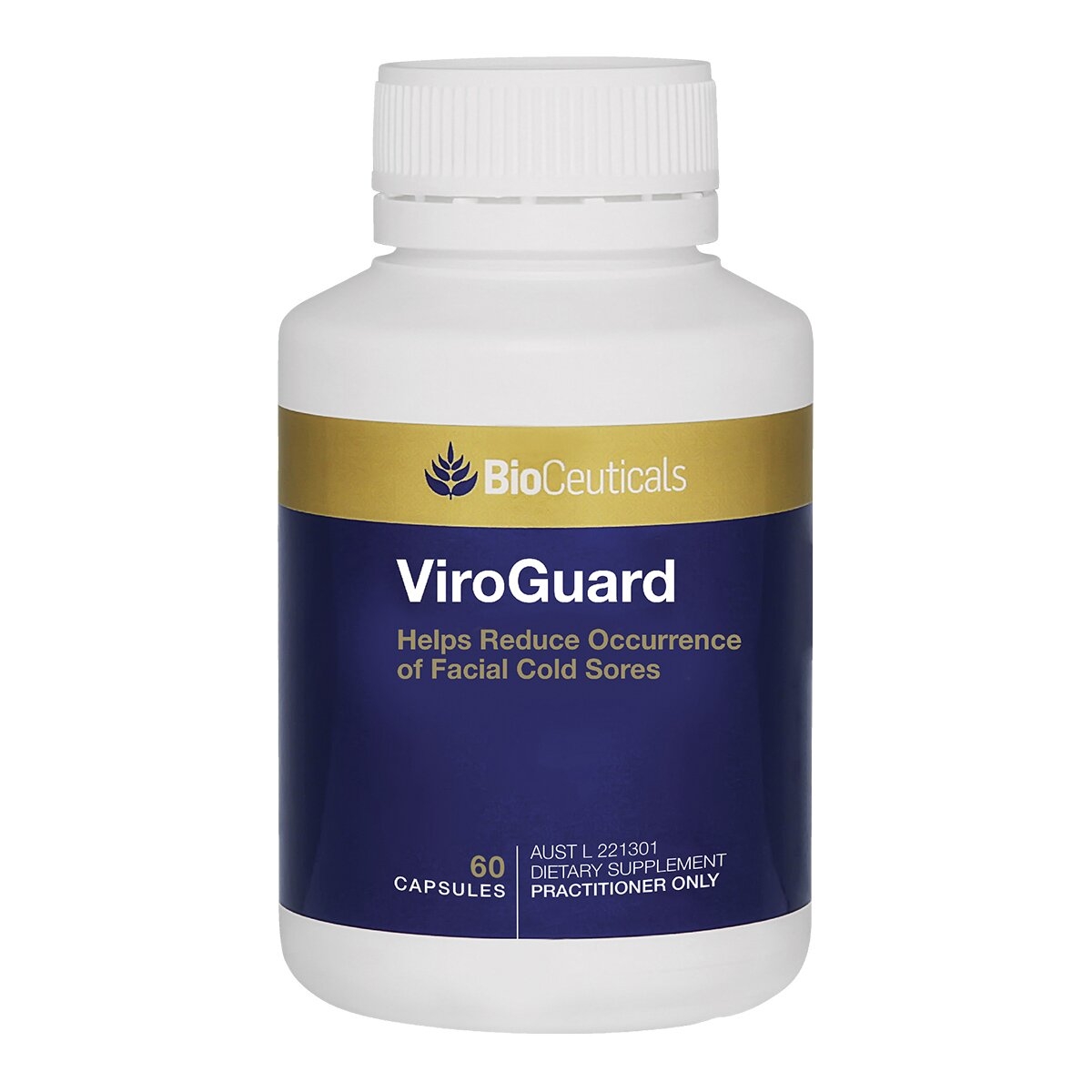
ViroGuard targets herpes simplex latency, the dormant state where HSV-1 and HSV-2 viruses hide within nerve cells, ready to reactivate under stress or when immunity is compromised. This comprehensive formula combines clinically-studied nutrients and botanicals to support immune function and help maintain the balance needed to keep these persistent viruses in their inactive state.
Lysine hydrochloride forms the cornerstone of this formula, working through its competitive relationship with arginine, an amino acid essential for HSV replication. L-lysine competes with arginine for absorption and transport, reducing intracellular arginine availability and thereby disrupting viral protein synthesis necessary for HSV replication. A review of 12 studies demonstrated that lysine doses below 1g per day are ineffective unless combined with a low-arginine diet, while daily doses ≥1.2g showed mixed results in clinical trials. However, lysine doses of 3g per day appeared most effective in reducing recurrence rates, with lysine proving more effective as prevention than outbreak treatment [4].
Zinc amino acid chelate provides essential immune support through multiple pathways critical for controlling HSV latency. Zinc supports the development and function of T lymphocytes, particularly T helper cells, while enhancing natural killer cell activity and promoting cytokine production. Beyond immune enhancement, zinc exerts direct antiviral action by binding to and functionally inactivating viral surface glycoproteins essential for viral attachment and entry into host cells. Clinical evidence from a study of twenty individuals with recurrent herpes showed that treatment with the equivalent of 10.2mg zinc taken for 2 months on and off over 12 months reduced both the average number of annual outbreaks and lesion duration by more than 50% [6].
Melissa officinalis (Lemon balm) extract, standardized for rosmarinic acid content, has demonstrated direct antiviral activity against herpes simplex virus type 2 in laboratory studies. The extract significantly reduced the virus's functional damage to infected host cells, even at the remarkably low concentration of 0.5mg/mL - equivalent to less than the amount found in a typical tablespoon of dried lemon balm used for tea. At this minimal dose, the extract achieved 60% inhibition of HSV-2 after the virus had already entered host cells [11], suggesting potent therapeutic potential for managing viral reactivation.
Echinacea purpurea extract rounds out the formula with its well-established immunomodulatory properties. While specific HSV research wasn't detailed in the source material, Echinacea is widely recognized for supporting immune system function and helping the body mount appropriate responses to viral challenges, making it a valuable addition to a comprehensive herpes management protocol.
Ingredients
Lysine hydrochloride
equiv. Lysine
530.98 mg
425 mg
Zinc amino acid chelate
equiv. Zinc
12.5 mg
2.5 mg
Melissa officinalis (Lemon balm) ext.
equiv. Rosmarinic acid
ext. equiv. dry (leaf)
107.14 mg
5.36 mg
750 mg
Echinacea purpurea ext.
ext. equiv. fresh (herb)
9.44 mg
425 mg
Instructions
Instructions
Dosage
2 tablets daily
Duration
Indicated for prevention and recommended at the onset of recurrent herpes simplex outbreaks.
Warnings
Consult your health professional before use during pregnancy or lactation
If you have any pre-existing conditions or are on any medications always consult your health professional before use
Always read the label
Dietary supplements should not replace a balanced diet
If symptoms persist, worsen or change unexpectedly, consult your healthcare professional
Contains zinc which may be dangerous if taken in large amounts or for a long period
Contraindications
Contraindications
This supplement may interact with the following categories of medications, as well as specific active ingredients.
• Antibiotics
• Bictegravir/emtricitabine/tenofovir alafenamide
• Cephalexin
• Cisplatin
• Medications for HIV/AIDS
• Penicillamine
• Ritonavir
• Atazanavir
Further details are provided below.
Please note that medications may be sold under different brand names, so check the listed active ingredients against your medication packaging.
Major Interactions
Moderate Interactions
Thyroid hormone
Taking lemon balm seems to decrease how well thyroid hormone works in the body. Taking lemon balm with thyroid hormone might decrease the effects of the thyroid hormone.
Antibiotics
• Doxycycline
• Ciprofloxacin
• Amoxicillin
• Azithromycin
• Norfloxacin
• Trimethoprim
Zinc might decrease how much antibiotic the body absorbs from the gut. Taking zinc along with quinolone antibiotics might decrease the effects of these antibiotics. To avoid this interaction, take antibiotics at least 2 hours before or 4-6 hours after zinc supplements.
Zinc can decrease the amount of tetracyclines the body absorbs. Taking zinc with tetracyclines might decrease the effects of tetracyclines. To avoid this interaction, take tetracyclines 2 hours before or 4-6 hours after taking zinc supplements.
Bictegravir/emtricitabine/tenofovir alafenamide
• Biktarvy
In theory, zinc might decrease how much bictegravir/emtricitabine/tenofovir alafenamide the body absorbs from the stomach. To avoid this interaction, take bictegravir/emtricitabine/tenofovir alafenamide at least 2 hours before or 6 hours after zinc containing products.
Cephalexin
• Keflex
Zinc can reduce how much cephalexin the body absorbs. This might decrease how well cephalexin works for treating infections. To avoid this interaction, take zinc 3 hours after taking cephalexin.
Cisplatin
• Platinol-AQ
Cisplatin is used to treat cancer. Taking zinc along with cisplatin might inactivate cisplatin therapy. But it's not clear if this is a big concern.
Medications for HIV/AIDS
• Integrase inhibitors
Taking zinc along with integrase inhibitors might decrease blood levels of integrase inhibitors. This might decrease the effects of these medications. Talk to your healthcare provider if you are using integrase inhibitors and want to start taking zinc.
Penicillamine
• Cuprimine, Depen
Zinc might decrease how much penicillamine the body absorbs. Taking zinc with penicillamine might decrease the effects of penicillamine. Take zinc and penicillamine at least 2 hours apart.
Ritonavir
• Norvir
Ritonavir is a drug used for HIV infection. Zinc can reduce how much ritonavir the body absorbs. But it isn't clear if this is a big concern.
Minor Interactions
Atazanavir
• Reyataz
Atazanavir is a drug used for HIV infection. Zinc decreases how much atazanavir the body absorbs. But the body still absorbs enough atazanavir for it to work for treating HIV. So this interaction is probably not a big concern.
$12.01
Members Save
• Lysine at 3g daily doses showed the most effectiveness in reducing HSV recurrence rates in clinical trials
• Zinc supplementation reduced both outbreak frequency and lesion duration by over 50% in clinical studies
• Lemon balm extract achieved 60% inhibition of HSV-2 at concentrations equivalent to a tablespoon of dried herb