
Clinical Benefits
Clinical Benefits
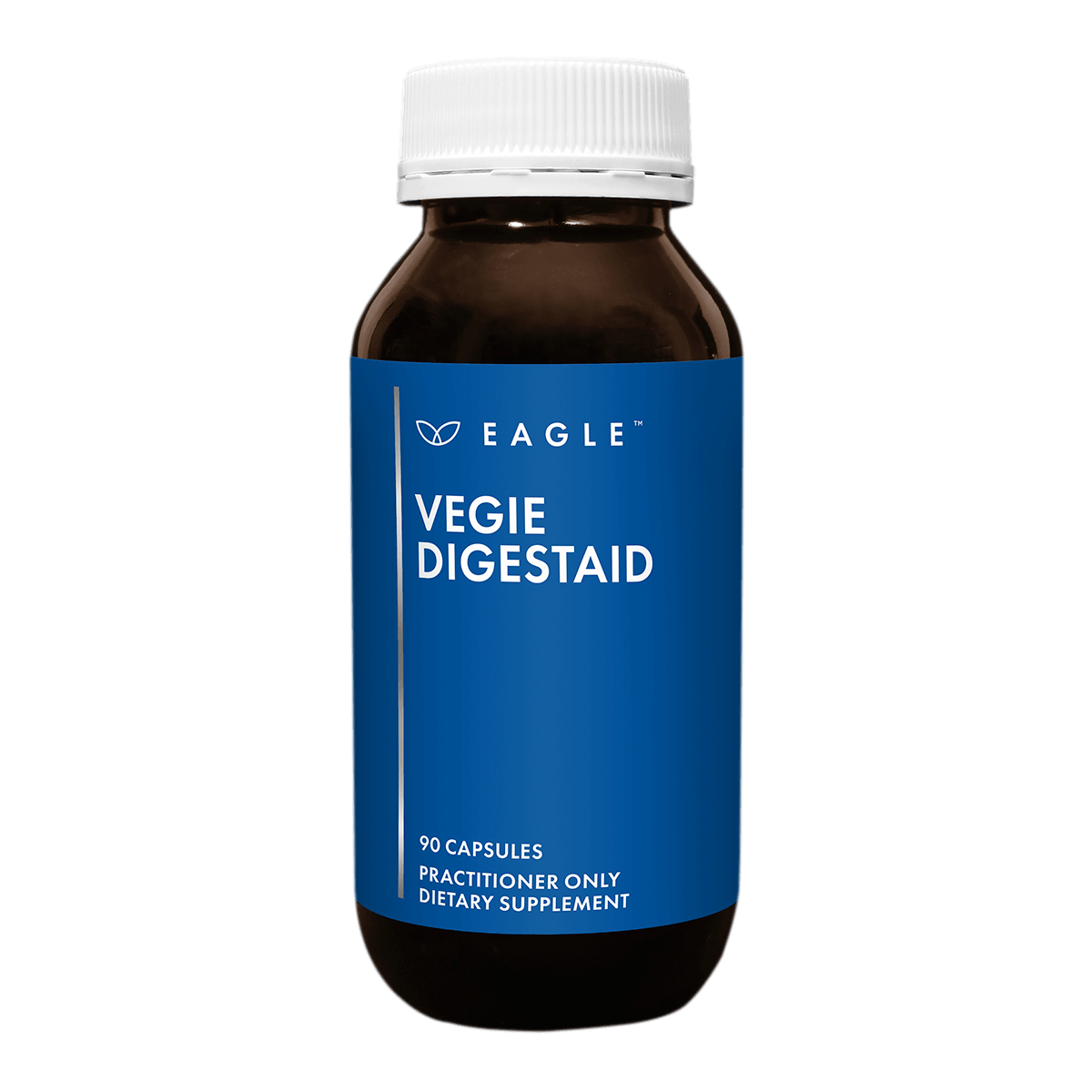
Vegie Digestaid is a comprehensive digestive enzyme formulation specifically designed to address enzymatic maldigestion, a condition where the body's ability to break down carbohydrates, proteins, and fats becomes compromised due to insufficient digestive enzyme production or activity. This multi-enzyme blend combines essential pancreatic enzymes with naturally occurring plant enzymes to support optimal nutrient breakdown and absorption.
The core enzyme complex includes amylase, which metabolizes complex carbohydrates and starches into maltose, dextrins, and simple sugars, helping prevent the passage of undigested starches that can ferment in the colon causing excessive gas, bloating, and watery stools. Protease enzymes break down proteins into peptides and amino acids by cleaving peptide bonds, addressing deficiency signs such as bloating, fatigue, muscle weakness, and visible protein fragments in stool. Lipase tackles triglycerides and dietary fats, converting them into monoglycerides and free fatty acids to prevent the clay-colored, greasy, foul-smelling stools characteristic of fat maldigestion.
Specialized enzymes beta-D-galactosidase (Tilactase) and cellulase target specific digestive challenges. Tilactase breaks down lactose into glucose and galactose, preventing the bloating, cramping, excessive gas, and diarrhea that occurs 30 minutes to 2 hours after consuming dairy products due to undigested lactose fermentation by colonic bacteria. Cellulase metabolizes cellulose, the structural plant fiber made of β-1,4-linked glucose units found in vegetables, fruits, and grains, reducing bloating, gas, cramping, and the passage of visible plant fibers in stools.
The formula is enhanced with bromelain from Ananas comosus (pineapple), a unique group of proteolytic enzymes particularly concentrated in the pineapple core. Bromelain functions to break down dietary proteins into smaller peptides and amino acids, remaining active in the human gastrointestinal tract due to its broad pH tolerance and optimal temperature range. Unlike other enzymes, bromelain is absorbed in active form, with up to 40% entering circulation post-ingestion, enabling it to complement human digestive enzymes and enhance protein digestion [20].
Ginger (Zingiber officinale) contributes zingibain, a bioactive proteolytic enzyme that has been clinically demonstrated to enhance nutrient digestibility, particularly protein and fiber, with modest improvements also observed in fat digestibility. Additionally, other bioactive compounds in ginger, such as gingerol and shogaol, indirectly support the activity of other enzymes including amylases and lipases, which aids in the digestion of carbohydrates and fats [22]. Dandelion (Taraxacum officinale) root extract provides bitter compounds that stimulate taste receptors (TAS2Rs) throughout the GI tract, initiating the release of cholecystokinin (CCK), which plays a central role in digestive enzyme production by stimulating pancreatic acinar cells to secrete enzymes such as amylase, lipase, and proteases [25].
Ingredients
Amylase enzyme
15000 DU
Protease
50000 HUT
Lipase
1200 LipU
Beta-D-galactosidase (Tilactase)
1500 ALU
Cellulase
300 CU
Ananas comosus (Bromelain)
2400000 PU
Taraxacum officinale (Dandelion) ext.
ext. equiv. dry (root)
166 mg
665 mg
Zingiber officinale (Ginger) ext.
ext. equiv. dry (rhizome)
42 mg
333 mg
Instructions
Instructions
Dosage
1 capsule morning and night, with food
Duration
Minimum 4 weeks
Suitable for long-term use, supporting optimisation of digestion and absorption
Warnings
Always read the label
Dietary supplements should not replace a balanced diet
If symptoms persist, worsen or change unexpectedly, consult your healthcare professional
Contraindications
Contraindications
This supplement may interact with the following categories of medications, as well as specific active ingredients.
• Medications changed by the liver - refer list
• Medications for diabetes
• Medications that slow blood clotting
• Diuretics
• Losartan
• Nifedipine
• Phenprocoumon
• Warfarin
• Medications for high blood pressure
• Medications moved by pumps in cells - refer list
• Metronidazole
Further details are provided below.
Please note that medications may be sold under different brand names, so check the listed active ingredients against your medication packaging.
Major Interactions
Moderate Interactions
Dandelion might have an effect like a water pill or "diuretic. " Taking dandelion might decrease how well the body gets rid of lithium. This could increase how much lithium is in the body and result in serious side effects. Talk with your healthcare provider before using this product if you are taking lithium.
Medications changed by the liver
• Caffeine
• Clozapine
• Olanzapine
• Theophylline
• Tizanidine
• Duloxetine
• Ramelteon
Some medications are changed and broken down by the liver. Dandelion might change how quickly the liver breaks down these medications. If you are taking medications metabolised by the liver, monitor for any changes in how your medication affects you.
Medications changed by the liver
• Glucuronidated drugs
Medications for diabetes
• Glyburide
• Glipizide
• Insulin
• Sitagliptin
• Empagliflozin
• Semaglutide
• Dapagliflozin
Dandelion might lower blood sugar levels. Taking dandelion along with diabetes medications might cause blood sugar to drop too low. Monitor your blood sugar closely.
Medications that slow blood clotting
• Heparin
• Rivaroxaban
• Apixaban
• Dabigatran
• Clopidogrel
Dandelion root might slow blood clotting. Taking dandelion root along with medications that also slow blood clotting might increase the risk of bruising and bleeding.
Diuretics
• Potassium-sparing diuretics
Dandelion contains significant amounts of potassium. Some "Diuretics" can also increase potassium levels in the body. Taking some "Diuretics" along with dandelion might cause too much potassium to be in the body.
Bromelain might slow blood clotting. Taking bromelain along with medications that also slow blood clotting might increase the risk of bruising and bleeding.
Losartan
• Cozaar
• Hyzaar
• Used for: high blood pressure, heart failure
Ginger can increase how much losartan the body absorbs. Taking ginger along with losartan might increase the effects and side effects of losartan.
Ginger might lower blood sugar levels. Taking ginger along with diabetes medications might cause blood sugar to drop too low. Monitor your blood sugar closely.
Ginger might slow blood clotting. Taking ginger along with medications that also slow blood clotting might increase the risk of bruising and bleeding.
Nifedipine
• Procardia
Taking ginger along with nifedipine might slow blood clotting and increase the chances of bruising and bleeding.
Phenprocoumon
• Marcoumar, others
Phenprocoumon is used to slow blood clotting. Ginger can also slow blood clotting. Taking ginger along with phenprocoumon might increase the chances of bruising and bleeding. Be sure to have your blood checked regularly. The dose of your phenprocoumon might need to be changed.
• Jantoven
• Used for: blood thinning, clot prevention
Warfarin is used to slow blood clotting. Ginger can also slow blood clotting. Taking ginger along with warfarin might increase the chances of bruising and bleeding. Be sure to have your blood checked regularly. The dose of your warfarin might need to be changed.
Minor Interactions
Medications changed by the liver
• Caffeine
• Clozapine
• Olanzapine
• Theophylline
• Tizanidine
• Duloxetine
• Ramelteon
Some medications are changed and broken down by the liver. Ginger might change how quickly the liver breaks down these medications. If you are taking medications metabolised by the liver, monitor for any changes in how your medication affects you.
• Cytochrome P450 2B6 substrates
• Warfarin
• Ibuprofen
• Diclofenac
• Glipizide
• Phenytoin
• Losartan
• Celecoxib
• Atorvastatin
• Simvastatin
• Amlodipine
• Diltiazem
• Cyclosporine
• Tacrolimus
• Midazolam
• Alprazolam
• Rivaroxaban
• Some HIV antiretrovirals
Medications for high blood pressure
• Amlodipine
• Diltiazem
• Verapamil
• Felodipine
• Nifedipine
Ginger might lower blood pressure. Taking ginger along with medications that lower blood pressure might cause blood pressure to go too low. Monitor your blood pressure closely.
Medications moved by pumps in cells
• Digoxin
• Dabigatran
• Cyclosporine
• Fexofenadine
• Loperamide
• Some HIV antiretrovirals
Some medications are moved in and out of cells by pumps. Ginger might change how these pumps work and change how much medication stays in the body. In some cases, this might change the effects and side effects of a medication.
Metronidazole
• Flagyl
Ginger can increase how much metronidazole the body absorbs. Taking ginger along with metronidazole might increase the effects and side effects of metronidazole.
$14.89
Members Save
• Contains bromelain which remains active in the digestive tract with up to 40% absorption into circulation to complement natural digestive enzymes
• Provides specialized enzymes including tilactase for lactose digestion and cellulase for breaking down plant fiber cellulose
• Features ginger's zingibain enzyme clinically shown to enhance protein and fiber digestibility while supporting carbohydrate and fat digestion