top of page

Clinical Benefits
Clinical Benefits
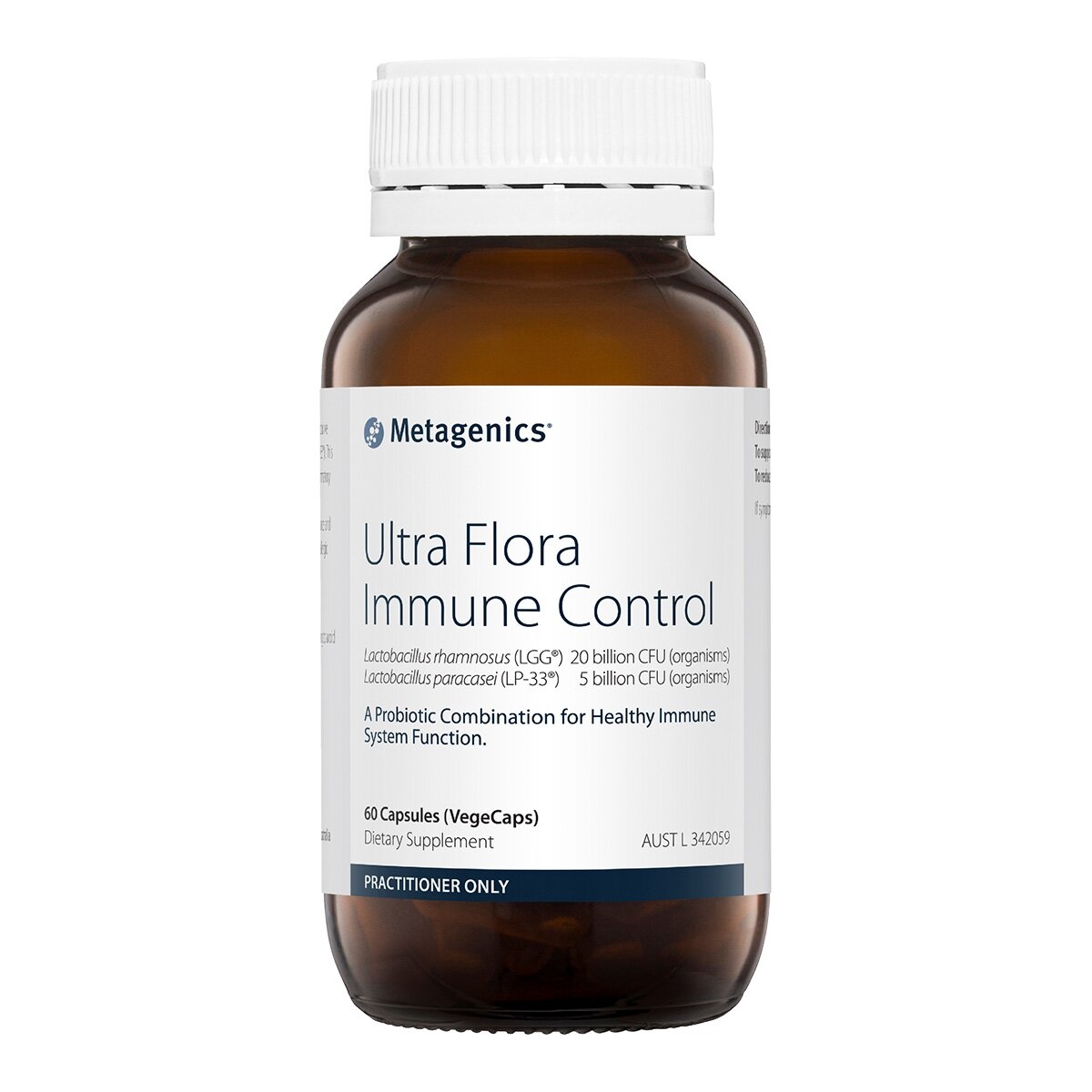
Ultraflora Immune Control combines two clinically-researched probiotic strains specifically chosen for their ability to modulate mast cell activation and restore immune balance. Mast cell activation occurs when these immune cells inappropriately release histamine and inflammatory mediators in response to harmless substances, leading to symptoms ranging from digestive discomfort and skin reactions to respiratory issues and neurological symptoms. The gut microbiota plays a fundamental role in preventing mast cell activation by shaping immune responses, particularly in balancing T helper cell responses and suppressing the Th2-dominant immune responses that drive IgE production and mast cell sensitization.
Lactobacillus rhamnosus GG (LGG) is a well-studied probiotic with potent immune-regulating effects, playing a critical role in decreasing systemic IgE levels - a key immunoglobulin involved in allergen sensitization and mast cell activation. LGG promotes the development and function of regulatory T cells (Tregs) by upregulating the master transcription factor for Treg differentiation. This strain helps recalibrate immune responses by promoting a Th1 profile over a Th2 profile, inhibiting Th2 cytokines like IL-4 and IL-5 while increasing IL-10 and TGF-β, which suppress overactive Th2-driven allergic pathways. Clinical evidence demonstrates that 10 adults receiving LGG at 2 billion CFU per day for five weeks showed an increase in regulatory T cells and IL-10 production, both important in dampening excessive inflammation and promoting immune tolerance [38]. Additionally, 20 billion CFU per day for 24-28 days reduced eczema incidence by 23%, with long-term benefits showing a 32% decline compared to controls [37].
Lactobacillus paracasei (LP-33) exerts multiple beneficial effects on immune regulation, particularly in allergic conditions. It helps inhibit mast cell degranulation, thereby reducing histamine release - a key mediator of allergic reactions. This strain suppresses Th2 cytokines, specifically IL-4 and IL-5, which are involved in promoting allergic inflammation, while enhancing Th1 immune responses by increasing IL-12 production. L. paracasei also contributes to downregulating serum IgE levels, further reducing allergic sensitivity and reactivity. A randomized controlled trial involving 425 adults with persistent allergic rhinitis due to grass pollen found that participants receiving 2 billion CFU/day of LP-33 alongside antihistamines for five weeks showed significant improvement in Rhinitis Quality of Life scores, with notable reductions in ocular symptoms [37]. In a separate study with 90 adults with perennial allergic rhinitis caused by house-dust mite allergy, those receiving 10 billion CFU/day of LP-33 for 30 days experienced significant reductions in overall symptom scores, while the placebo group reported increased symptoms.
Both probiotic strains work synergistically to support intestinal barrier integrity by promoting tight junction protein expression, reducing intestinal permeability, and decreasing markers of gut inflammation. A healthy gut barrier prevents the leakage of antigens and toxins that could otherwise stimulate mast cells and initiate inappropriate immune activation. The strains also support the production of short-chain fatty acids (SCFAs), particularly butyrate, which strengthens the intestinal epithelial barrier and promotes epithelial cell regeneration. Through these mechanisms, the probiotics in Ultraflora Immune Control address the root causes of mast cell hyperactivity by restoring immune tolerance, reducing inflammation, and preventing chronic allergic progression beyond just symptomatic relief.
Ingredients
LGG® Lactobacillus rhamnosus
20 billion CFU
Lactobacillus paracasei (LP-33)
5 billion CFU
Instructions
Instructions
Dosage
1 capsule daily with a large glass of water on an empty stomach
Duration
8 weeks
Warnings
Stable at ambient (room) temperatures for 7 days. More info
Product must be refrigerated
Always read the label
Dietary supplements should not replace a balanced diet
If symptoms persist, worsen or change unexpectedly, consult your healthcare professional
Contraindications
Contraindications
Major Interactions
Moderate Interactions
Minor Interactions
$22.55
Members Save
• LGG increased regulatory T cells and anti-inflammatory IL-10 production in just 5 weeks, promoting immune tolerance
• LP-33 significantly improved allergy symptoms in 425 adults with grass pollen allergies when combined with antihistamines
• 20 billion CFU daily of LGG reduced eczema incidence by 23% short-term and 32% long-term compared to controls
Ultraflora Immune Control
Metagenics
bottom of page