
Clinical Benefits
Clinical Benefits
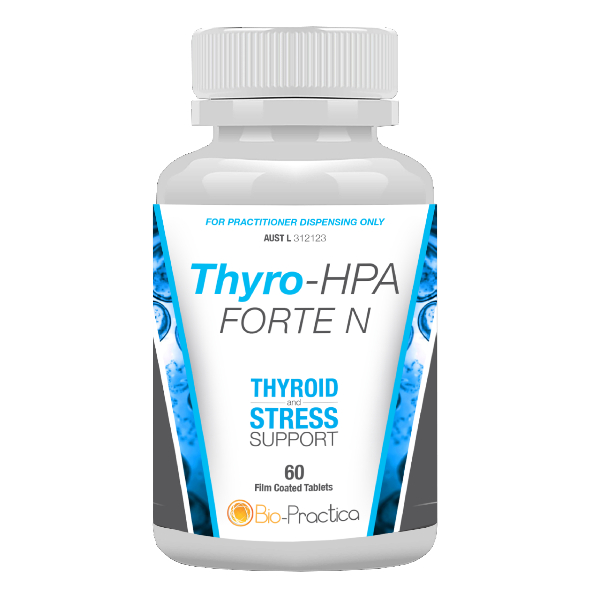
ThyroHPA forte N provides comprehensive nutritional support for healthy thyroid function, addressing key deficiencies and metabolic pathways that can contribute to hypothyroidism. The formulation combines essential micronutrients with adaptogenic herbs to support optimal thyroid hormone production, conversion, and cellular utilization.
Iodine, provided as potassium iodide in its bioavailable form, serves as the fundamental building block for thyroid hormone synthesis. Once absorbed, iodide is transported into thyroid follicular cells where the enzyme thyroid peroxidase (TPO) catalyzes its oxidation to elemental iodine, which is then covalently attached to tyrosine residues on thyroglobulin to form T3 and T4. Without sufficient iodide, this entire hormone production cascade is impaired, resulting in reduced thyroid hormone levels and compensatory TSH elevation [29]. Selenium plays an equally critical role, with the thyroid gland containing the highest concentration of selenium per gram of tissue in the human body. This essential trace mineral serves as a cofactor for iodothyronine deiodinase enzymes, which convert inactive T4 into biologically active T3, while also providing antioxidant protection via glutathione peroxidase to defend thyroid cells from oxidative damage during hormone synthesis [15][16].
Zinc and iron provide vital enzymatic support for thyroid hormone metabolism and production. Zinc is essential for deiodinase enzyme activity, converting T4 to active T3, and supports thyroid hormone receptor function. Clinical research demonstrates that supplementation with 30-50 mg/day elemental zinc for 3 months improved thyroid function in patients with low zinc status [20]. Iron serves as a vital cofactor for thyroid peroxidase (TPO), the enzyme responsible for iodination of tyrosine during hormone synthesis. A study in hypothyroid women with iron deficiency found that 150 mg/day elemental iron supplementation for 12 weeks significantly improved TPO activity and serum T3 and T4 levels [10]. The activated B2 (riboflavin 5-phosphate) and other B-vitamins support cellular energy metabolism and mitochondrial function, which are often impaired in hypothyroidism.
L-tyrosine provides the amino acid backbone essential for thyroid hormone synthesis, as both T4 and T3 are created through the iodination of tyrosine residues within thyroglobulin protein. The antioxidant vitamins C, D3, and E protect thyroid cells from oxidative stress and support immune function, which is particularly important given the autoimmune component present in many cases of hypothyroidism. These nutrients work synergistically to maintain the delicate balance required for optimal thyroid hormone production and peripheral conversion.
The adaptogenic herbs Withania somnifera (Ashwagandha) and Rhodiola rosea address the stress-thyroid connection by supporting healthy cortisol levels and HPA axis function. Chronic stress and elevated cortisol suppress the hypothalamic-pituitary-thyroid (HPT) axis, reducing T3 and T4 production. A clinical trial with Withania somnifera standardized to 5% withanolides at 300 mg twice daily over 8 weeks in 50 participants with subclinical hypothyroidism showed significant increases in serum T4 by 19.6% and T3 by 41.5%, while reducing TSH by 17.4% [14][51]. Rhodiola extract has demonstrated similar benefits in animal studies, significantly improving thyroid function by reducing elevated TSH levels while doubling T3 and T4 levels [52]. These adaptogenic herbs help restore the natural regulatory mechanisms that govern thyroid hormone production and release.
[29]>https://kresserinstitute.com/environmental-toxins-harm-thyroid/
[16]>https://pmc.ncbi.nlm.nih.gov/articles/PMC11314468/
[20]>https://pubmed.ncbi.nlm.nih.gov/17185277/
[10]>https://designsforhealth.com.au/wp-content/uploads/Thyroid-Hormone-Metabolism-Bioavailability
[14]>https://www.biomedica.com.au/media/contentmanager/content/Thyroid_Technical_Sheet
Ingredients
L-tyrosine
500 mg
Potassium iodide (Iodine)
equiv. Iodine
200 μg
150 μg
Selenomethionine (Selenium)
equiv. Selenium
190 μg
75 μg
Zinc citrate dihydrate
equiv. Zinc
15.6 mg
5 mg
Riboflavin 5-phosphate sodium (Activated B2)
equiv. Riboflavin
13 mg
10 mg
Ascorbic acid (Vitamin C)
100 mg
Cholecalciferol (Vitamin D3)
equiv. Vitamin D3
5 μg
200 IU
d-alpha-Tocopheryl acid succinate (Vitamin E)
equiv. Vitamin E
43 mg
52 IU
Withania somnifera ext.
ext. equiv. dry (root)
150 mg
1.5 g
Rhodiola rosea ext.
ext. equiv. dry (root)
25 mg
200 mg
Instructions
Instructions
Dosage
2 tablets daily with meals
Duration
Suitable for long-term use, with dosing adjusted according to symptoms
Warnings
Contains sucrose
Always read the label
Dietary supplements should not replace a balanced diet
If symptoms persist, worsen or change unexpectedly, consult your healthcare professional
Contains iodine; caution in concurrent use with thyroid medication
Contains selenium which is toxic in high doses; a daily dose of 150 µg for adults of selenium from dietary supplements should not be exceeded
Contains zinc which may be dangerous if taken in large amounts or for a long period
Contraindications
Contraindications
This supplement may interact with the following categories of medications, as well as specific active ingredients.
• Medications that decrease the immune system
• Medications that slow blood clotting
• Sedative medications
• Warfarin
• Medications for an overactive thyroid
• Lithium
• Medications for diabetes
• Medications for high blood pressure
• Medications that can harm the liver
• Medications changed by the liver - refer list
• Medications moved by pumps in cells - refer list
• Medications for depression
• Estrogens
• Fluphenazine
• Indinavir
• Levothyroxine
• Medications for cancer
• Choline Magnesium Trisalicylate
• Salsalate
• Aspirin
• Atorvastatin
• Calcipotriene
• Digoxin
• Diltiazem
• Verapamil
• Diuretics
• Cyclosporine
• Selumetinib
• Antibiotics
• Bictegravir/emtricitabine/tenofovir alafenamide
• Cephalexin
• Cisplatin
• Medications for HIV/AIDS
• Penicillamine
• Ritonavir
• Atazanavir
Further details are provided below.
Please note that medications may be sold under different brand names, so check the listed active ingredients against your medication packaging.
Major Interactions
Moderate Interactions
Medications that decrease the immune system
• Cyclosporine
• Tacrolimus
• Mycophenolate
• Prednisone
• Methotrexate
• Azathioprine
Selenium can increase the activity of the immune system. Some medications, such as those used after a transplant, decrease the activity of the immune system. Taking selenium along with these medications might decrease the effects of these medications.
Medications that slow blood clotting
• Heparin
• Rivaroxaban
• Apixaban
• Dabigatran
• Clopidogrel
Selenium might slow blood clotting. Taking selenium along with medications that also slow blood clotting might increase the risk of bruising and bleeding.
Niacin
Taking niacin along with the drug simvastatin can increase good cholesterol levels. Taking niacin plus simvastatin along with selenium and other antioxidants can decrease the effects of niacin and simvastatin on good cholesterol levels. It is unknown if selenium alone decreases the effects of niacin plus simvastatin on good cholesterol levels.
Sedative medications
• Diazepam
• Alprazolam
• Temazepam
• Zolpidem
• Zopiclone
• Promethazine
Selenium might reduce how quickly the body breaks down sedative medications. Taking selenium with these medications might increase the effects and side effects of these medications.
• Jantoven
• Used for: blood thinning, clot prevention
Selenium might slow blood clotting. Selenium might also increase the effects of warfarin in the body. Taking selenium along with warfarin might increase the chances of bruising and bleeding.
Large amounts of iodine can decrease thyroid function. Lithium can also decrease thyroid function. Taking iodine along with lithium might decrease thyroid function too much. Do not take large amounts of iodine if you are taking lithium.
Medications for an overactive thyroid
• Antithyroid drugs
Iodine can increase or decrease thyroid function. Taking iodine along with medications for an overactive thyroid might change the effects of these medications. Do not take iodine supplements if you are taking medications for an overactive thyroid, unless recommended by a healthcare provider.
Medications for diabetes
• Glyburide
• Glipizide
• Insulin
• Sitagliptin
• Empagliflozin
• Semaglutide
• Dapagliflozin
Ashwagandha might lower blood sugar levels. Taking ashwagandha along with diabetes medications might cause blood sugar to drop too low. Monitor your blood sugar closely.
Medications for high blood pressure
• Amlodipine
• Ramipril
• Perindopril
• Metoprolol
• Losartan
• Hydrochlorothiazide
Ashwagandha might lower blood pressure. Taking ashwagandha along with medications that lower blood pressure might cause blood pressure to go too low. Monitor your blood pressure closely.
Medications that can harm the liver
• Acetaminophen / Paracetamol
• Methotrexate
• Atorvastatin
• Simvastatin
• Isoniazid
Ashwagandha might harm the liver. Some medications can also harm the liver. Taking ashwagandha along with a medication that can harm the liver might increase the risk of liver damage.
Ashwagandha can increase the activity of the immune system. Some medications, such as those used after a transplant, decrease the activity of the immune system. Taking ashwagandha along with these medications might decrease the effects of these medications.
Ashwagandha might cause sleepiness and slowed breathing. Some medications, called sedatives, can also cause sleepiness and slowed breathing. Taking ashwagandha with sedative medications might cause breathing problems and/or too much sleepiness.
Thyroid hormone
The body naturally produces thyroid hormones. Ashwagandha might increase how much thyroid hormone the body produces. Taking ashwagandha with thyroid hormone pills might cause too much thyroid hormone in the body, and increase the effects and side effects of thyroid hormone.
Medications changed by the liver
• Glipizide
• Phenytoin
• Losartan
Some medications are changed and broken down by the liver. Rhodiola might change how quickly the liver breaks down these medications. If you are taking medications metabolised by the liver, monitor for any changes in how your medication affects you.
Rhodiola might lower blood sugar levels. Taking rhodiola along with diabetes medications might cause blood sugar to drop too low. Monitor your blood sugar closely.
Rhodiola might lower blood pressure. Taking rhodiola along with medications that lower blood pressure might cause blood pressure to go too low. Monitor your blood pressure closely.
Medications moved by pumps in cells
• P-glycoprotein substrates
Some medications are moved in and out of cells by pumps. Rhodiola might change how these pumps work and change how much medication stays in the body. In some cases, this might change the effects and side effects of a medication.
Rhodiola can increase the activity of the immune system. Some medications, such as those used after a transplant, decrease the activity of the immune system. Taking rhodiola along with these medications might decrease the effects of these medications.
The body naturally produces thyroid hormones. Tyrosine might increase how much thyroid hormone the body produces. Taking tyrosine with thyroid hormone pills might cause there to be too much thyroid hormone. This could increase the effects and side effects of thyroid hormones.
Aluminum
Aluminum is found in most antacids. Vitamin C can increase how much aluminum the body absorbs. However, it is not clear if this interaction is a big concern. Take vitamin C two hours before or four hours after antacids.
Estrogens
• Oral contraceptive pill
• Estradiol
• Conjugated estrogens
• HRT combination products
Vitamin C might decrease how quickly the body gets rid of estrogens. Taking vitamin C along with estrogens might increase the effects and side effects of estrogens.
Fluphenazine
• Prolixin
Large amounts of vitamin C might decrease how much fluphenazine is in the body. Taking vitamin C along with fluphenazine might decrease the effectiveness of fluphenazine.
Indinavir
• Crixivan
Taking large amounts of vitamin C along with indinavir might decrease how much indinavir stays in the body. It's not clear if this interaction is a big concern.
Levothyroxine
• Synthroid, others
Taking vitamin C along with levothyroxine might increase how much levothyroxine the body absorbs. This can increase the amount of levothyroxine in the body and increase its effects and side effects.
Medications for cancer
• Cyclophosphamide
• Chlorambucil
• Melphalan
• Busulfan
• Temozolomide
Vitamin C is an antioxidant. There is some concern that antioxidants might decrease the effects of some medications used for cancer. If you are taking medications for cancer, check with your healthcare provider before taking vitamin C.
• Doxorubicin
• Bleomycin
• Daunorubicin
• Mitomycin
• Epirubicin
Vitamin C is an antioxidant. There is some concern that antioxidants might decrease the effects of medications used for cancer. If you are taking medications for cancer, check with your healthcare provider before taking vitamin C.
Taking niacin with vitamin C and other antioxidants can decrease the effects of niacin on good cholesterol levels. It is unknown if vitamin C alone decreases the effects of niacin on good cholesterol levels.
Warfarin is used to slow blood clotting. Large amounts of vitamin C might decrease the effects of warfarin. Decreasing the effects of warfarin might increase the risk of clotting. Be sure to have your blood checked regularly. The dose of your warfarin might need to be changed.
Atorvastatin
Vitamin D might decrease how much atorvastatin the body absorbs. Taking vitamin D with atorvastatin might decrease the effects of atorvastatin.
Calcipotriene
• Dovonex
Taking vitamin D along with calcipotriene might increase the effects and side effects of calcipotriene.
• Used for: heart failure, atrial fibrillation
Taking vitamin D along with digoxin might increase the effects and side effects of digoxin. If you are taking digoxin, talk to your doctor before taking vitamin D supplements.
Diltiazem
• Cardizem, others
Vitamin D helps your body absorb calcium. Calcium can affect the heart. Diltiazem can also affect the heart. Taking large amounts of vitamin D along with diltiazem might decrease the effects of diltiazem.
Verapamil
• Calan, others
Vitamin D helps the body absorb calcium. Calcium can affect the heart. Verapamil can also affect the heart. Do not take large amounts of vitamin D if you are taking verapamil.
Diuretics
• Thiazide diuretics
Vitamin D helps the body absorb calcium. Some "Diuretics" increase the amount of calcium in the body. Taking large amounts of vitamin D along with some "Diuretics" might cause too much calcium in the body. This could cause serious side effects, including kidney problems.
Cyclosporine
• Restasis
• Used for: organ transplant, autoimmune conditions
Taking large amounts of vitamin E along with cyclosporine might increase how much cyclosporine the body absorbs. This might increase the effects and side effects of cyclosporine.
• Atorvastatin
• Simvastatin
• Amlodipine
• Diltiazem
• Cyclosporine
• Tacrolimus
• Midazolam
• Alprazolam
• Rivaroxaban
• Some HIV antiretrovirals
Some medications are changed and broken down by the liver. Vitamin E might change how quickly the liver breaks down these medications. If you are taking medications metabolised by the liver, monitor for any changes in how your medication affects you.
Vitamin E is an antioxidant. There is some concern that antioxidants might decrease the effects of some medications used for cancer. If you are taking medications for cancer, check with your healthcare provider before taking vitamin E.
Vitamin E might slow blood clotting. Taking vitamin E along with medications that also slow blood clotting might increase the risk of bruising and bleeding.
Taking niacin along with the drug simvastatin can increase good cholesterol levels. Taking niacin plus simvastatin along with vitamin E and other antioxidants can decrease the effects of niacin and simvastatin on good cholesterol levels. It is unknown if vitamin E alone decreases the effects of niacin plus simvastatin on good cholesterol levels.
Selumetinib
• Koselugo
Selumetinib, a drug used for cancer, contains vitamin E. Taking selumetinib with vitamin E-containing supplements can result in an unsafe dose of vitamin E. This could increase the risk of bleeding.
Warfarin is used to slow blood clotting. Vitamin E can also slow blood clotting. Taking vitamin E along with warfarin can increase the chances of bruising and bleeding. Be sure to have your blood checked regularly. The dose of your warfarin might need to be changed.
Antibiotics
• Doxycycline
• Ciprofloxacin
• Amoxicillin
• Azithromycin
• Norfloxacin
• Trimethoprim
Zinc might decrease how much antibiotic the body absorbs from the gut. Taking zinc along with quinolone antibiotics might decrease the effects of these antibiotics. To avoid this interaction, take antibiotics at least 2 hours before or 4-6 hours after zinc supplements.
Zinc can decrease the amount of tetracyclines the body absorbs. Taking zinc with tetracyclines might decrease the effects of tetracyclines. To avoid this interaction, take tetracyclines 2 hours before or 4-6 hours after taking zinc supplements.
Bictegravir/emtricitabine/tenofovir alafenamide
• Biktarvy
In theory, zinc might decrease how much bictegravir/emtricitabine/tenofovir alafenamide the body absorbs from the stomach. To avoid this interaction, take bictegravir/emtricitabine/tenofovir alafenamide at least 2 hours before or 6 hours after zinc containing products.
Cephalexin
• Keflex
Zinc can reduce how much cephalexin the body absorbs. This might decrease how well cephalexin works for treating infections. To avoid this interaction, take zinc 3 hours after taking cephalexin.
Cisplatin
• Platinol-AQ
Cisplatin is used to treat cancer. Taking zinc along with cisplatin might inactivate cisplatin therapy. But it's not clear if this is a big concern.
Medications for HIV/AIDS
• Integrase inhibitors
Taking zinc along with integrase inhibitors might decrease blood levels of integrase inhibitors. This might decrease the effects of these medications. Talk to your healthcare provider if you are using integrase inhibitors and want to start taking zinc.
Penicillamine
• Cuprimine, Depen
Zinc might decrease how much penicillamine the body absorbs. Taking zinc with penicillamine might decrease the effects of penicillamine. Take zinc and penicillamine at least 2 hours apart.
Ritonavir
• Norvir
Ritonavir is a drug used for HIV infection. Zinc can reduce how much ritonavir the body absorbs. But it isn't clear if this is a big concern.
Minor Interactions
Medications changed by the liver
• Atorvastatin
• Simvastatin
• Amlodipine
• Diltiazem
• Cyclosporine
• Tacrolimus
• Midazolam
• Alprazolam
• Rivaroxaban
• Some HIV antiretrovirals
Some medications are changed and broken down by the liver. Ashwagandha might change how quickly the liver breaks down these medications. If you are taking medications metabolised by the liver, monitor for any changes in how your medication affects you.
• Caffeine
• Clozapine
• Olanzapine
• Theophylline
• Tizanidine
• Duloxetine
• Ramelteon
Some medications are changed and broken down by the liver. Rhodiola might change how quickly the liver breaks down these medications. If you are taking medications metabolised by the liver, monitor for any changes in how your medication affects you.
Medications for depression
• Antidepressant drugs
Rhodiola might increase the risk of side effects from antidepressant drugs.
Sedative medications
• Diazepam
• Alprazolam
• Temazepam
• Zolpidem
• Zopiclone
• Promethazine
Rhodiola might cause sleepiness and slowed breathing. Some medications, called sedatives, can also cause sleepiness and slowed breathing. Taking rhodiola with sedative medications might cause breathing problems and/or too much sleepiness.
Aspirin
Aspirin is removed by the body through the kidneys and in the urine. Vitamin C might decrease how the body removes aspirin and could potentially increase the amount of aspirin in the body. But it's not clear if this is a big concern.
Choline Magnesium Trisalicylate
• Trilisate
Vitamin C might decrease how quickly the body gets rid of choline magnesium trisalicylate. It is not clear if this interaction is a big concern.
Salsalate
• Disalcid
Vitamin C might decrease how quickly the body gets rid of salsalate. Taking vitamin C along with salsalate might cause too much salsalate in the body, and increase the effects and side effects of salsalate.
Some medications are changed and broken down by the liver. Vitamin D might change how quickly the liver breaks down these medications. If you are taking medications metabolised by the liver, monitor for any changes in how your medication affects you.
Atazanavir
• Reyataz
Atazanavir is a drug used for HIV infection. Zinc decreases how much atazanavir the body absorbs. But the body still absorbs enough atazanavir for it to work for treating HIV. So this interaction is probably not a big concern.
$14.24
Members Save
• Clinical studies show Ashwagandha increases T4 by 19.6% and T3 by 41.5% while reducing TSH by 17.4% in subclinical hypothyroidism
• Provides bioavailable iodine and selenium - essential cofactors for thyroid hormone synthesis and T4 to T3 conversion
• Iron and zinc supplementation significantly improves thyroid peroxidase activity and hormone production in deficient individuals