
Clinical Benefits
Clinical Benefits
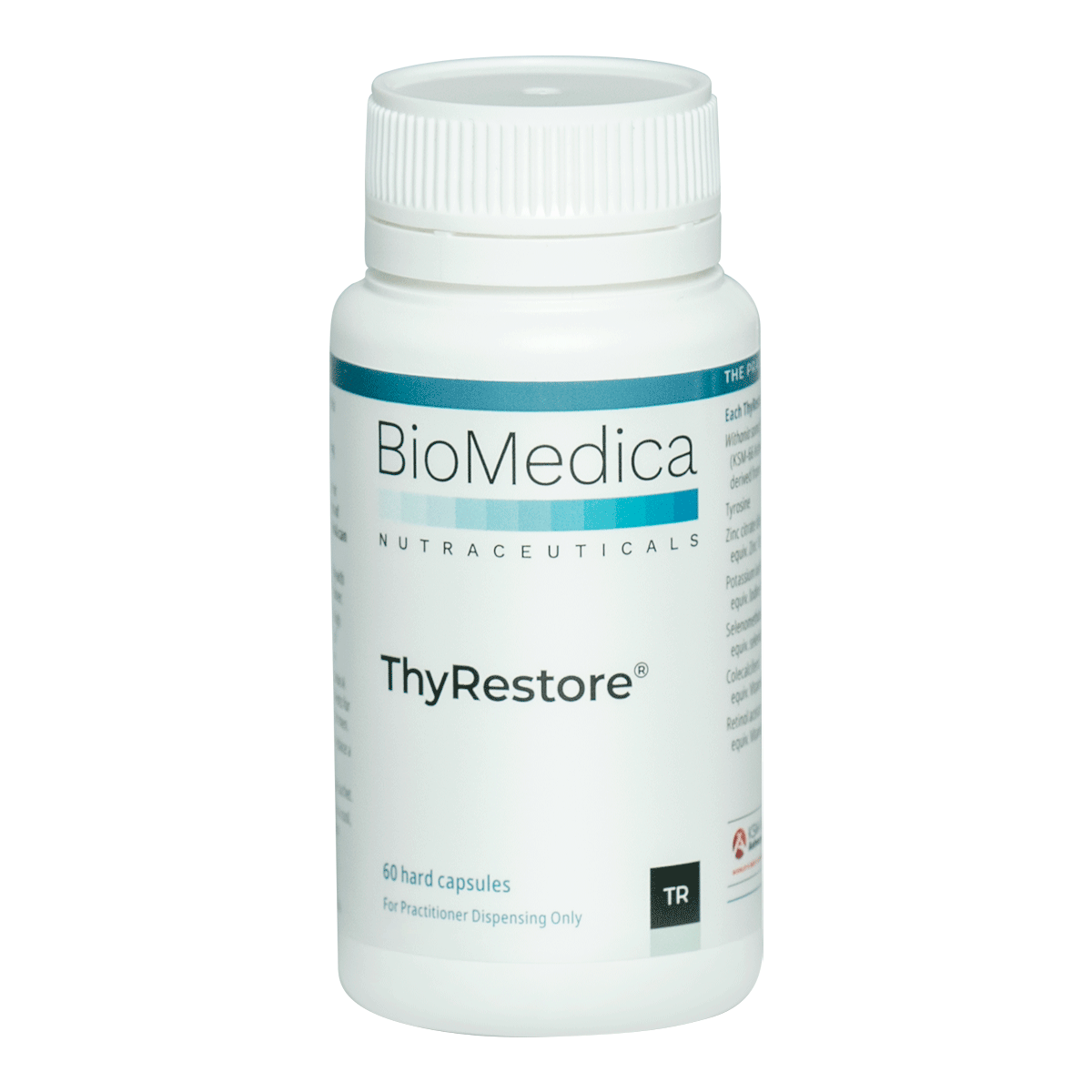
Thyrestore is specifically formulated to support optimal thyroid function through a comprehensive blend of nutrients and adaptogens that target key pathways involved in thyroid hormone production and metabolism. The thyroid gland requires specific nutrients to synthesize hormones T3 and T4, convert inactive T4 to active T3, and maintain healthy cellular function throughout the hypothalamic-pituitary-thyroid axis.
KSM-66® Ashwagandha (Withania somnifera) serves as the cornerstone adaptogen in this formula, directly supporting thyroid hormone production through stress axis regulation. Clinical research demonstrates that Ashwagandha standardized to 5% withanolides at 600mg daily significantly increased serum T4 by 19.6% and T3 by 41.5%, while reducing TSH by 17.4% over 8 weeks in individuals with subclinical hypothyroidism [31][51]. The thyroid-supportive effects are attributed to its ability to regulate the hypothalamic-pituitary-adrenal (HPA) axis and reduce cortisol levels, since chronic stress and elevated cortisol suppress the hypothalamic-pituitary-thyroid axis, resulting in reduced T3 and T4 production [31].
L-tyrosine provides the essential amino acid foundation for thyroid hormone synthesis, as both T4 and T3 are created through the iodination of tyrosine residues within the thyroglobulin protein. This makes tyrosine a necessary precursor for thyroid hormone production, with the recommended daily intake being 14mg per kg of body weight [14]. Zinc citrate plays a multifaceted role in thyroid metabolism, serving as an essential cofactor for deiodinase enzymes that convert inactive T4 into biologically active T3. Clinical research shows that zinc deficiency reduces both the efficiency of T4 to T3 conversion and tissue sensitivity to T3, contributing to hypothyroid symptoms even when circulating hormone levels appear normal. Supplementation with 30-50mg daily elemental zinc for 3 months improved thyroid function in patients with low zinc status [20].
Iodine, provided as potassium iodide, is fundamental to thyroid hormone synthesis as it is incorporated into tyrosine residues to form T3 and T4. Within thyroid cells, iodine is oxidized and attached to tyrosine residues on thyroglobulin, forming the building blocks that couple to create thyroid hormones [16][29]. Without sufficient iodine, the entire hormone production cascade becomes impaired, resulting in reduced T3 and T4 levels and compensatory rises in TSH [29]. Selenium supports thyroid function through multiple mechanisms, serving as a cofactor for iodothyronine deiodinase enzymes responsible for T4 to T3 conversion, while also providing antioxidant protection via glutathione peroxidase that defends thyroid cells from oxidative damage during hormone synthesis [15][16][30].
Vitamin D3 (cholecalciferol) and Vitamin A (retinol acetate) complete the formula by supporting overall endocrine function and cellular metabolism. These fat-soluble vitamins work synergistically with thyroid hormones to optimize metabolic processes and maintain healthy tissue function throughout the body, ensuring that thyroid hormones can effectively carry out their regulatory roles in energy production, temperature regulation, and cellular repair.
[31]>https://cfpub.epa.gov/si/si_public_record_report.cfm?LAB=NCEA&dirEntryID=246456
[51]>https://pubmed.ncbi.nlm.nih.gov/28829155/
[14]>https://www.biomedica.com.au/media/contentmanager/content/Thyroid_Technical_Sheet
[20]>https://pubmed.ncbi.nlm.nih.gov/17185277/
[16]>https://pmc.ncbi.nlm.nih.gov/articles/PMC11314468/
[29]>https://kresserinstitute.com/environmental-toxins-harm-thyroid/
Ingredients
KSM-66® Withania somnifera ext.
ext. equiv. dry (root)
300 mg
3.75 g
L-tyrosine
350 mg
Zinc citrate dihydrate
equiv. Zinc
31.15 mg
10 mg
Potassium iodide (Iodine)
equiv. Iodine
196 μg
149.84 μg
Selenomethionine (Selenium)
equiv. Selenium
186.5 μg
74.6 μg
Cholecalciferol (Vitamin D3)
equiv. Vitamin D3
12.5 μg
500 IU
Retinol acetate (Vitamin A)
equiv. Vitamin A
equiv. Vitamin A
344.1 μg
1000 IU
Instructions
Instructions
Dosage
2 capsules daily
Duration
Suitable for long-term use, with dosing adjusted according to symptoms
Warnings
Always read the label
Dietary supplements should not replace a balanced diet
If symptoms persist, worsen or change unexpectedly, consult your healthcare professional
Contains iodine; caution in concurrent use with thyroid medication
Contains selenium which is toxic in high doses; a daily dose of 150 µg for adults of selenium from dietary supplements should not be exceeded
Contains zinc which may be dangerous if taken in large amounts or for a long period
The recommended daily amount of vitamin A from all sources is 700 µg retinol equivalents for women and 900 µg equivalents for men
If you are pregnant or considering becoming pregnant, do not take vitamin A supplements without consulting your healthcare practitioner or pharmacist
When taken in excess of 3000 µg retinol equivalents, vitamin A can cause birth defects
Contraindications
Contraindications
This supplement may interact with the following categories of medications, as well as specific active ingredients.
• Medications that decrease the immune system
• Medications that slow blood clotting
• Sedative medications
• Warfarin
• Medications for an overactive thyroid
• Lithium
• Medications for skin conditions
• Medications that can harm the liver
• Atorvastatin
• Calcipotriene
• Digoxin
• Diltiazem
• Verapamil
• Diuretics
• Medications changed by the liver - refer list
• Antibiotics
• Bictegravir/emtricitabine/tenofovir alafenamide
• Cephalexin
• Cisplatin
• Medications for HIV/AIDS
• Penicillamine
• Ritonavir
• Atazanavir
Further details are provided below.
Please note that medications may be sold under different brand names, so check the listed active ingredients against your medication packaging.
Major Interactions
Medications for skin conditions
• Retinoids
Some medications for skin conditions are made from vitamin A. Taking vitamin A and these medications together could cause toxic effects.
Moderate Interactions
Medications that decrease the immune system
• Cyclosporine
• Tacrolimus
• Mycophenolate
• Prednisone
• Methotrexate
• Azathioprine
Selenium can increase the activity of the immune system. Some medications, such as those used after a transplant, decrease the activity of the immune system. Taking selenium along with these medications might decrease the effects of these medications.
Medications that slow blood clotting
• Heparin
• Rivaroxaban
• Apixaban
• Dabigatran
• Clopidogrel
Selenium might slow blood clotting. Taking selenium along with medications that also slow blood clotting might increase the risk of bruising and bleeding.
Niacin
Taking niacin along with the drug simvastatin can increase good cholesterol levels. Taking niacin plus simvastatin along with selenium and other antioxidants can decrease the effects of niacin and simvastatin on good cholesterol levels. It is unknown if selenium alone decreases the effects of niacin plus simvastatin on good cholesterol levels.
Sedative medications
• Diazepam
• Alprazolam
• Temazepam
• Zolpidem
• Zopiclone
• Promethazine
Selenium might reduce how quickly the body breaks down sedative medications. Taking selenium with these medications might increase the effects and side effects of these medications.
• Jantoven
• Used for: blood thinning, clot prevention
Selenium might slow blood clotting. Selenium might also increase the effects of warfarin in the body. Taking selenium along with warfarin might increase the chances of bruising and bleeding.
Large amounts of iodine can decrease thyroid function. Lithium can also decrease thyroid function. Taking iodine along with lithium might decrease thyroid function too much. Do not take large amounts of iodine if you are taking lithium.
Medications for an overactive thyroid
• Antithyroid drugs
Iodine can increase or decrease thyroid function. Taking iodine along with medications for an overactive thyroid might change the effects of these medications. Do not take iodine supplements if you are taking medications for an overactive thyroid, unless recommended by a healthcare provider.
Thyroid hormone
The body naturally produces thyroid hormones. Tyrosine might increase how much thyroid hormone the body produces. Taking tyrosine with thyroid hormone pills might cause there to be too much thyroid hormone. This could increase the effects and side effects of thyroid hormones.
Medications that can harm the liver
• Acetaminophen / Paracetamol
• Methotrexate
• Atorvastatin
• Simvastatin
• Isoniazid
Taking large amounts of vitamin A might harm the liver. Some medications can also harm the liver. Taking high doses of vitamin A along with a medication that can harm the liver might increase the risk of liver damage.
Warfarin is used to slow blood clotting. Large amounts of vitamin A can also slow blood clotting. Taking vitamin A along with warfarin can increase the chances of bruising and bleeding. Be sure to have your blood checked regularly. The dose of your warfarin might need to be changed.
Atorvastatin
Vitamin D might decrease how much atorvastatin the body absorbs. Taking vitamin D with atorvastatin might decrease the effects of atorvastatin.
Calcipotriene
• Dovonex
Taking vitamin D along with calcipotriene might increase the effects and side effects of calcipotriene.
• Used for: heart failure, atrial fibrillation
Taking vitamin D along with digoxin might increase the effects and side effects of digoxin. If you are taking digoxin, talk to your doctor before taking vitamin D supplements.
Diltiazem
• Cardizem, others
Vitamin D helps your body absorb calcium. Calcium can affect the heart. Diltiazem can also affect the heart. Taking large amounts of vitamin D along with diltiazem might decrease the effects of diltiazem.
Verapamil
• Calan, others
Vitamin D helps the body absorb calcium. Calcium can affect the heart. Verapamil can also affect the heart. Do not take large amounts of vitamin D if you are taking verapamil.
Diuretics
• Thiazide diuretics
Vitamin D helps the body absorb calcium. Some "Diuretics" increase the amount of calcium in the body. Taking large amounts of vitamin D along with some "Diuretics" might cause too much calcium in the body. This could cause serious side effects, including kidney problems.
Antibiotics
• Doxycycline
• Ciprofloxacin
• Amoxicillin
• Azithromycin
• Norfloxacin
• Trimethoprim
Zinc might decrease how much antibiotic the body absorbs from the gut. Taking zinc along with quinolone antibiotics might decrease the effects of these antibiotics. To avoid this interaction, take antibiotics at least 2 hours before or 4-6 hours after zinc supplements.
Zinc can decrease the amount of tetracyclines the body absorbs. Taking zinc with tetracyclines might decrease the effects of tetracyclines. To avoid this interaction, take tetracyclines 2 hours before or 4-6 hours after taking zinc supplements.
Bictegravir/emtricitabine/tenofovir alafenamide
• Biktarvy
In theory, zinc might decrease how much bictegravir/emtricitabine/tenofovir alafenamide the body absorbs from the stomach. To avoid this interaction, take bictegravir/emtricitabine/tenofovir alafenamide at least 2 hours before or 6 hours after zinc containing products.
Cephalexin
• Keflex
Zinc can reduce how much cephalexin the body absorbs. This might decrease how well cephalexin works for treating infections. To avoid this interaction, take zinc 3 hours after taking cephalexin.
Cisplatin
• Platinol-AQ
Cisplatin is used to treat cancer. Taking zinc along with cisplatin might inactivate cisplatin therapy. But it's not clear if this is a big concern.
Medications for HIV/AIDS
• Integrase inhibitors
Taking zinc along with integrase inhibitors might decrease blood levels of integrase inhibitors. This might decrease the effects of these medications. Talk to your healthcare provider if you are using integrase inhibitors and want to start taking zinc.
Penicillamine
• Cuprimine, Depen
Zinc might decrease how much penicillamine the body absorbs. Taking zinc with penicillamine might decrease the effects of penicillamine. Take zinc and penicillamine at least 2 hours apart.
Ritonavir
• Norvir
Ritonavir is a drug used for HIV infection. Zinc can reduce how much ritonavir the body absorbs. But it isn't clear if this is a big concern.
Minor Interactions
Medications changed by the liver
• Atorvastatin
• Simvastatin
• Amlodipine
• Diltiazem
• Cyclosporine
• Tacrolimus
• Midazolam
• Alprazolam
• Rivaroxaban
• Some HIV antiretrovirals
Some medications are changed and broken down by the liver. Vitamin D might change how quickly the liver breaks down these medications. If you are taking medications metabolised by the liver, monitor for any changes in how your medication affects you.
Atazanavir
• Reyataz
Atazanavir is a drug used for HIV infection. Zinc decreases how much atazanavir the body absorbs. But the body still absorbs enough atazanavir for it to work for treating HIV. So this interaction is probably not a big concern.
$13.12
Members Save
• KSM-66® Ashwagandha increased T4 levels by 19.6% and T3 by 41.5% while reducing TSH by 17.4% in clinical trials
• Zinc supplementation improved thyroid function in patients with low zinc status, supporting T4 to T3 conversion
• Provides essential iodine for thyroid hormone synthesis, preventing the impairment of T3 and T4 production