
Clinical Benefits
Clinical Benefits
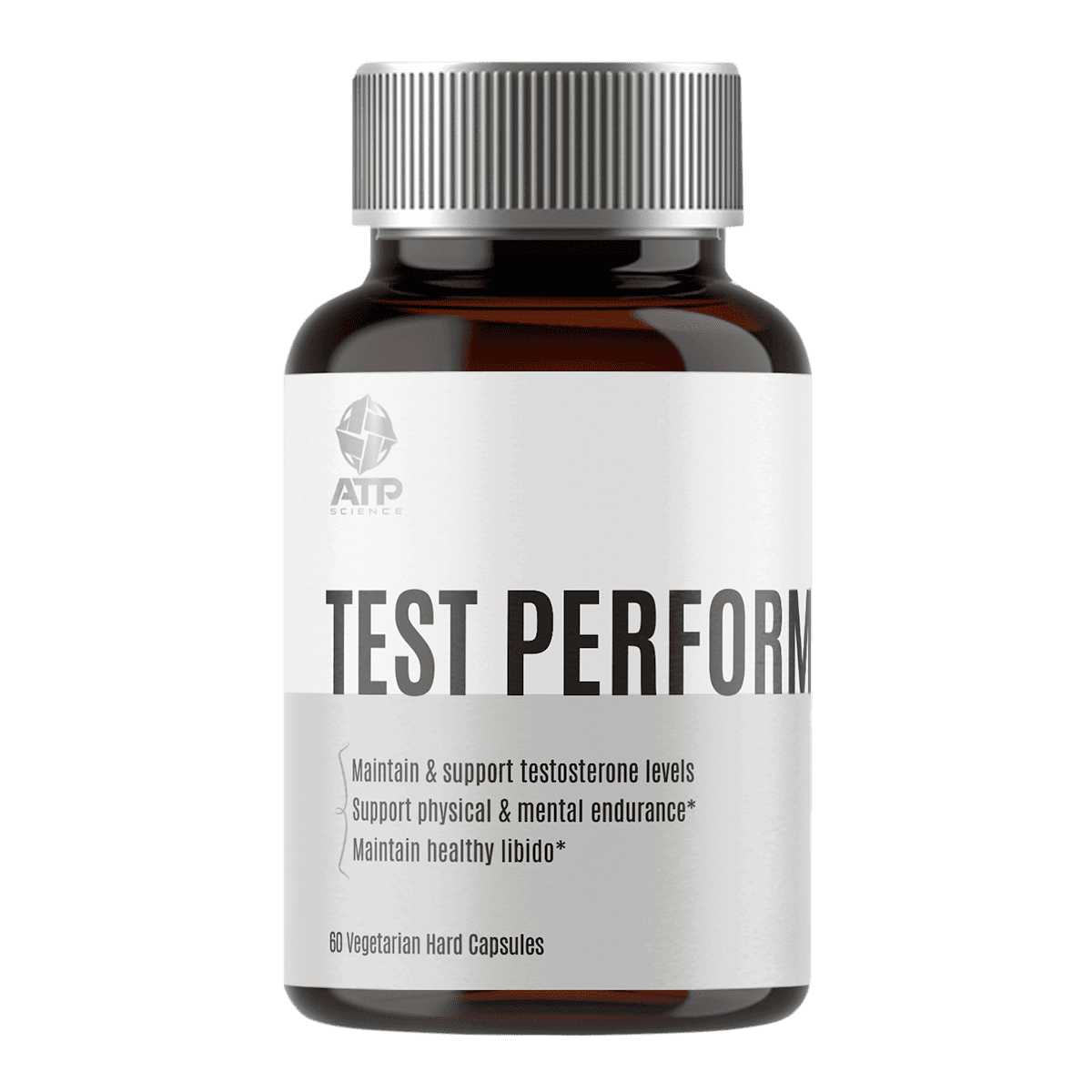
Hypogonadism, characterized by impaired reproductive hormone production due to deficient hypothalamic-pituitary signaling, affects both men and women by reducing essential hormones like LH, FSH, testosterone, and estradiol. This condition can lead to menstrual absence, erectile dysfunction, infertility, and various metabolic disruptions. Test Perform combines scientifically-backed botanicals and nutrients that target the hypothalamic-pituitary-gonadal axis to naturally restore hormonal balance and reproductive function.
KSM-66® Ashwagandha (Withania somnifera) works synergistically with other adaptogens to combat chronic stress and inflammation, which are primary drivers of hypogonadism. Chronic stress leads to sustained cortisol elevation, which directly suppresses hypothalamic GnRH secretion by altering kisspeptin and other stimulatory inputs to GnRH neurons, reducing pulsatility and decreasing LH and FSH output [42]. By addressing this stress-cortisol pathway, ashwagandha helps restore the natural hormonal cascade essential for reproductive health.
Tribulus terrestris stands out as one of the most clinically validated herbs for hypogonadism, containing active saponins like protodioscin that enhance hypothalamic signaling and stimulate pituitary LH and FSH production [33]. In male clinical trials, men with baseline testosterone levels below 300 ng/dL experienced remarkable improvements after taking 750 mg daily for three months, with total testosterone rising by 27-33% across separate studies [36]. Female studies are equally impressive, showing a 32% increase in LH, 30% increase in progesterone, and a 61% increase in FSH when taking 750 mg daily [34][35]. Notably, Tribulus demonstrated superior effectiveness for ovulation induction compared to pharmaceutical clomiphene, achieving a 60% success rate versus 47% for the conventional treatment [35].
Panax ginseng (Korean ginseng) provides comprehensive support for both male and female reproductive health through its influence on the hypothalamic-pituitary-gonadal axis. In males, Korean ginseng prevents testosterone suppression even under stress conditions, with studies showing it can maintain or increase testosterone levels when administered at approximately 283 mg daily [31][32]. Female studies reveal even more dramatic results, with participants experiencing 40-50% increases in estradiol, 30% increases in progesterone, 35-40% increases in FSH, and 40% increases in LH [29]. These hormonal improvements translated to tangible reproductive benefits, including 50% more healthy ovarian follicles, 40% reduction in failed follicles, and 45% increase in corpus luteum formation—a key marker of successful ovulation [29].
The formula's mineral components play crucial cofactor roles in hormonal production. Zinc deficiency is directly associated with hypogonadism in both sexes, as zinc acts as an essential cofactor for pituitary signaling and maintains the critical balance between LH and FSH [21][22][24]. In women, zinc deficiency disrupts the hypothalamic-pituitary-ovarian axis, impairing LH and FSH secretion and leading to abnormal follicle development, reduced estradiol production, and menstrual irregularities [21]. For men, zinc not only increases LH to stimulate testosterone synthesis but also supports prolactin secretion, which enhances testicular cell responsiveness to LH, thereby sustaining testosterone production even when LH levels are normal [22][24]. Boron works complementarily to optimize hormone utilization and bioavailability.
Serenoa repens (Saw palmetto) and Trigonella foenum-graecum (Fenugreek) provide additional support for hormonal balance and reproductive health. Saw palmetto is traditionally used to support healthy testosterone metabolism and prostate function in men, while fenugreek has been associated with improved libido, energy levels, and hormonal balance in both sexes through its influence on various metabolic pathways.
[21]>https://pmc.ncbi.nlm.nih.gov/articles/PMC7468694/
[22]>https://pubmed.ncbi.nlm.nih.gov/20446777/
[24]>https://onlinelibrary.wiley.com/doi/abs/10.1002/food.19890331007
[29]>https://ovarianresearch.biomedcentral.com/articles/10.1186/s13048-022-00945-x
[31]>https://pmc.ncbi.nlm.nih.gov/articles/PMC10042648/
[32]>https://pmc.ncbi.nlm.nih.gov/articles/PMC3861174/
[33]>https://www.sciencedirect.com/science/article/abs/pii/S0944711321000040
[34]>https://www.researchgate.net/publication/260150404
[35]>https://bmccomplementmedtherapies.biomedcentral.com/articles/10.1186/1472-6882-14-511
Ingredients
KSM-66® Withania somnifera ext.
ext. equiv. dry (root)
300 mg
3.75 g
Panax ginseng (Korean ginseng) ext.
ext. equiv. dry (root)
150 mg
1.5 g
Tribulus terrestris ext.
ext. equiv. dry (fruit)
100 mg
5 g
Serenoa repens (Saw palmetto) ext.
ext. equiv. dry (fruit)
100 mg
600 mg
Trigonella foenum-graecum (Fenugreek) ext.
ext. equiv. dry (seed)
24 mg
3 g
Zinc gluconate
equiv. Zinc
39.06 mg
5 mg
Borax (Boron)
equiv. Boron
26.46 mg
3 mg
Instructions
Instructions
Dosage
2 capsules daily
Duration
Minimum duration of 8 weeks, with continuation until hormonal parameters are normalised and symptoms alleviated
Warnings
Not to be taken by children under 12 years
Always read the label
Dietary supplements should not replace a balanced diet
If symptoms persist, worsen or change unexpectedly, consult your healthcare professional
Contains trigonella foenum-graecum; may potentiate hypoglycaemic effect of hypoglycaemic medication
Contains zinc which may be dangerous if taken in large amounts or for a long period
Contraindications
Contraindications
This supplement may interact with the following categories of medications, as well as specific active ingredients.
• Estrogens
• Furosemide
• Imatinib
• Medications changed by the liver - refer list
• Medications for depression
• Medications for diabetes
• Medications that can cause an irregular heartbeat
• Medications that decrease the immune system
• Medications that slow blood clotting
• Midazolam
• Nifedipine
• Raltegravir
• Selegiline
• Warfarin
• Fexofenadine
• Medications for high blood pressure
• Metoprolol
• Phenytoin
• Sildenafil
• Toprol
• Dilantin
• Viagra
• Theophylline
• Antibiotics
• Bictegravir/emtricitabine/tenofovir alafenamide
• Cephalexin
• Cisplatin
• Medications for HIV/AIDS
• Penicillamine
• Ritonavir
• Atazanavir
Further details are provided below.
Please note that medications may be sold under different brand names, so check the listed active ingredients against your medication packaging.
Major Interactions
Estrogens
Concomitant administration of estrogen and Boron may increase serum estrogen levels
Moderate Interactions
Estrogens
• Oral contraceptive pill
• Estradiol
• Conjugated estrogens
• HRT combination products
Panax ginseng might have some of the same effects as estrogen. Taking Panax ginseng along with estrogen pills might decrease the effects of estrogen.
Furosemide
Panax ginseng might decrease how well furosemide works. But there isn't enough information to know if this is a big concern.
Imatinib
• Gleevec
Panax ginseng might decrease how quickly the liver breaks down imatinib. Taking Panax ginseng with imatinib might increase the effects and side effects of imatinib.
Insulin
Panax ginseng might decrease blood sugar. Insulin is also used to decrease blood sugar. Taking Panax ginseng along with insulin might cause your blood sugar to be too low. Monitor your blood sugar closely. The dose of your insulin might need to be changed.
Medications changed by the liver
• Tramadol
• Metoprolol
• Fluoxetine
• Paroxetine
• Tamoxifen
• Amitriptyline
Some medications are changed and broken down by the liver. Panax ginseng might change how quickly the liver breaks down these medications. If you are taking medications metabolised by the liver, monitor for any changes in how your medication affects you.
• Atorvastatin
• Simvastatin
• Amlodipine
• Diltiazem
• Cyclosporine
• Tacrolimus
• Midazolam
• Alprazolam
• Rivaroxaban
• Some HIV antiretrovirals
Medications for depression
• MAOIs
Taking Panax ginseng with MAOIs might increase the risk for certain side effects, such as anxiousness, headache, restlessness, and insomnia. Some common MAOIs include phenelzine, selegiline, and tranylcypromine.
Medications for diabetes
• Glyburide
• Glipizide
• Insulin
• Sitagliptin
• Empagliflozin
• Semaglutide
• Dapagliflozin
Panax ginseng might lower blood sugar levels. Taking panax ginseng along with diabetes medications might cause blood sugar to drop too low. Monitor your blood sugar closely.
Medications that can cause an irregular heartbeat
• QT interval-prolonging drugs
Panax ginseng might affect electrical currents in the heart. This can increase the risk of having an irregular heartbeat. Some medications can have this same effect. Taking panax ginseng with these medications might increase the risk for a serious heart issue.
Medications that decrease the immune system
• Cyclosporine
• Tacrolimus
• Mycophenolate
• Prednisone
• Methotrexate
• Azathioprine
Panax ginseng can increase the activity of the immune system. Some medications, such as those used after a transplant, decrease the activity of the immune system. Taking panax ginseng along with these medications might decrease the effects of these medications.
Medications that slow blood clotting
• Heparin
• Rivaroxaban
• Apixaban
• Dabigatran
• Clopidogrel
Panax ginseng might slow blood clotting. Taking panax ginseng along with medications that also slow blood clotting might increase the risk of bruising and bleeding.
Midazolam
• Versed
Panax ginseng might increase how quickly the liver breaks down midazolam. Taking Panax ginseng with midazolam may decrease the effects of midazolam.
Nifedipine
• Procardia
Panax ginseng might affect how much nifedipine is available in the body. Taking Panax ginseng along with nifedipine might increase the effects and side effects of nifedipine.
Raltegravir
• Isentress
Raltegravir has been associated with liver toxicity in some people. Taking Panax ginseng with raltegravir might increase the risk of liver toxicity in some people taking raltegravir.
Selegiline
• Eldepryl
Panax ginseng might decrease or increase how much selegiline is absorbed by the body. This might change the effects and side effects of selegiline.
Stimulant drugs
Stimulant drugs speed up the nervous system. By speeding up the nervous system, stimulant medications can make you feel jittery and speed up your heartbeat. Panax ginseng might also speed up the nervous system. Taking Panax ginseng along with stimulant drugs might cause serious problems including increased heart rate and high blood pressure. Avoid taking stimulant drugs along with Panax ginseng.
• Jantoven
• Used for: blood thinning, clot prevention
Warfarin is used to slow blood clotting. Panax ginseng might decrease the effects of warfarin. But it's not clear if this interaction is a big problem. Be sure to have your blood checked regularly. The dose of your warfarin might need to be changed.
Tribulus might lower blood sugar levels. Taking Tribulus along with diabetes medications might cause blood sugar to drop too low. Monitor your blood sugar closely.
Medications for high blood pressure
• Amlodipine
• Ramipril
• Perindopril
• Metoprolol
• Losartan
• Hydrochlorothiazide
Tribulus might lower blood pressure. Taking Tribulus along with medications that lower blood pressure might cause blood pressure to go too low. Monitor your blood pressure closely.
Fenugreek might lower blood sugar levels. Taking fenugreek along with diabetes medications might cause blood sugar to drop too low. Monitor your blood sugar closely.
Fenugreek might slow blood clotting. Taking fenugreek along with medications that also slow blood clotting might increase the risk of bruising and bleeding.
Metoprolol
Fenugreek might lower blood pressure. Taking fenugreek with metoprolol might cause blood pressure to drop too low.
Phenytoin
Fenugreek might decrease levels of phenytoin in the body. Taking fenugreek with phenytoin might reduce the effects of phenytoin.
Sildenafil
Fenugreek might reduce levels of sildenafil in the body. Taking fenugreek with sildenafil might reduce the effects of sildenafil.
Theophylline
Fenugreek might reduce how much theophylline is absorbed by the body. Using fenugreek while taking theophylline might reduce the effects of theophylline.
Warfarin is used to slow blood clotting. Fenugreek might also slow blood clotting. Taking fenugreek along with warfarin might increase the chances of bruising and bleeding. Be sure to have your blood checked regularly. The dose of your warfarin might need to be changed.
Antibiotics
• Doxycycline
• Ciprofloxacin
• Amoxicillin
• Azithromycin
• Norfloxacin
• Trimethoprim
Zinc might decrease how much antibiotic the body absorbs from the gut. Taking zinc along with quinolone antibiotics might decrease the effects of these antibiotics. To avoid this interaction, take antibiotics at least 2 hours before or 4-6 hours after zinc supplements.
Zinc can decrease the amount of tetracyclines the body absorbs. Taking zinc with tetracyclines might decrease the effects of tetracyclines. To avoid this interaction, take tetracyclines 2 hours before or 4-6 hours after taking zinc supplements.
Bictegravir/emtricitabine/tenofovir alafenamide
• Biktarvy
In theory, zinc might decrease how much bictegravir/emtricitabine/tenofovir alafenamide the body absorbs from the stomach. To avoid this interaction, take bictegravir/emtricitabine/tenofovir alafenamide at least 2 hours before or 6 hours after zinc containing products.
Cephalexin
• Keflex
Zinc can reduce how much cephalexin the body absorbs. This might decrease how well cephalexin works for treating infections. To avoid this interaction, take zinc 3 hours after taking cephalexin.
Cisplatin
• Platinol-AQ
Cisplatin is used to treat cancer. Taking zinc along with cisplatin might inactivate cisplatin therapy. But it's not clear if this is a big concern.
Medications for HIV/AIDS
• Integrase inhibitors
Taking zinc along with integrase inhibitors might decrease blood levels of integrase inhibitors. This might decrease the effects of these medications. Talk to your healthcare provider if you are using integrase inhibitors and want to start taking zinc.
Penicillamine
• Cuprimine, Depen
Zinc might decrease how much penicillamine the body absorbs. Taking zinc with penicillamine might decrease the effects of penicillamine. Take zinc and penicillamine at least 2 hours apart.
Ritonavir
• Norvir
Ritonavir is a drug used for HIV infection. Zinc can reduce how much ritonavir the body absorbs. But it isn't clear if this is a big concern.
Saw palmetto seems to decrease estrogen levels in the body. Taking saw palmetto along with estrogen pills might decrease their effects.
Saw palmetto might slow blood clotting. Taking saw palmetto along with medications that also slow blood clotting might increase the risk of bruising and bleeding.
Minor Interactions
Fexofenadine
• Allegra
Fexofenadine is taken to treat seasonal allergies. Panax ginseng might reduce how much fexofenadine is available in the body. But there isn't enough information to know if this is a big concern.
Atazanavir
• Reyataz
Atazanavir is a drug used for HIV infection. Zinc decreases how much atazanavir the body absorbs. But the body still absorbs enough atazanavir for it to work for treating HIV. So this interaction is probably not a big concern.
$15.40
Members Save
• Tribulus terrestris increased testosterone by 27-33% in men with low baseline levels and achieved 60% ovulation success rate in women
• Korean ginseng demonstrated 40-50% increases in estradiol and 50% more healthy ovarian follicles in female studies
• Zinc deficiency directly impairs LH and FSH signaling, making supplementation essential for restoring hypothalamic-pituitary function