
Clinical Benefits
Clinical Benefits
Super Mushroom Complex delivers a scientifically-backed combination of medicinal mushrooms specifically chosen to address innate immune impairment, a condition where the body's first-line immune defenders - neutrophils and macrophages - fail to function optimally. This dysfunction can manifest as frequent respiratory infections, prolonged recovery times, and poor wound healing, all stemming from compromised immune cell activity that leaves the body vulnerable to pathogens and unable to effectively clear infections.
Cordyceps sinensis stands as a powerful immune enhancer that directly strengthens neutrophil function through multiple pathways. This remarkable fungus enhances neutrophil oxidative burst and NET formation, improving the body's ability to control bacterial and viral pathogens [1][11][14][15]. Clinical trials using 1-3 grams per day have demonstrated significant improvements in respiratory tract immunity and enhanced macrophage clearance of intracellular pathogens. Perhaps most importantly, Cordyceps reduces cortisol-induced immunosuppression by modulating the HPA axis, preserving neutrophil viability during chronic stress - a critical factor since stress is one of the most potent suppressors of innate immunity.
Trametes versicolor, commonly known as Turkey Tail, contributes polysaccharide-K (PSK) and polysaccharide-peptide (PSP), which are potent biological response modifiers that enhance innate immunity at the cellular level [11][12]. Turkey Tail enhances neutrophil recruitment via IL-8 mediated chemotaxis, promoting neutrophil migration to infection sites where they're needed most. It simultaneously stimulates macrophage production of IL-6, TNF-α, and IL-1β, which improves recruitment of other immune cells and boosts macrophage killing ability. Clinical trials using 3-6 grams per day of PSK have shown improved neutrophil counts, enhanced macrophage responsiveness, and better survival rates in patients with chronic infection or immune suppression.
Ganoderma lucidum (Reishi) provides critical immune balance through its β-glucans, triterpenoids, and ganoderic acids, making it particularly valuable for cases of immune dysregulation where the immune system is overactive but underperforming [15][36]. Reishi polysaccharides regulate immune function by reducing excessive production of reactive oxygen species, which preserves surrounding tissue integrity during immune responses. The mushroom encourages the transition of macrophages from M1 (inflammatory) to M2 (repair) phenotype, facilitating resolution of inflammation and tissue regeneration - a crucial process often impaired in chronic immune dysfunction. Human and animal studies using 1.5-5 grams per day of standardized Reishi extract have demonstrated reduced inflammatory markers and enhanced infection recovery rates.
Lentinula edodes (Shiitake) rounds out this immune-supporting formula with its rich polysaccharide content, especially lentinan, which directly influences neutrophil and macrophage function in ways that support both functionality and modulation [36][11][13][15][16][18][71]. Shiitake enhances neutrophil functioning, including improved killing capacity (phagocytosis) and enhanced ability to follow chemical trails to infection sites (chemotaxis). It delays neutrophil cell death, promoting longevity of functional neutrophils at infection sites by modulating caspase-3 activity. Additionally, Shiitake induces macrophage production of TNF-α, IL-1β, and nitric oxide (NO), leading to enhanced microbial killing and more effective antigen presentation, while polysaccharide extracts have been shown to improve neutrophil/monocyte ratios and restore immune balance.
[1]>https://www.bioceuticals.com.au/product-training/flyers/immunactiv-restore
[11]>https://www.metagenicsinstitute.com.au/tech-data/cordyceps-coriolus-reishi-immune
[12]>https://www.metagenicsinstitute.com.au/infographics/78de6455-74db-ab83-7ddd-b9729f29d9c4
[13]>https://www.metagenicsinstitute.com.au/tech-data/ahcc-ginger
[14]>https://designsforhealth.com.au/wp-content/uploads/DFH_Protocol_Immune-Health_MAY24_A4_Download
[15]>https://designsforhealth.com.au/wp-content/uploads/DFH_Tech-Sheet_Immunitone_DEC-23
[16]>https://www.biomedica.com.au/media/contentmanager/content/Immunological_aging_-_WEB
Ingredients
Cordyceps sinensis ext.
ext. equiv. dry (hyphae)
266.68 mg
4 g
Trametes versicolor (Turkey tail) ext.
ext. equiv. dry (hyphae)
145.45 mg
4 g
Ganoderma lucidum (Reishi) ext.
ext. equiv. dry (fruiting body)
235.3 mg
4 g
Lentinula edodes (Shiitake) ext.
ext. equiv. dry (fruiting body)
249.99 mg
4 g
Instructions
Instructions
Dosage
1 level teaspoon (2.7 g) 2 times daily in 125 mL of water
Duration
Minimum 2.5 weeks
Suitable for long-term immune support, with dosing adjusted according to symptoms
Warnings
Not for children under 2 years without medical advice
Always read the label
Dietary supplements should not replace a balanced diet
If symptoms persist, worsen or change unexpectedly, consult your healthcare professional
Contraindications
Contraindications
This supplement may interact with the following categories of medications, as well as specific active ingredients.
• Medications that decrease the immune system
• Medications that slow blood clotting
• Testosterone
• Medications for diabetes
• Tamoxifen
• Medications changed by the liver - refer list
• Medications for high blood pressure
Further details are provided below.
Please note that medications may be sold under different brand names, so check the listed active ingredients against your medication packaging.
Major Interactions
Moderate Interactions
Medications that decrease the immune system
• Cyclosporine
• Tacrolimus
• Mycophenolate
• Prednisone
• Methotrexate
• Azathioprine
Shiitake mushroom can increase the activity of the immune system. Some medications, such as those used after a transplant, decrease the activity of the immune system. Taking shiitake mushroom along with these medications might decrease the effects of these medications.
Medications that slow blood clotting
• Heparin
• Rivaroxaban
• Apixaban
• Dabigatran
• Clopidogrel
Cordyceps might slow blood clotting. Taking cordyceps along with medications that also slow blood clotting might increase the risk of bruising and bleeding.
Medications for diabetes
• Glyburide
• Glipizide
• Insulin
• Sitagliptin
• Empagliflozin
• Semaglutide
• Dapagliflozin
Turkey tail mushroom might lower blood sugar levels. Taking turkey tail mushroom along with diabetes medications might cause blood sugar to drop too low. Monitor your blood sugar closely.
Tamoxifen
• Soltamox
• Used for: breast cancer treatment and prevention
Taking turkey tail mushroom with tamoxifen might change the way that tamoxifen works in the body or reduce the effects of tamoxifen.
Medications for high blood pressure
• Amlodipine
• Ramipril
• Perindopril
• Metoprolol
• Losartan
• Hydrochlorothiazide
Reishi mushroom might lower blood pressure. Taking reishi mushroom along with medications that lower blood pressure might cause blood pressure to go too low. Monitor your blood pressure closely.
Reishi mushroom might slow blood clotting. Taking reishi mushroom along with medications that also slow blood clotting might increase the risk of bruising and bleeding.
Minor Interactions
Testosterone
Cordyceps might increase testosterone levels. But it's not clear if this is a big concern. People taking testosterone should be cautious until more is known about this potential interaction.
Medications changed by the liver
• Warfarin
• Ibuprofen
• Diclofenac
• Glipizide
• Phenytoin
• Losartan
• Celecoxib
Some medications are changed and broken down by the liver. PSP, a chemical found in turkey tail mushroom, might change how quickly the liver breaks down these medications. If you are taking medications metabolised by the liver, monitor for any changes in how your medication affects you.
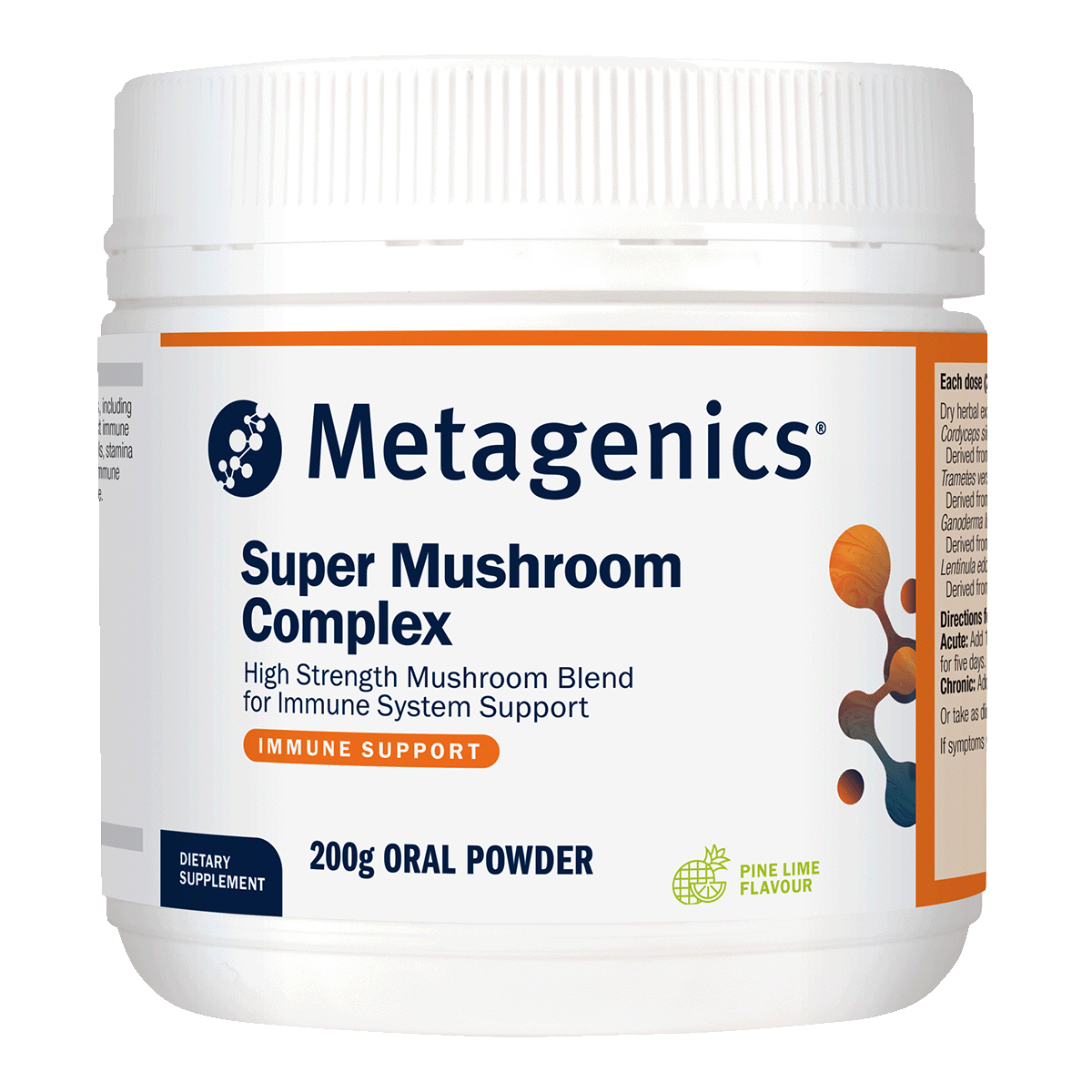
$12.53
Members Save
• Cordyceps enhances neutrophil oxidative burst and NET formation while reducing cortisol-induced immunosuppression, with clinical trials showing improved respiratory immunity at 1-3g daily
• Turkey Tail's PSK compounds improve neutrophil recruitment and macrophage killing ability, with studies showing enhanced immune cell counts at 3-6g daily
• Reishi facilitates crucial macrophage transition from inflammatory to repair states, supporting tissue healing and infection recovery in clinical studies