
Clinical Benefits
Clinical Benefits
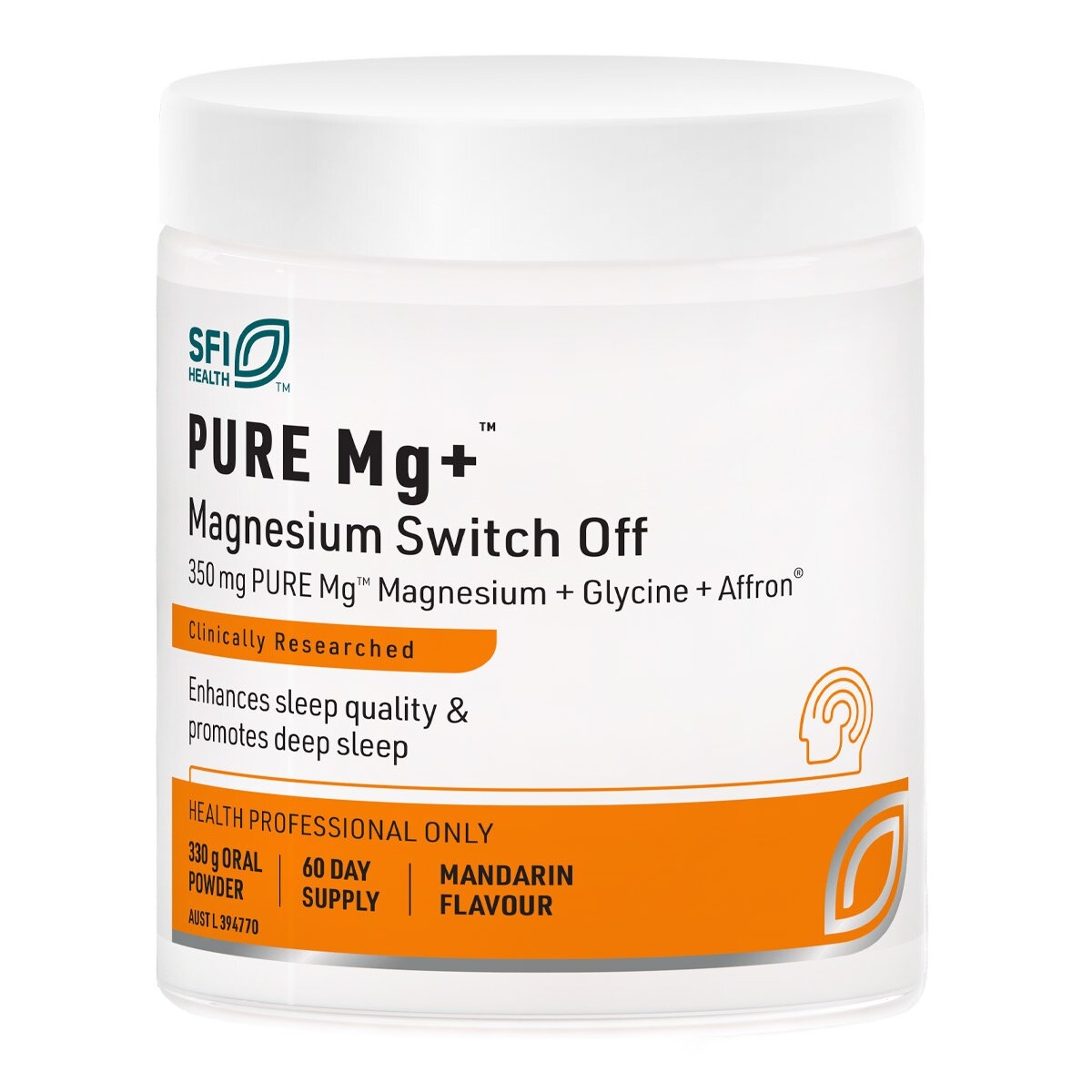
Pure Mg Switch Off combines scientifically-backed ingredients specifically formulated to address circadian disruption and support healthy sleep architecture. This comprehensive formula targets the key nutritional cofactors required for optimal melatonin synthesis while providing calming compounds that promote deeper, more restorative sleep stages.
Magnesium serves as a critical cofactor in the melatonin synthesis pathway, specifically supporting the conversion of 5-HTP to serotonin in Step 3 of the biochemical process. As detailed in the document, magnesium acts as a cofactor in decarboxylation enzymes, supporting serotonin production which is then converted to melatonin. Beyond synthesis support, magnesium also enhances GABA receptor function and is naturally found in sleep-supporting foods like pumpkin seeds, hemp seeds, and almonds. The three forms in this formula—citrate, glycinate, and amino acid chelate—provide optimal absorption and bioavailability.
Glycine works synergistically with magnesium to promote deeper sleep stages and reduce core body temperature, a natural signal for sleep onset. Research shows glycine supplementation can improve sleep quality by facilitating the transition into slow-wave sleep (N3), the deepest and most restorative stage where brain detoxification occurs through glymphatic activation. This stage is essential for cognitive recovery, emotional regulation, tissue repair, and immune function, typically comprising 20-40% of total sleep time.
Affron® Crocus sativus (Saffron) extract provides a clinically-studied approach to supporting mood and stress resilience, which directly impacts circadian rhythm regulation. Chronic stress and elevated cortisol levels can significantly impair melatonin synthesis by diverting tryptophan through the kynurenine pathway rather than toward melatonin production. As noted in the research, cortisol and inflammatory cytokines activate enzymes that push more tryptophan down the kynurenine pathway and away from melatonin synthesis [13]. By supporting healthy stress response, saffron helps preserve the tryptophan availability needed for optimal melatonin production.
The combination of these ingredients addresses the multifaceted nature of circadian disruption, from providing essential synthesis cofactors to supporting the neurobiological processes that govern sleep architecture. Clinical evidence demonstrates that when melatonin synthesis is optimized and stress-induced disruptions are minimized, individuals can experience up to 40% reduction in sleep onset latency and significant improvements in sleep efficiency [27]. This comprehensive approach ensures that both the biochemical requirements and physiological conditions for healthy circadian rhythm function are met.
Ingredients
Magnesium citrate
equiv. Magnesium
729.47 mg
116.71 mg
Magnesium glycinate
equiv. Magnesium
833.25 mg
116.65 mg
Magnesium amino acid chelate
equiv. Magnesium
583.28 mg
116.65 mg
Glycine
2 g
Affron® Crocus sativus (Saffron) ext.
equiv. Lepticrosalides
ext. dry conc. (stigma)
14 mg
0.49 mg
42.02 mg
Instructions
Instructions
Dosage
1 scoop (5.5 g) daily with 100 - 200 mL water; Consume up to 1 hour before bed
Duration
Minimum 4 weeks
Suitable for long-term sleep support, with dosing adjusted according to symptoms
Warnings
Always read the label
Dietary supplements should not replace a balanced diet
If symptoms persist, worsen or change unexpectedly, consult your healthcare professional
Contraindications
Contraindications
This supplement may interact with the following categories of medications, as well as specific active ingredients.
• Medications for diabetes
• Medications for high blood pressure
• Sedative medications
• Medications for depression
• Estrogens
• Levothyroxine
• Tamoxifen
• Warfarin
• Diuretics
Further details are provided below.
Please note that medications may be sold under different brand names, so check the listed active ingredients against your medication packaging.
Major Interactions
Medications for depression
• MAOIs
Fermented soy products such as tofu and soy sauce contain tyramine. Tyramine is a naturally occurring chemical that is involved in blood pressure regulation. MAOIs can decrease how quickly the body breaks down tyramine. Consuming more than 6 mg of tyramine while taking one of these medications can increase the risk of serious side effects, such as very high blood pressure. If you take one of these medications, avoid fermented soy products that contain high amounts of tyramine. Some common MAOIs include phenelzine, selegiline, and tranylcypromine.
Moderate Interactions
Medications for diabetes
• Glyburide
• Glipizide
• Insulin
• Sitagliptin
• Empagliflozin
• Semaglutide
• Dapagliflozin
Saffron might lower blood sugar levels. Taking saffron along with diabetes medications might cause blood sugar to drop too low. Monitor your blood sugar closely.
Medications for high blood pressure
• Amlodipine
• Ramipril
• Perindopril
• Metoprolol
• Losartan
• Hydrochlorothiazide
Saffron might lower blood pressure. Taking saffron along with medications that lower blood pressure might cause blood pressure to go too low. Monitor your blood pressure closely.
Sedative medications
• Diazepam
• Alprazolam
• Temazepam
• Zolpidem
• Zopiclone
• Promethazine
Saffron might cause sleepiness and slowed breathing. Some medications, called sedatives, can also cause sleepiness and slowed breathing. Taking saffron with sedative medications might cause breathing problems and/or too much sleepiness.
Caffeine
Soy contains the chemical genistein. Genistein might slow down how quickly the body gets rid of caffeine. This might increase the effects of caffeine.
Estrogens
• Oral contraceptive pill
• Estradiol
• Conjugated estrogens
• HRT combination products
Large amounts of soy might have some of the same effects as estrogen. Taking soy along with estrogen pills might decrease the effects of estrogen pills.
Levothyroxine
• Synthroid, others
Levothyroxine is used for low thyroid function. Soy seems to decrease how much levothyroxine is absorbed by the body in infants, but not adults. This might decrease the effects of levothyroxine in infants. The dose of levothyroxine may need to be adjusted if soy is being used regularly, such as in soy-based formulas. Otherwise, take levothyroxine and soy at least 4 hours apart.
Soy might lower blood sugar levels. Taking soy along with diabetes medications might cause blood sugar to drop too low. Monitor your blood sugar closely.
Soy might lower blood pressure. Taking soy along with medications that lower blood pressure might cause blood pressure to go too low. Monitor your blood pressure closely.
Progesterone
Some research shows that taking soy milk along with progesterone might increase bone loss in females with osteoporosis.
Tamoxifen
• Soltamox
• Used for: breast cancer treatment and prevention
Tamoxifen affects the activity of estrogen in the body. Soy seems to also affect estrogen activity in the body. Taking soy with tamoxifen might change the effects of tamoxifen. Speak with a healthcare provider if you are taking tamoxifen.
• Jantoven
• Used for: blood thinning, clot prevention
Warfarin is used to slow blood clotting. Soy has been reported to decrease the effects of warfarin. This might increase the risk of clotting. Be sure to have your blood checked regularly. The dose of your warfarin might need to be changed.
Diuretics
• Diuretic drugs
Soy can increase urine production. The effects seem to be similar to those of "Diuretics. " Taking soy along with "Diuretics" might increase the risk for side effects.
Minor Interactions
$13.55
Members Save
• Provides essential magnesium cofactors required for melatonin synthesis pathway, supporting the conversion of 5-HTP to serotonin
• Clinical studies show melatonin support can reduce sleep onset latency by up to 40% and improve next-day energy levels
• Glycine promotes deeper slow-wave sleep (N3 stage) essential for brain detoxification and cognitive recovery