
Clinical Benefits
Clinical Benefits
Pomegranate peel extract represents a potent natural intervention for musculoskeletal inflammation, containing concentrated polyphenolic compounds that target multiple inflammatory pathways simultaneously. Unlike pomegranate juice or seeds, the peel contains ellagic acid concentrations up to 40 times higher, making standardized peel extracts the most effective way to harness these therapeutic benefits for conditions involving chronic joint pain, cartilage degradation, and inflammatory tissue damage.
The anti-inflammatory effects of pomegranate peel extract (Punica granatum) work through several key mechanisms that address the root causes of musculoskeletal inflammation. The extract's primary bioactive compound, ellagic acid, powerfully suppresses NF-κB activation - the master switch that controls inflammatory gene expression - while simultaneously inhibiting COX-2 signaling pathways that produce pain-amplifying prostaglandins [43]. Additionally, the extract significantly reduces the activity of matrix metalloproteinases (MMPs), specifically MMP-1, MMP-2, MMP-3, and MMP-9, which are the tissue-degrading enzymes responsible for breaking down cartilage, collagen, and other connective tissue components in inflamed joints [43].
Clinical research demonstrates remarkable pain relief and joint protection benefits from pomegranate peel supplementation. In a rigorous rheumatoid arthritis study using standardized pomegranate peel extract at doses equivalent to 2.2g daily for humans, participants experienced a dramatic 58-75% reduction in pain behavior and heat sensitivity, with analgesic effects comparable to indomethacin - a pharmaceutical anti-inflammatory significantly stronger than ibuprofen [44]. The extract also achieved a 28% reduction in MMP-1, directly protecting joint tissues from inflammatory damage [44].
For osteoarthritis specifically, multiple clinical trials reveal consistent benefits across key measures of joint health and function. In a controlled study of 33 women consuming 1g daily for 8 weeks, participants experienced 20-25% improvements in knee function, 25-30% reductions in pain, and remarkable 35-40% decreases in C-reactive protein (CRP), a key inflammatory marker [45]. The extract also enhanced the body's antioxidant defenses by 20-40% while reducing oxidative stress by 25-30%, creating an environment more conducive to tissue repair [45].
Extensive animal studies provide additional evidence of pomegranate peel's cartilage-protective effects at clinically relevant doses. Daily supplementation equivalent to 5g for humans demonstrated 50-70% preservation of collagen and proteoglycans - the essential building blocks of healthy cartilage - while reducing COX activation and MMP-3 by 40-60% [45]. Perhaps most significantly, the extract increased Collagen II gene expression by 50%, specifically targeting joint cartilage regeneration [45]. In separate studies using equivalent doses of 2-2.2g daily, participants showed 40-60% reductions in key inflammatory mediators including MMP-2, MMP-9, COX-2, and TNF-α, alongside 40-50% decreases in prostaglandin E2 (PGE2) - the primary pain-signaling molecule [45]. These anti-inflammatory effects translated into measurable structural improvements, with 30-40% increases in cartilage thickness and bone density, and 50% decreases in joint inflammation [45].
Ingredients
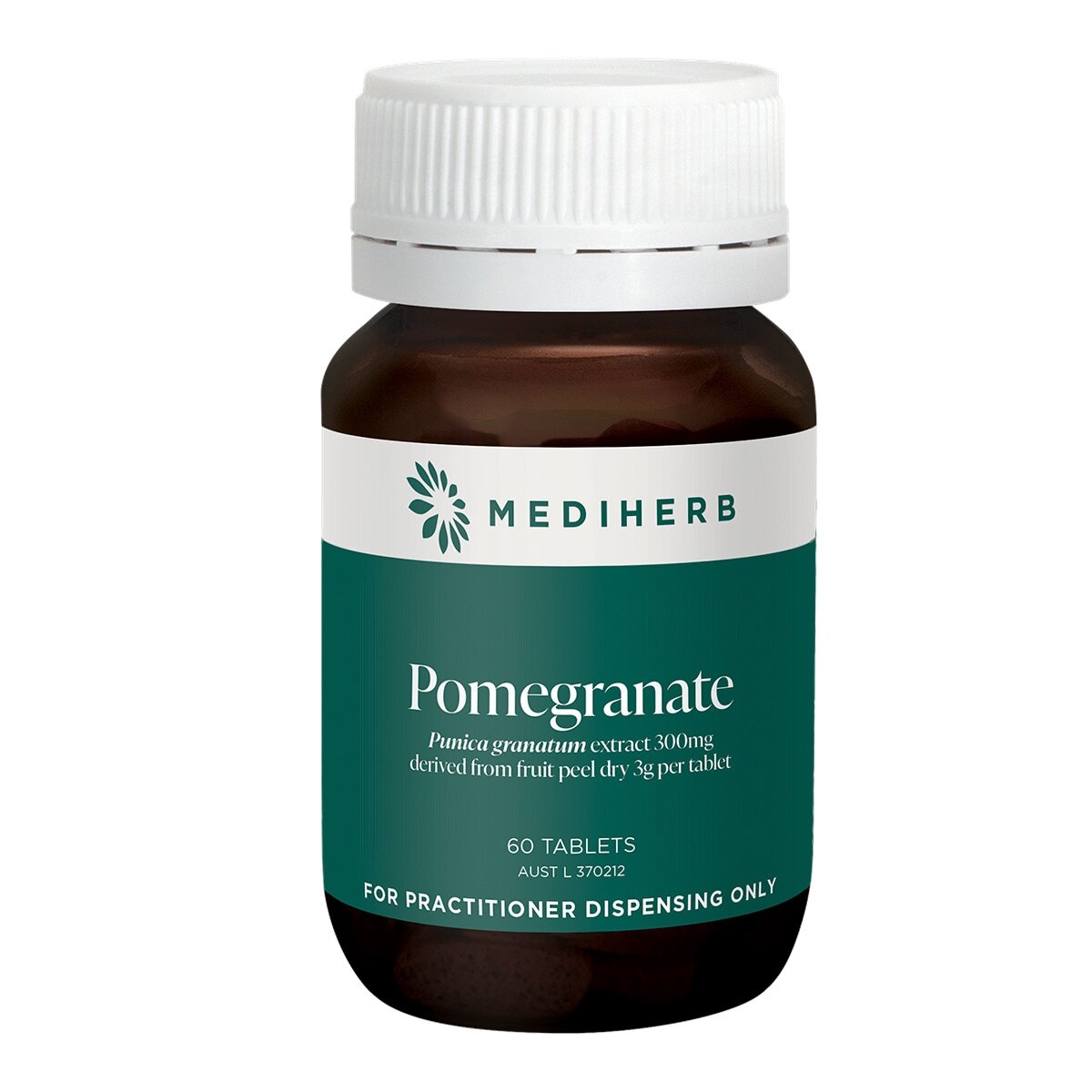
Punica granatum (Pomegranate) ext.
ext. equiv. dry (fruit peel)
300 mg
3 g
Instructions
Instructions
Dosage
1 tablet twice daily
Duration
Suitable for long-term use, with dosing adjusted according to symptoms
Warnings
For adult use only
Do not use for longer than 14 days
Do not exceed maximum recommended dose
Do not use if pregnant or likely to become pregnant and caution for use during lactation
Seek medical advice if diarrhoea persists for more than 48 hours in adults or children over 6 years, 6 hours in infants under 6 months, 12 hours in children under 3 years or 24 hours in children aged 3 - 6 years
Always read the label
Dietary supplements should not replace a balanced diet
If symptoms persist, worsen or change unexpectedly, consult your healthcare professional
Contraindications
Contraindications
This supplement may interact with the following categories of medications, as well as specific active ingredients.
• Medications changed by the liver - refer list
• Medications for high blood pressure
• Rosuvastatin
• Warfarin
• Tolbutamide
Further details are provided below.
Please note that medications may be sold under different brand names, so check the listed active ingredients against your medication packaging.
Major Interactions
Moderate Interactions
Medications changed by the liver
• Tramadol
• Metoprolol
• Fluoxetine
• Paroxetine
• Tamoxifen
• Amitriptyline
Some medications are changed and broken down by the liver. Pomegranate might change how quickly the liver breaks down these medications. If you are taking medications metabolised by the liver, monitor for any changes in how your medication affects you.
• Atorvastatin
• Simvastatin
• Amlodipine
• Diltiazem
• Cyclosporine
• Tacrolimus
• Midazolam
• Alprazolam
• Rivaroxaban
• Some HIV antiretrovirals
Medications for high blood pressure
• ACE inhibitors
Pomegranate might lower blood pressure. Taking pomegranate along with medications that lower blood pressure might cause blood pressure to go too low. Monitor your blood pressure closely.
• Amlodipine
• Ramipril
• Perindopril
• Metoprolol
• Losartan
• Hydrochlorothiazide
Rosuvastatin
Rosuvastatin is broken down by the body. Taking pomegranate might decrease how quickly the body breaks down rosuvastatin. This might increase the effects and side effects of rosuvastatin.
• Jantoven
• Used for: blood thinning, clot prevention
Warfarin is broken down by the body. Drinking pomegranate juice might decrease how quickly the body breaks down warfarin. This might increase the effects and side effects of warfarin.
Minor Interactions
Medications changed by the liver
• Warfarin
• Ibuprofen
• Diclofenac
• Glipizide
• Phenytoin
• Losartan
• Celecoxib
Some medications are changed and broken down by the liver. Pomegranate might change how quickly the liver breaks down these medications. If you are taking medications metabolised by the liver, monitor for any changes in how your medication affects you.
Tolbutamide
• Orinase
Tolbutamide is broken down by the body. Taking pomegranate might decrease how quickly the body breaks down tolbutamide. This might increase the effects and side effects of tolbutamide.
$8.66
Members Save
• Achieves 58-75% reduction in pain comparable to prescription anti-inflammatories stronger than ibuprofen
• Preserves 50-70% of cartilage collagen and proteoglycans while reducing tissue-damaging enzymes by 40-60%
• Reduces inflammatory markers by 35-40% while improving joint function by 20-25% in clinical studies