
Clinical Benefits
Clinical Benefits
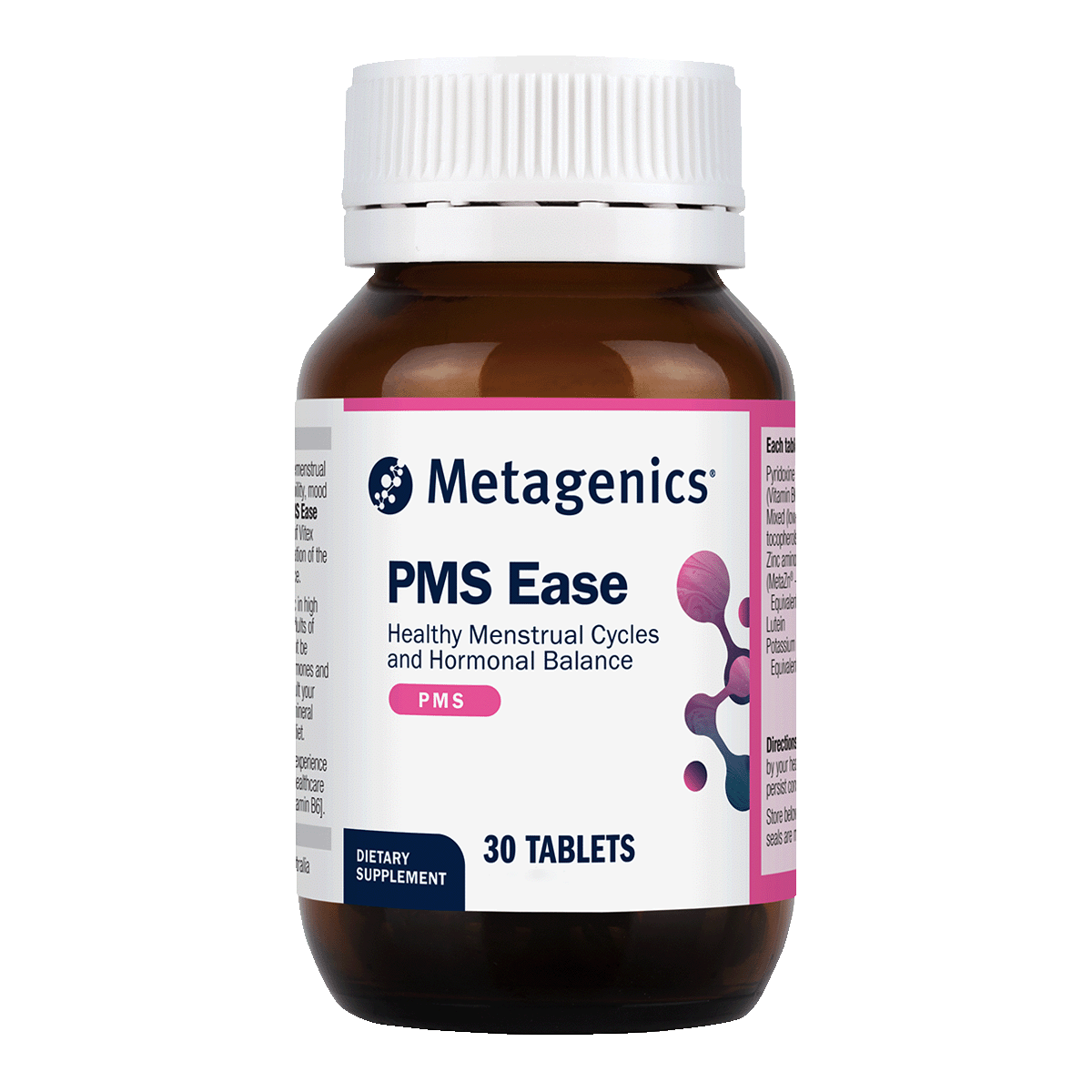
PMS Ease is specifically formulated to address low progesterone, a condition that affects approximately 47.8% of women worldwide and contributes significantly to premenstrual syndrome (PMS) symptoms [63]. Low progesterone occurs when the corpus luteum—the temporary gland formed after ovulation—fails to produce adequate amounts of this crucial hormone, leading to emotional instability, menstrual irregularities, and physical discomfort in the days leading up to menstruation.
Vitamin B6 (Pyridoxine) plays a fundamental role in progesterone production as it acts as a coenzyme for the key enzyme 3β-HSD, which converts pregnenolone into progesterone. This essential nutrient is crucial for maintaining healthy luteal cells within the corpus luteum and also supports estrogen clearance, helping keep prolactin levels in check—important since high prolactin can suppress ovulation. Clinical evidence demonstrates that 40mg of B6 taken twice daily significantly improves PMS symptoms, with reductions in irritability, tension, sleep problems, mood swings, food cravings, depression, forgetfulness, anxiety, poor concentration, crying, and fatigue.
Zinc bisglycinate provides highly bioavailable zinc, which plays a critical role in the pituitary gland's release of luteinizing hormone (LH) and follicle-stimulating hormone (FSH)—both essential for ovulation and the formation of a healthy corpus luteum for optimal progesterone production. In a clinical study of 142 women receiving 50mg of elemental zinc daily for three consecutive menstrual cycles, participants experienced significant reductions in PMS symptom scores throughout the study, with a 9.5% decrease in the first cycle, 6% in the second, and 2.6% in the third cycle, totaling an 18% reduction in PMS symptoms over 3 months [42].
Withania somnifera (Ashwagandha) addresses one of the key underlying causes of low progesterone: chronic stress and elevated cortisol levels. Chronic cortisol elevation disrupts reproductive function through suppression of GnRH pulsatility, leading to reduced LH and FSH secretion, which impairs follicular development and ovulation [35,36,37]. A clinical study found that 300mg of Ashwagandha taken twice daily significantly reduces serum cortisol levels in adults experiencing chronic stress over 60 days, with a 27.9% decrease in serum cortisol compared to only a 7.9% decrease in the placebo group [56]. Additionally, Withania has shown beneficial effects in treating low progesterone by enhancing LH and FSH activity, supporting follicle growth and size, and decreasing both estrogen and prolactin levels by inhibiting aromatase activity [42].
Vitex agnus-castus (Chasteberry) specifically targets high prolactin levels, a common cause of low progesterone. This herb contains active compounds such as agnuside, aucubin, and casticin, which mimic dopamine within the brain and suppress prolactin release. By lowering prolactin levels, Chasteberry helps restore normal GnRH activity, leading to more balanced secretion of LH and FSH, which is critical for healthy follicular development, ovulation, and corpus luteum formation. Some studies suggest that Chasteberry may also mildly increase LH levels, further promoting the luteinization of granulosa cells and supporting stronger progesterone production. Systematic reviews of over 1,700 participants found Chasteberry to be safe and effective for PMS and PMDD, particularly for somatic, depressive, and anxiety-related symptoms, at doses ranging from 4mg to 41mg per day [42].
The formula is completed with supporting nutrients including iodine and selenium, which are essential for thyroid hormone production—critical since hypothyroidism can significantly impact progesterone levels through disrupted pituitary feedback regulation [41,42,43,44]. Vitamin E provides antioxidant support, lutein offers cellular protection, and ginger extract may help with digestive comfort and inflammation reduction, creating a comprehensive approach to hormonal balance and PMS management.
[35]>https://pubmed.ncbi.nlm.nih.gov/31461711/
[36]>https://pubmed.ncbi.nlm.nih.gov/105533/
[37]>https://pmc.ncbi.nlm.nih.gov/articles/PMC10068287/
[41]>https://pubmed.ncbi.nlm.nih.gov/26297348/
[42]>https://www.metagenicsinstitute.com.au/tech-data/vitex-ginger-withania
[43]>https://pubmed.ncbi.nlm.nih.gov/19298732/
[44]>https://www.thejgog.com/wp-content/uploads/securepdfs/2021/12/06_JGOG_Thyroid_article_final.pdf
Ingredients
Pyridoxine hydrochloride (Vitamin B6)
equiv. Pyridoxine
50 mg
41.14 mg
Tocopherols concentrate - mixed (low-alpha type) (Vitamin E)
50 mg
Meta Zn® Zinc bisglycinate (Zinc amino acid chelate)
equiv. Zinc
125 mg
25 mg
Lutein
5 mg
Potassium iodide (Iodine)
equiv. Iodine
196 μg
150 μg
Selenomethionine (Selenium)
equiv. Selenium
250 μg
100 μg
Withania somnifera ext.
ext. equiv. dry (root)
180 mg
4.5 g
Vitex agnus-castus (Chasteberry) ext.
ext. equiv. dry (fruit)
44 mg
2 g
Zingiber officinale (Ginger) ext.
ext. equiv. dry (rhizome)
25 mg
1 g
Instructions
Instructions
Dosage
1 tablet daily with a meal
Duration
Minimum duration of 8 weeks, with continuation guided by symptoms
Suitable for long-term PMS + PMDD management
Warnings
Always read the label
Dietary supplements should not replace a balanced diet
If symptoms persist, worsen or change unexpectedly, consult your healthcare professional
Vitex agnus-castus may affect hormones and medicines such as oral contraceptives
Contains vitamin B6; stop taking this medication if you experience tingling, burning or numbness and see your healthcare practitioner as soon as possible
Contains zinc which may be dangerous if taken in large amounts or for a long period
Contains iodine; caution in concurrent use with thyroid medication
Contains selenium which is toxic in high doses; a daily dose of 150 µg for adults of selenium from dietary supplements should not be exceeded
Contraindications
Contraindications
This supplement may interact with the following categories of medications, as well as specific active ingredients.
• Medications that decrease the immune system
• Medications that slow blood clotting
• Sedative medications
• Warfarin
• Medications for an overactive thyroid
• Lithium
• Medications for diabetes
• Medications for high blood pressure
• Medications that can harm the liver
• Medications changed by the liver - refer list
• Losartan
• Nifedipine
• Phenprocoumon
• Medications moved by pumps in cells - refer list
• Metronidazole
• Cyclosporine
• Medications for cancer
• Selumetinib
• Estrogens
• Medications for mental conditions
• Medications used for Parkinson disease
• Metoclopramide
Further details are provided below.
Please note that medications may be sold under different brand names, so check the listed active ingredients against your medication packaging.
Major Interactions
Moderate Interactions
Medications that decrease the immune system
• Cyclosporine
• Tacrolimus
• Mycophenolate
• Prednisone
• Methotrexate
• Azathioprine
Selenium can increase the activity of the immune system. Some medications, such as those used after a transplant, decrease the activity of the immune system. Taking selenium along with these medications might decrease the effects of these medications.
Medications that slow blood clotting
• Heparin
• Rivaroxaban
• Apixaban
• Dabigatran
• Clopidogrel
Selenium might slow blood clotting. Taking selenium along with medications that also slow blood clotting might increase the risk of bruising and bleeding.
Niacin
Taking niacin along with the drug simvastatin can increase good cholesterol levels. Taking niacin plus simvastatin along with selenium and other antioxidants can decrease the effects of niacin and simvastatin on good cholesterol levels. It is unknown if selenium alone decreases the effects of niacin plus simvastatin on good cholesterol levels.
Sedative medications
• Diazepam
• Alprazolam
• Temazepam
• Zolpidem
• Zopiclone
• Promethazine
Selenium might reduce how quickly the body breaks down sedative medications. Taking selenium with these medications might increase the effects and side effects of these medications.
• Jantoven
• Used for: blood thinning, clot prevention
Selenium might slow blood clotting. Selenium might also increase the effects of warfarin in the body. Taking selenium along with warfarin might increase the chances of bruising and bleeding.
Large amounts of iodine can decrease thyroid function. Lithium can also decrease thyroid function. Taking iodine along with lithium might decrease thyroid function too much. Do not take large amounts of iodine if you are taking lithium.
Medications for an overactive thyroid
• Antithyroid drugs
Iodine can increase or decrease thyroid function. Taking iodine along with medications for an overactive thyroid might change the effects of these medications. Do not take iodine supplements if you are taking medications for an overactive thyroid, unless recommended by a healthcare provider.
Medications for diabetes
• Glyburide
• Glipizide
• Insulin
• Sitagliptin
• Empagliflozin
• Semaglutide
• Dapagliflozin
Ashwagandha might lower blood sugar levels. Taking ashwagandha along with diabetes medications might cause blood sugar to drop too low. Monitor your blood sugar closely.
Medications for high blood pressure
• Amlodipine
• Ramipril
• Perindopril
• Metoprolol
• Losartan
• Hydrochlorothiazide
Ashwagandha might lower blood pressure. Taking ashwagandha along with medications that lower blood pressure might cause blood pressure to go too low. Monitor your blood pressure closely.
Medications that can harm the liver
• Acetaminophen / Paracetamol
• Methotrexate
• Atorvastatin
• Simvastatin
• Isoniazid
Ashwagandha might harm the liver. Some medications can also harm the liver. Taking ashwagandha along with a medication that can harm the liver might increase the risk of liver damage.
Ashwagandha can increase the activity of the immune system. Some medications, such as those used after a transplant, decrease the activity of the immune system. Taking ashwagandha along with these medications might decrease the effects of these medications.
Ashwagandha might cause sleepiness and slowed breathing. Some medications, called sedatives, can also cause sleepiness and slowed breathing. Taking ashwagandha with sedative medications might cause breathing problems and/or too much sleepiness.
Thyroid hormone
The body naturally produces thyroid hormones. Ashwagandha might increase how much thyroid hormone the body produces. Taking ashwagandha with thyroid hormone pills might cause too much thyroid hormone in the body, and increase the effects and side effects of thyroid hormone.
Losartan
• Cozaar
• Hyzaar
• Used for: high blood pressure, heart failure
Ginger can increase how much losartan the body absorbs. Taking ginger along with losartan might increase the effects and side effects of losartan.
Ginger might lower blood sugar levels. Taking ginger along with diabetes medications might cause blood sugar to drop too low. Monitor your blood sugar closely.
Ginger might slow blood clotting. Taking ginger along with medications that also slow blood clotting might increase the risk of bruising and bleeding.
Nifedipine
• Procardia
Taking ginger along with nifedipine might slow blood clotting and increase the chances of bruising and bleeding.
Phenprocoumon
• Marcoumar, others
Phenprocoumon is used to slow blood clotting. Ginger can also slow blood clotting. Taking ginger along with phenprocoumon might increase the chances of bruising and bleeding. Be sure to have your blood checked regularly. The dose of your phenprocoumon might need to be changed.
Warfarin is used to slow blood clotting. Ginger can also slow blood clotting. Taking ginger along with warfarin might increase the chances of bruising and bleeding. Be sure to have your blood checked regularly. The dose of your warfarin might need to be changed.
Cyclosporine
• Restasis
• Used for: organ transplant, autoimmune conditions
Taking large amounts of vitamin E along with cyclosporine might increase how much cyclosporine the body absorbs. This might increase the effects and side effects of cyclosporine.
Medications changed by the liver
• Atorvastatin
• Simvastatin
• Amlodipine
• Diltiazem
• Cyclosporine
• Tacrolimus
• Midazolam
• Alprazolam
• Rivaroxaban
• Some HIV antiretrovirals
Some medications are changed and broken down by the liver. Vitamin E might change how quickly the liver breaks down these medications. If you are taking medications metabolised by the liver, monitor for any changes in how your medication affects you.
Medications for cancer
• Cyclophosphamide
• Chlorambucil
• Melphalan
• Busulfan
• Temozolomide
Vitamin E is an antioxidant. There is some concern that antioxidants might decrease the effects of some medications used for cancer. If you are taking medications for cancer, check with your healthcare provider before taking vitamin E.
Vitamin E might slow blood clotting. Taking vitamin E along with medications that also slow blood clotting might increase the risk of bruising and bleeding.
Taking niacin along with the drug simvastatin can increase good cholesterol levels. Taking niacin plus simvastatin along with vitamin E and other antioxidants can decrease the effects of niacin and simvastatin on good cholesterol levels. It is unknown if vitamin E alone decreases the effects of niacin plus simvastatin on good cholesterol levels.
Selumetinib
• Koselugo
Selumetinib, a drug used for cancer, contains vitamin E. Taking selumetinib with vitamin E-containing supplements can result in an unsafe dose of vitamin E. This could increase the risk of bleeding.
Warfarin is used to slow blood clotting. Vitamin E can also slow blood clotting. Taking vitamin E along with warfarin can increase the chances of bruising and bleeding. Be sure to have your blood checked regularly. The dose of your warfarin might need to be changed.
Estrogens
• Oral contraceptive pill
• Estradiol
• Conjugated estrogens
• HRT combination products
Vitex agnus-castus seems to change hormone levels in the body. Taking vitex agnus-castus along with estrogen pills might decrease the effects of estrogen pills.
Medications for mental conditions
• Olanzapine
• Quetiapine
• Risperidone
• Clozapine
• Haloperidol
• Aripiprazole
Vitex agnus-castus seems to affect a chemical in the brain called dopamine. Some medications for mental disorders help to decrease dopamine. Taking vitex agnus-castus along with these medications might decrease the effects of these medications.
Medications used for Parkinson disease
• Dopamine agonists
Vitex agnus-castus contains chemicals that affect the brain. These chemicals affect the brain similarly to some medications used for Parkinson disease. Taking vitex agnus-castus with these medications might increase the effects and side effects of the medications used for Parkinson disease.
Metoclopramide
Vitex agnus-castus seems to affect a certain brain chemical called dopamine. Metoclopramide also affects dopamine. Taking vitex agnus-castus along with metoclopramide might decrease the effects of metoclopramide.
Minor Interactions
Medications changed by the liver
• Atorvastatin
• Simvastatin
• Amlodipine
• Diltiazem
• Cyclosporine
• Tacrolimus
• Midazolam
• Alprazolam
• Rivaroxaban
• Some HIV antiretrovirals
Some medications are changed and broken down by the liver. Ashwagandha might change how quickly the liver breaks down these medications. If you are taking medications metabolised by the liver, monitor for any changes in how your medication affects you.
• Caffeine
• Clozapine
• Olanzapine
• Theophylline
• Tizanidine
• Duloxetine
• Ramelteon
Some medications are changed and broken down by the liver. Ginger might change how quickly the liver breaks down these medications. If you are taking medications metabolised by the liver, monitor for any changes in how your medication affects you.
• Cytochrome P450 2B6 substrates
• Warfarin
• Ibuprofen
• Diclofenac
• Glipizide
• Phenytoin
• Losartan
• Celecoxib
Medications for high blood pressure
• Amlodipine
• Diltiazem
• Verapamil
• Felodipine
• Nifedipine
Ginger might lower blood pressure. Taking ginger along with medications that lower blood pressure might cause blood pressure to go too low. Monitor your blood pressure closely.
Medications moved by pumps in cells
• Digoxin
• Dabigatran
• Cyclosporine
• Fexofenadine
• Loperamide
• Some HIV antiretrovirals
Some medications are moved in and out of cells by pumps. Ginger might change how these pumps work and change how much medication stays in the body. In some cases, this might change the effects and side effects of a medication.
Metronidazole
• Flagyl
Ginger can increase how much metronidazole the body absorbs. Taking ginger along with metronidazole might increase the effects and side effects of metronidazole.
$11.74
Members Save
• Vitamin B6 at therapeutic doses significantly reduces PMS symptoms including irritability, mood swings, anxiety, and food cravings while supporting progesterone synthesis
• Clinical studies show zinc supplementation reduces PMS symptoms by 18% over 3 months through enhanced LH and FSH production
• Ashwagandha decreases stress-related cortisol levels by 27.9%, helping restore normal reproductive hormone function and progesterone production