
Clinical Benefits
Clinical Benefits
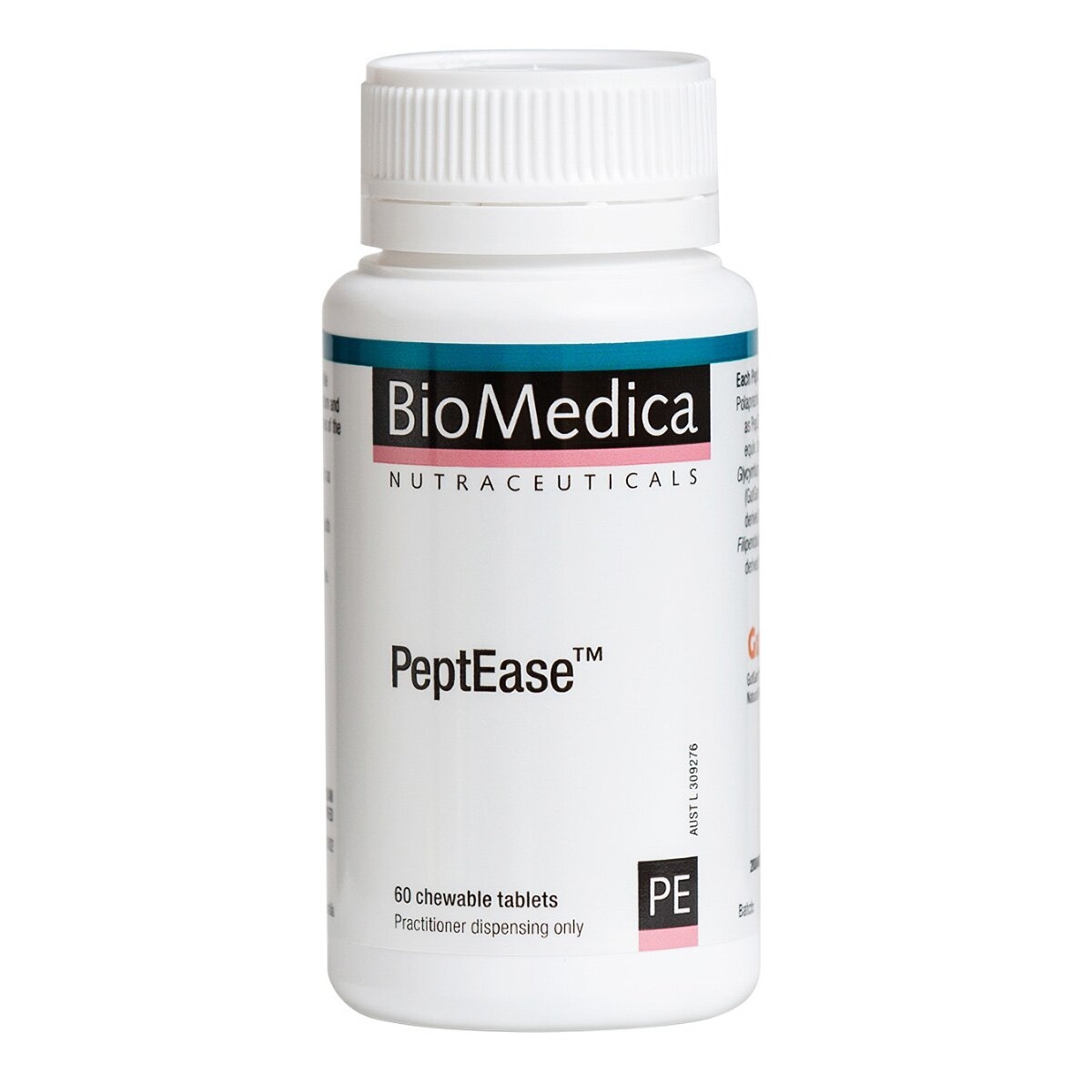
PeptEase is a targeted formulation designed to address functional dyspepsia (FD), a condition affecting up to 30% of the western population that causes chronic upper abdominal pain, bloating, nausea, and early satiety [2]. This comprehensive approach targets multiple pathways involved in FD pathophysiology, including mucosal protection, inflammation reduction, and gastric motility enhancement.
PepZinGI® Zinc L-carnosine (Polaprezinc) represents a clinically validated approach to gastric healing and protection. This unique chelated compound adheres selectively to damaged mucosa, releasing zinc and carnosine locally while exerting anti-inflammatory, antioxidant, and cytoprotective effects [37]. In clinical trials addressing gastric ulcers, zinc L-carnosine administered at 75 mg twice daily for 8 weeks demonstrated significant symptom improvement and ulcer healing, with endoscopic healing rates ranging from 60-80% [37]. For gastritis, a condition that overlaps with functional dyspepsia, doses of 50 mg three times daily over 2 weeks led to endoscopic improvement in 75% of participants and symptomatic improvement in over 80% [37]. The compound's selective binding to damaged areas enhances heat shock protein expression, which assists in cellular repair and protection under stress conditions.
GutGard® deglycyrrhizinised licorice extract provides dual benefits for functional dyspepsia through both symptom relief and antimicrobial action. This specialized form has had glycyrrhizin removed to eliminate blood pressure concerns while maintaining therapeutic efficacy. GutGard® inhibits inflammatory prostaglandin synthesis, which plays a central role in triggering gastric pain and inflammation by sensitizing nerve endings and promoting mucosal irritation [34]. In a placebo-controlled trial involving 50 patients with FD, participants receiving 75 mg of GutGard® twice daily experienced a 39% reduction in total symptom scores by day 15, increasing to 50% by day 30 [34]. Additionally, GutGard® demonstrates significant anti-Helicobacter pylori activity, which is present in up to 50% of dyspepsia cases [3][7]. In clinical trials, 150 mg daily of GutGard® achieved a 56% H. pylori eradication rate over 60 days, making it 14 times more effective than placebo [36].
Meadowsweet (Filipendula ulmaria) extract contributes anti-inflammatory and gastric-protective properties through its naturally occurring salicylate derivatives, tannins, and flavonoids [5]. These compounds work synergistically to reduce gastric hyperacidity, coat irritated mucosa, and provide relief from burning or sour regurgitation commonly experienced in functional dyspepsia [5]. Meadowsweet has been traditionally used in herbal gastroenterology for acid-sensitive dyspepsia, where its astringent properties help protect the gastric lining from irritation while supporting normal digestive function.
This combination of clinically researched ingredients addresses the multifactorial nature of functional dyspepsia, targeting mucosal healing, inflammation reduction, and potential underlying H. pylori infection that contributes to symptom persistence in many patients.
[2]>https://www.biomedica.com.au/media/contentmanager/content/Upper_Digestive_Complaints
[3]>https://www.metagenicsinstitute.com.au/tech-data/bcm95-turmeric-gutgard-liquorice
[7]>https://www.ncbi.nlm.nih.gov/books/NBK554563/
[34]>https://pmc.ncbi.nlm.nih.gov/articles/PMC4928719/
Ingredients
PepZinGI® Zinc L-carnosine (Polaprezinc)
equiv. Zinc
26.19 mg
5.63 mg
GutGard® Glycyrrhiza glabra deglycyrrhizinised (Licorice) ext.
ext. equiv. dry (root)
50 mg
1.25 g
Filipendula ulmaria (Meadowsweet) ext.
ext. equiv. dry (herb top)
80 mg
400 mg
Instructions
Instructions
Dosage
1 tablet 3 times daily
Duration
4 weeks
Suitable for long-term prevention of upper digestive disorders
Warnings
Contains no more than 0.001% methyl salicylate
Always read the label
Dietary supplements should not replace a balanced diet
If symptoms persist, worsen or change unexpectedly, consult your healthcare professional
Contains zinc which may be dangerous if taken in large amounts or for a long period
Contraindications
Contraindications
This supplement may interact with the following categories of medications, as well as specific active ingredients.
• Choline Magnesium Trisalicylate
• Salsalate
• Digoxin
• Estrogens
• Medications changed by the liver - refer list
• Medications for high blood pressure
• Medications for inflammation
• Medications moved by pumps in cells - refer list
• Midazolam
• Paclitaxel
• Warfarin
• Diuretics
• Methotrexate
Further details are provided below.
Please note that medications may be sold under different brand names, so check the listed active ingredients against your medication packaging.
Major Interactions
Moderate Interactions
Choline Magnesium Trisalicylate
Meadowsweet contains chemicals that are similar to choline magnesium trisalicylate. Taking meadowsweet along with choline magnesium trisalicylate might increase the effects and side effects of choline magnesium trisalicylate.
Salsalate
Meadowsweet contains chemicals that are similar to salsalate. Taking meadowsweet along with salsalate might increase the effects and side effects of salsalate.
Minor Interactions
$15.92
Members Save
• Zinc L-carnosine achieved 75% endoscopic improvement in gastritis patients and 60-80% ulcer healing rates in clinical trials
• GutGard® licorice extract reduced functional dyspepsia symptoms by 50% within 30 days in placebo-controlled studies
• GutGard® demonstrated 56% H. pylori eradication rate, addressing a key underlying cause found in up to 50% of dyspepsia cases