
Clinical Benefits
Clinical Benefits
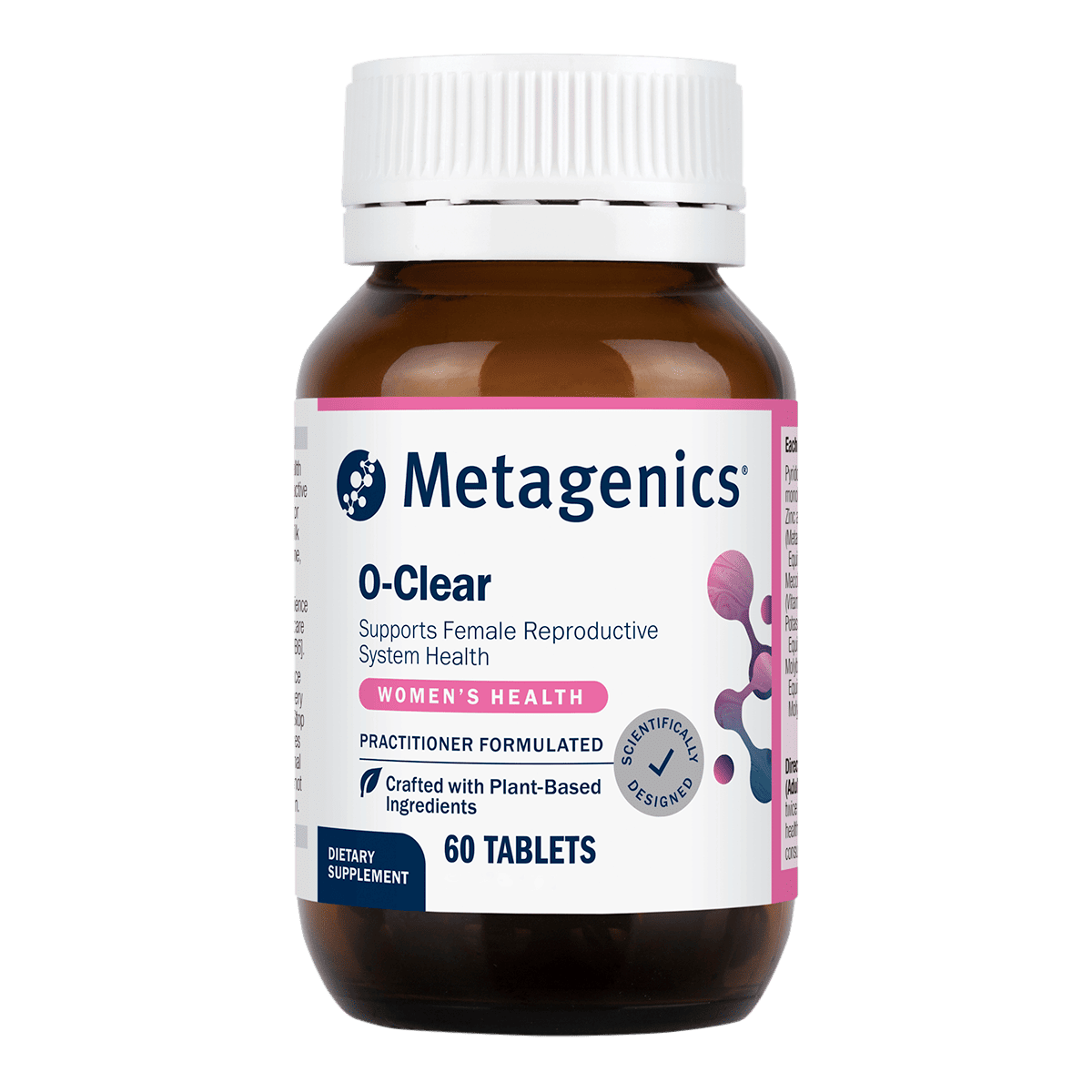
O-Clear is specifically formulated to support healthy estrogen metabolism and balance in conditions associated with hyperestrogenism, including endometriosis. This comprehensive blend combines targeted nutrients and botanical extracts that work synergistically to support the liver's natural detoxification pathways and help maintain optimal hormone balance.
A key component of this formula is the methylating nutrient complex featuring Pyridoxine (Vitamin B6), Cyanocobalamin (Vitamin B12), and supporting cofactors. These nutrients are essential cofactors for catechol-O-methyltransferase (COMT), the enzyme responsible for converting 2-OH and 4-OH estrogens to their inactive metabolites. This process aids in estrogen clearance and is particularly helpful in estrogen-dependent conditions such as fibroids and endometriosis [36]. The inclusion of Zinc bisglycinate specifically supports men with hyperestrogenism, as zinc has been shown to inhibit aromatase activity, thereby reducing the conversion of testosterone to estrogen and helping maintain healthy estrogen levels [39],[40].
The botanical blend features St Mary's Thistle (Silybum marianum), which contains silymarin compounds that support liver detoxification pathways crucial for estrogen metabolism. Turmeric (Curcuma longa) provides curcumin, which has been found to selectively activate ERβ - a protective, anti-proliferative, and anti-inflammatory estrogen receptor that opposes the more problematic ERα receptor, making it particularly beneficial for those with heavy bleeding. Curcumin also activates Nrf2, which increases the expression of several detoxification enzymes including glutathione to support the detoxification and elimination of estrogen [38].
Rosemary (Rosmarinus officinalis) contains carnosol, which increases liver detoxification of estradiol via glucuronidation pathways. Additionally, rosemary directly antagonizes ERα, which is involved in cell proliferation and growth, making it particularly beneficial for those suffering from endometriosis or breast swelling [38]. The Soybean extract (Glycine max) provides genistein, which has a binding affinity of up to 87% with ERβ in contrast to 4% for ERα. By interacting preferentially with ERβ, genistein down-regulates ERα activation, blocking the more potent and proliferative effects of natural estrogen. Studies have found soy consumption alters detoxification and increases 2-OH production over problematic 16-OH, while also mitigating endometriosis by down-regulating genes involved in tumor cell migration and inhibiting vascular endothelial growth factor (VEGF) [38].
The formula is completed with essential trace minerals including Iodine and Molybdenum. Iodine is particularly important when using soy products, as soy contains goitrogens that can interfere with iodine uptake into the thyroid for hormone synthesis - a consideration that's especially relevant since elevated estrogen also blocks thyroid hormones. Molybdenum supports Phase II liver detoxification processes that are crucial for hormone metabolism.
Ingredients
Pyridoxal 5-phosphate monohydrate (P5P)
equiv. Pyridoxine
39 mg
24.88 mg
Meta Zn® Zinc bisglycinate (Zinc amino acid chelate)
equiv. Zinc
60 mg
12 mg
Cyanocobalamin (Vitamin B12)
250 µg
Potassium iodide (Iodine)
equiv. Iodine
131 µg
100 µg
Molybdenum trioxide
equiv. Molybdenum
94 µg
62.5 µg
Glycine max (Soybean) ext.
ext. equiv. dry (seed)
144 mg
23 g
Silybum marianum (St Mary's Thistle) ext.
ext. equiv. dry (seed)
43 mg
3 g
BCM-95™ Turmeric Curcuma longa (Turmeric) ext.
ext. equiv. dry (rhizome)
60 mg
1.5 g
Rosmarinus officinalis (Rosemary) ext.
ext. equiv. dry (leaf)
100 mg
1 g
Instructions
Instructions
Dosage
1 tablet twice daily with meals
Duration
Suitable for long-term management of endometriosis
Warnings
Contains soy
Dietary supplements should not replace a balanced diet
Contains vitamin B6; stop taking this medication if you experience tingling, burning or numbness and see your healthcare practitioner as soon as possible
Contains zinc which may be dangerous if taken in large amounts or for a long period
Contains iodine; caution in concurrent use with thyroid medication
Contraindications
Contraindications
This supplement may interact with the following categories of medications, as well as specific active ingredients.
• Medications for depression
• Estrogens
• Levothyroxine
• Medications for diabetes
• Medications for high blood pressure
• Tamoxifen
• Warfarin
• Diuretics
• Medications for an overactive thyroid
• Lithium
• Medications changed by the liver - refer list
• Medications for cancer
• Medications moved by pumps in cells - refer list
• Medications that can harm the liver
• Medications that slow blood clotting
• Methotrexate
• Sulfasalazine
• Tacrolimus
• Talinolol
• Tramadol
• Docetaxel
• Glyburide
• Losartan
• Norfloxacin
• Paclitaxel
• Choline Magnesium Trisalicylate
• Salsalate
• Morphine
• Raloxifene
• Sirolimus
• Indinavir
• Medications used for lowering cholesterol
Further details are provided below.
Please note that medications may be sold under different brand names, so check the listed active ingredients against your medication packaging.
Major Interactions
Medications for depression
• MAOIs
Fermented soy products such as tofu and soy sauce contain tyramine. Tyramine is a naturally occurring chemical that is involved in blood pressure regulation. MAOIs can decrease how quickly the body breaks down tyramine. Consuming more than 6 mg of tyramine while taking one of these medications can increase the risk of serious side effects, such as very high blood pressure. If you take one of these medications, avoid fermented soy products that contain high amounts of tyramine. Some common MAOIs include phenelzine, selegiline, and tranylcypromine.
Moderate Interactions
Caffeine
Soy contains the chemical genistein. Genistein might slow down how quickly the body gets rid of caffeine. This might increase the effects of caffeine.
Estrogens
• Oral contraceptive pill
• Estradiol
• Conjugated estrogens
• HRT combination products
Large amounts of soy might have some of the same effects as estrogen. Taking soy along with estrogen pills might decrease the effects of estrogen pills.
Levothyroxine
• Synthroid, others
Levothyroxine is used for low thyroid function. Soy seems to decrease how much levothyroxine is absorbed by the body in infants, but not adults. This might decrease the effects of levothyroxine in infants. The dose of levothyroxine may need to be adjusted if soy is being used regularly, such as in soy-based formulas. Otherwise, take levothyroxine and soy at least 4 hours apart.
Medications for diabetes
• Glyburide
• Glipizide
• Insulin
• Sitagliptin
• Empagliflozin
• Semaglutide
• Dapagliflozin
Soy might lower blood sugar levels. Taking soy along with diabetes medications might cause blood sugar to drop too low. Monitor your blood sugar closely.
Medications for high blood pressure
• Amlodipine
• Ramipril
• Perindopril
• Metoprolol
• Losartan
• Hydrochlorothiazide
Soy might lower blood pressure. Taking soy along with medications that lower blood pressure might cause blood pressure to go too low. Monitor your blood pressure closely.
Progesterone
Some research shows that taking soy milk along with progesterone might increase bone loss in females with osteoporosis.
Tamoxifen
• Soltamox
• Used for: breast cancer treatment and prevention
Tamoxifen affects the activity of estrogen in the body. Soy seems to also affect estrogen activity in the body. Taking soy with tamoxifen might change the effects of tamoxifen. Speak with a healthcare provider if you are taking tamoxifen.
• Jantoven
• Used for: blood thinning, clot prevention
Warfarin is used to slow blood clotting. Soy has been reported to decrease the effects of warfarin. This might increase the risk of clotting. Be sure to have your blood checked regularly. The dose of your warfarin might need to be changed.
Diuretics
• Diuretic drugs
Soy can increase urine production. The effects seem to be similar to those of "Diuretics. " Taking soy along with "Diuretics" might increase the risk for side effects.
Large amounts of iodine can decrease thyroid function. Lithium can also decrease thyroid function. Taking iodine along with lithium might decrease thyroid function too much. Do not take large amounts of iodine if you are taking lithium.
Medications for an overactive thyroid
• Antithyroid drugs
Iodine can increase or decrease thyroid function. Taking iodine along with medications for an overactive thyroid might change the effects of these medications. Do not take iodine supplements if you are taking medications for an overactive thyroid, unless recommended by a healthcare provider.
Medications changed by the liver
• Atorvastatin
• Simvastatin
• Amlodipine
• Diltiazem
• Cyclosporine
• Tacrolimus
• Midazolam
• Alprazolam
• Rivaroxaban
• Some HIV antiretrovirals
Some medications are changed and broken down by the liver. Turmeric might change how quickly the liver breaks down these medications. If you are taking medications metabolised by the liver, monitor for any changes in how your medication affects you.
Medications for cancer
• Cyclophosphamide
• Chlorambucil
• Melphalan
• Busulfan
• Temozolomide
Turmeric is an antioxidant. There is some concern that antioxidants might decrease the effects of some medications used for cancer. If you are taking medications for cancer, check with your healthcare provider before taking turmeric.
• Doxorubicin
• Bleomycin
• Daunorubicin
• Mitomycin
• Epirubicin
Turmeric is an antioxidant. There is some concern that antioxidants might decrease the effects of medications used for cancer. If you are taking medications for cancer, check with your healthcare provider before taking turmeric.
Turmeric might lower blood sugar levels. Taking turmeric along with diabetes medications might cause blood sugar to drop too low. Monitor your blood sugar closely.
Medications moved by pumps in cells
• Rosuvastatin
• Atorvastatin
• Simvastatin
• Methotrexate
• Fexofenadine
• Levothyroxine
Some medications are moved in and out of cells by pumps. Turmeric might change how these pumps work and change how much medication stays in the body. In some cases, this might change the effects and side effects of a medication.
Medications that can harm the liver
• Acetaminophen / Paracetamol
• Methotrexate
• Atorvastatin
• Simvastatin
• Isoniazid
Turmeric might harm the liver. Some medications can also harm the liver. Taking turmeric along with a medication that can harm the liver might increase the risk of liver damage.
Medications that slow blood clotting
• Heparin
• Rivaroxaban
• Apixaban
• Dabigatran
• Clopidogrel
Turmeric might slow blood clotting. Taking turmeric along with medications that also slow blood clotting might increase the risk of bruising and bleeding.
Methotrexate
• Trexall
• Otrexup
• Rasuvo
• Used for: rheumatoid arthritis, psoriasis, certain cancers
Turmeric might harm the liver. Methotrexate can also harm the liver. Taking turmeric along with methotrexate might increase the risk of liver damage.
Sulfasalazine
• Azulfidine
• Used for: Crohn's disease, ulcerative colitis, rheumatoid arthritis
Turmeric might increase how much sulfasalazine the body absorbs. Taking turmeric while taking sulfasalazine might increase the effects and side effects of sulfasalazine.
Tacrolimus
• Astagraf
• Used for: organ transplant anti-rejection
Turmeric might increase the amount of tacrolimus in the body. This can increase the side effects of tacrolimus and even damage the kidneys.
Talinolol
• Cordanum
• Used for: angina, heart conditions
Turmeric might decrease how much talinolol the body absorbs. Taking turmeric while taking talinolol might decrease the effects of talinolol.
Turmeric might decrease how much tamoxifen is in the body. Taking turmeric with tamoxifen might decrease the effects of tamoxifen.
Tramadol
• ConZip
• Used for: moderate to severe pain
Turmeric might decrease or increase how much tramadol is in the body. Taking turmeric with tramadol might increase or decrease the effects of tramadol.
Warfarin is used to slow blood clotting. Taking turmeric while taking warfarin might increase the effects of warfarin and increase the risk of bleeding and bruising.
Choline Magnesium Trisalicylate
• Trilisate
Rosemary contains chemicals that are similar to choline magnesium trisalicylate. Taking rosemary along with choline magnesium trisalicylate might increase the effects and side effects of choline magnesium trisalicylate.
Rosemary might lower blood sugar levels. Taking rosemary along with diabetes medications might cause blood sugar to drop too low. Monitor your blood sugar closely.
Rosemary might slow blood clotting. Taking rosemary along with medications that also slow blood clotting might increase the risk of bruising and bleeding.
Salsalate
• Disalcid
Salsalate is called a salicylate. Rosemary also contains a salicylate. Taking salsalate with rosemary might increase the risk for side effects from salicylates.
Ledipasvir
Taking milk thistle might decrease how quickly the body breaks down ledipasvir. This might increase the effects and side effects of ledipasvir.
• Cytochrome P450 2B6 substrates
Some medications are changed and broken down by the liver. Milk thistle might change how quickly the liver breaks down these medications. If you are taking medications metabolised by the liver, monitor for any changes in how your medication affects you.
Medications changed by the liver
• Glucuronidated drugs
Milk thistle might lower blood sugar levels. Taking milk thistle along with diabetes medications might cause blood sugar to drop too low. Monitor your blood sugar closely.
• P-glycoprotein substrates
Some medications are moved in and out of cells by pumps. Milk thistle might change how these pumps work and change how much medication stays in the body. In some cases, this might change the effects and side effects of a medication.
Milk thistle might affect levels of morphine in the blood. This might increase or decrease the effects and side effects of morphine.
Raloxifene
• Evista
Taking milk thistle might decrease how well the body breaks down raloxifene in the stomach. This might increase the effects and side effects of raloxifene.
Sirolimus
• Rapamune
Taking milk thistle might decrease how well the liver breaks down sirolimus. This might increase the effects and side effects of sirolimus.
Sofosbuvir
Taking milk thistle might increase how quickly the body breaks down sofosbuvir. This might decrease the effects of sofosbuvir.
Milk thistle might increase how much tamoxifen is absorbed by the body. This might increase the effects and side effects of tamoxifen.
Warfarin is used to slow blood clotting. Taking milk thistle might increase the effects of warfarin, which could increase the risk of bleeding.
Minor Interactions
Docetaxel
• Taxotere
• Used for: breast, lung, prostate cancer
Turmeric might increase how much docetaxel the body absorbs. Taking turmeric while taking docetaxel might increase the effects and side effects of docetaxel.
Estrogens
• Oral contraceptive pill
• Estradiol
• Conjugated estrogens
• HRT combination products
Large amounts of turmeric might interfere with the effects of estrogen. Taking turmeric along with estrogen might decrease the effects of estrogens. Some estrogen pills include conjugated equine estrogens, ethinyl estradiol, estradiol, and others.
Glyburide
• Diabeta
• Micronase
• Glynase
• Used for: type 2 diabetes
Turmeric contains curcumin. Curcumin might lower blood sugar. Glyburide is also used to lower blood sugar. Taking curcumin or turmeric along with glyburide might cause your blood sugar to go too low. Monitor your blood sugar closely. Your dose of glyburide might need to be changed.
Losartan
• Cozaar
• Hyzaar
• Used for: high blood pressure, heart failure
Taking turmeric while taking losartan might increase the effects and side effects of losartan.
Medications changed by the liver
• Caffeine
• Clozapine
• Olanzapine
• Theophylline
• Tizanidine
• Duloxetine
• Ramelteon
Some medications are changed and broken down by the liver. Turmeric might change how quickly the liver breaks down these medications. If you are taking medications metabolised by the liver, monitor for any changes in how your medication affects you.
Medications moved by pumps in cells
• Digoxin
• Dabigatran
• Cyclosporine
• Fexofenadine
• Loperamide
• Some HIV antiretrovirals
Some medications are moved in and out of cells by pumps. Turmeric might change how these pumps work and change how much medication stays in the body. In some cases, this might change the effects and side effects of a medication.
Norfloxacin
• Noroxin
• Used for: urinary tract infections
Turmeric might increase how much norfloxacin the body absorbs. Taking turmeric while taking norfloxacin might increase the effects and side effects of norfloxacin.
Paclitaxel
• Abraxane
• Onxol
• Taxol
• Used for: various cancers
Turmeric might change how much paclitaxel stays in the body. Taking turmeric while taking paclitaxel might change the effects and side effects of paclitaxel. However, this doesn't seem to be a big concern.
Some medications are changed and broken down by the liver. Rosemary might change how quickly the liver breaks down these medications. If you are taking medications metabolised by the liver, monitor for any changes in how your medication affects you.
Indinavir
• Crixivan
Milk thistle might increase how quickly the liver breaks down some medications. But milk thistle does not seem to affect how quickly the body breaks down indinavir.
• Warfarin
• Ibuprofen
• Diclofenac
• Glipizide
• Phenytoin
• Losartan
• Celecoxib
Some medications are changed and broken down by the liver. Milk thistle might change how quickly the liver breaks down these medications. If you are taking medications metabolised by the liver, monitor for any changes in how your medication affects you.
• Atorvastatin
• Simvastatin
• Amlodipine
• Diltiazem
• Cyclosporine
• Tacrolimus
• Midazolam
• Alprazolam
• Rivaroxaban
• Some HIV antiretrovirals
• Organic anion-transporting polypeptide substrates
Some medications are moved in and out of cells by pumps. Milk thistle might change how these pumps work and change how much medication stays in the body. In some cases, this might change the effects and side effects of a medication.
Medications used for lowering cholesterol
• Atorvastatin
• Rosuvastatin
• Simvastatin
• Pravastatin
• Fluvastatin
Milk thistle might change the levels of some medications used for lowering cholesterol. This might decrease how well these medications work.
$16.97
Members Save
• Contains methylating nutrients (B6, B12) that support COMT enzyme function for converting active estrogen metabolites to inactive forms
• Features zinc to inhibit aromatase activity, reducing testosterone-to-estrogen conversion in men with hyperestrogenism
• Includes curcumin from turmeric that selectively activates protective ERβ receptors while supporting liver detoxification pathways