Clinical Benefits
Clinical Benefits
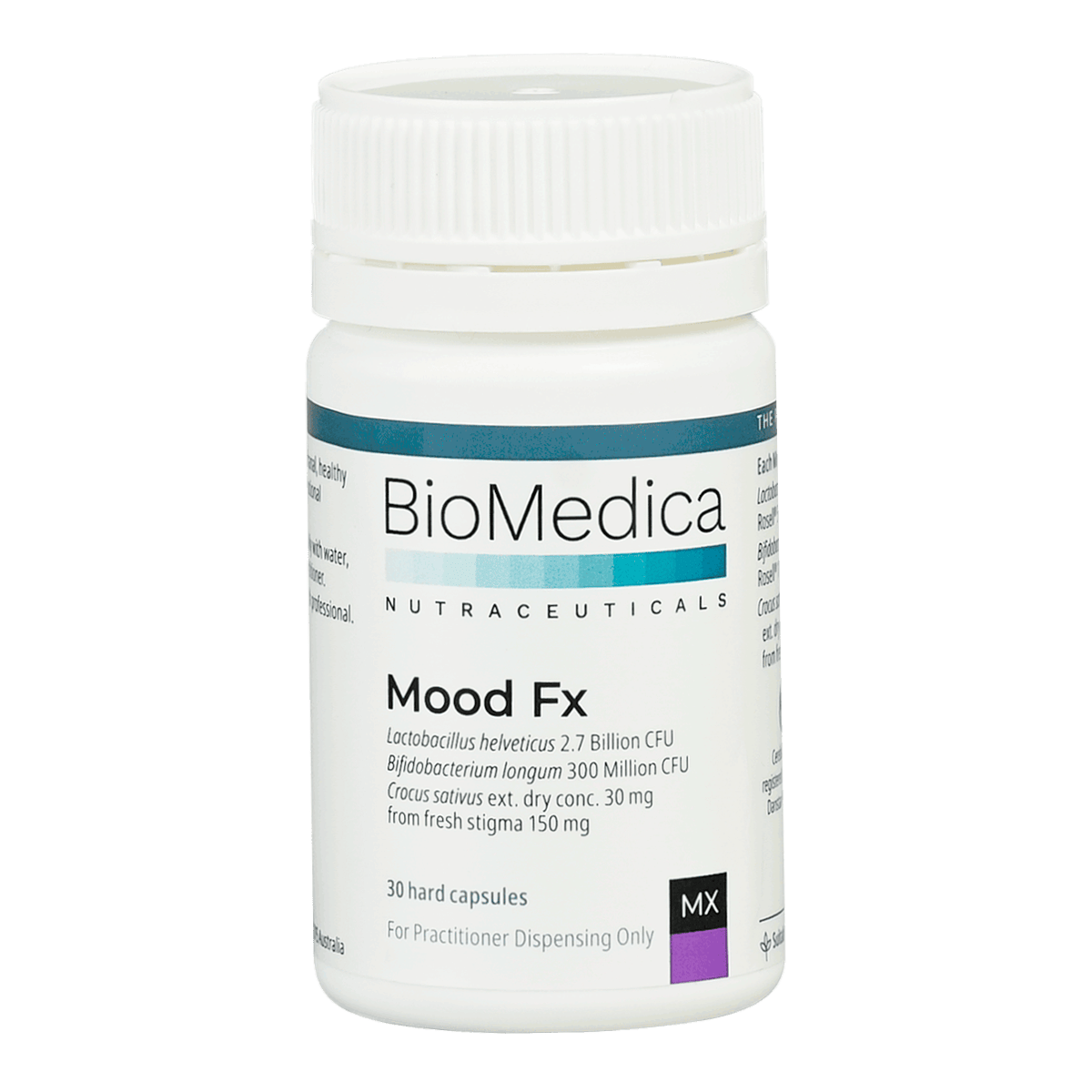
Mood FX combines targeted probiotic strains with saffron extract to support emotional wellbeing and stress resilience through the gut-brain axis. This precise formulation addresses mood imbalances at their neurobiological source, targeting the complex communication pathways between digestive health and mental state.
The core probiotic combination of Lactobacillus helveticus R0052 and Bifidobacterium longum R0175 works through several coordinated mechanisms that influence the gut–brain axis. These strains reduce inflammation-driven neurochemical disruption by decreasing pro-inflammatory cytokines and supporting IL-10 upregulation, which protects serotonin and dopamine pathways from cytokine-induced depletion. They also reinforce gut barrier integrity and competitively suppress stress-amplifying gut bacteria, reducing inflammatory signalling into the central nervous system. The strains modulate afferent vagus nerve signalling, improving emotional regulation and reducing amygdala-driven stress responsivity, while attenuating hypothalamic–pituitary–adrenal (HPA) axis overactivity, leading to reduced cortisol production [28].
Clinical research has demonstrated impressive outcomes with this probiotic combination after 30 days of supplementation. Global psychological distress symptoms decreased by approximately 40-50%, while depression decreased by 30-35% and anxiety by 33%. Anger and hostility were reduced by 30-40%, and general psychological or emotional stress symptoms improved by 40%. Importantly, 24-hour urinary cortisol also decreased by 15-20%, indicating measurable stress hormone reduction [28]. These effects stabilise neurotransmission, lower visceral stress signalling, and improve behavioural and emotional processing.
The inclusion of SAFR'INSIDE™ Crocus sativus (saffron) extract provides additional mood support through its well-established antidepressant and anxiolytic properties. Saffron contains bioactive compounds like crocin and safranal that modulate neurotransmitter activity, particularly serotonin and dopamine pathways, while also providing neuroprotective effects against oxidative stress and inflammation in brain tissue.
Ingredients
Lactobacillus helveticus (R0052)
2.7 billion CFU
Bifidobacterium longum (R0175)
300 million CFU
SAFR'INSIDE™ Crocus sativus (Saffron) ext.
ext. equiv. dry (stigma)
30 mg
150 mg
Instructions
Instructions
Dosage
1 capsule daily with water
Duration
4 weeks
Warnings
Always read the label
Dietary supplements should not replace a balanced diet
If symptoms persist, worsen or change unexpectedly, consult your healthcare professional
Contraindications
Contraindications
This supplement may interact with the following categories of medications, as well as specific active ingredients.
• Medications for diabetes
• Medications for high blood pressure
• Sedative medications
Further details are provided below.
Please note that medications may be sold under different brand names, so check the listed active ingredients against your medication packaging.
Major Interactions
Moderate Interactions
Medications for diabetes
• Glyburide
• Glipizide
• Insulin
• Sitagliptin
• Empagliflozin
• Semaglutide
• Dapagliflozin
Saffron might lower blood sugar levels. Taking saffron along with diabetes medications might cause blood sugar to drop too low. Monitor your blood sugar closely.
Medications for high blood pressure
• Amlodipine
• Ramipril
• Perindopril
• Metoprolol
• Losartan
• Hydrochlorothiazide
Saffron might lower blood pressure. Taking saffron along with medications that lower blood pressure might cause blood pressure to go too low. Monitor your blood pressure closely.
Sedative medications
• Diazepam
• Alprazolam
• Temazepam
• Zolpidem
• Zopiclone
• Promethazine
Saffron might cause sleepiness and slowed breathing. Some medications, called sedatives, can also cause sleepiness and slowed breathing. Taking saffron with sedative medications might cause breathing problems and/or too much sleepiness.