
Clinical Benefits
Clinical Benefits
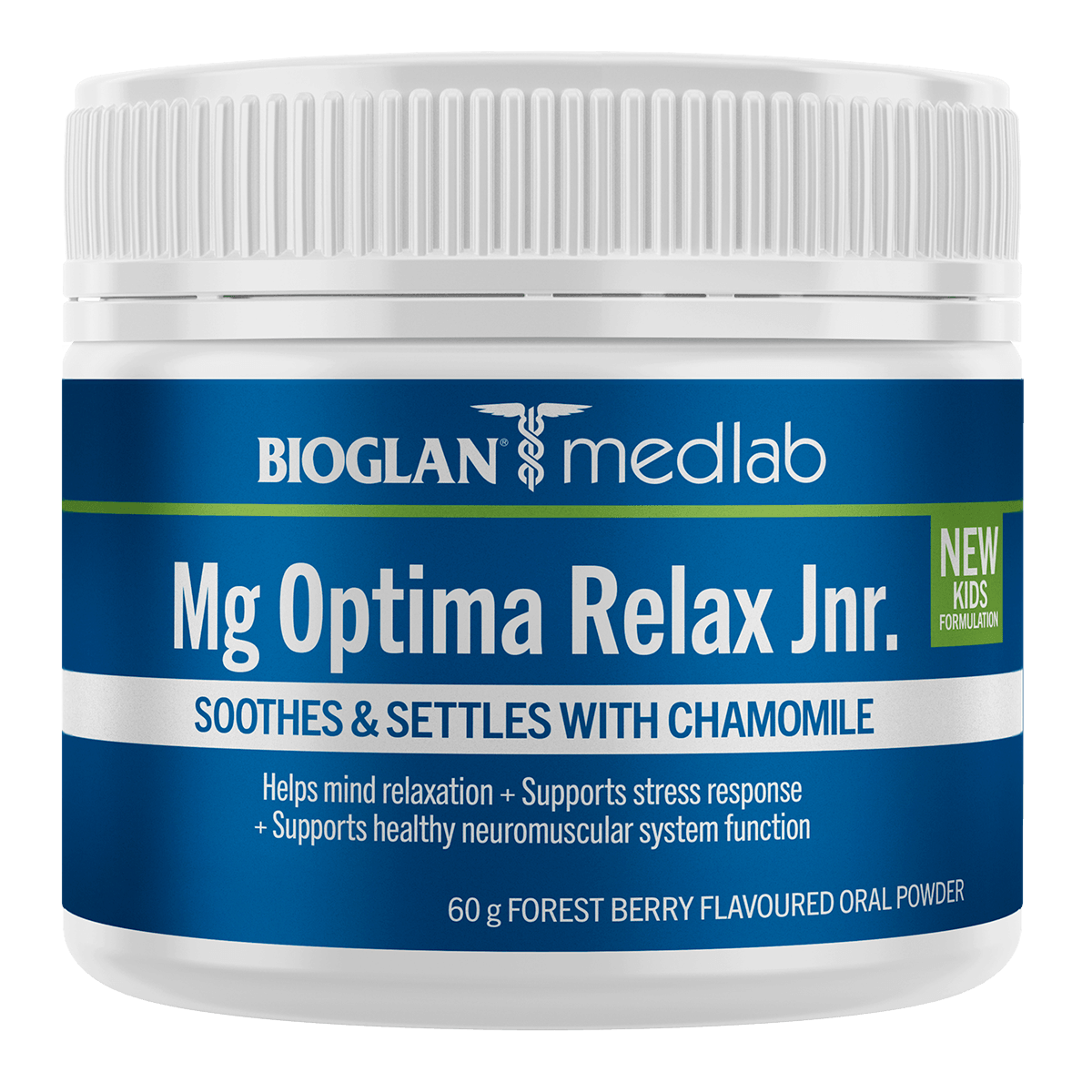
Mg Optima Relax is specifically formulated to address sympathetic nervous system (SNS) hyperactivation, a condition where the body remains locked in a prolonged 'fight-or-flight' response due to sustained noradrenaline release. This persistent sympathetic overdrive manifests as hypervigilance, muscle tension, sleep disruption, and difficulty relaxing, ultimately contributing to numerous physiological dysregulations that require targeted nutritional intervention.
Magnesium glycinate serves as the cornerstone ingredient, acting as a natural calcium antagonist at nerve terminals to limit calcium entry through voltage-gated channels. This magnesium-induced restriction of calcium influx subsequently reduces noradrenaline release and dampens SNS drive, fostering a more balanced stress response [49]. Clinical evidence demonstrates the profound impact of magnesium supplementation: in one study, rats administered magnesium equivalent to 200-300mg elemental magnesium for humans showed a remarkable 90% suppression of SNS stimulation and 50% reduction in norepinephrine release [51]. Another clinical study found that dietary magnesium supplementation reduced plasma noradrenaline by 31.9% compared to controls [50]. Importantly, both psychological and physiological stress measurably depletes magnesium levels through catecholamine-driven shifts and elevated kidney excretion, with university students showing 44% increased urinary magnesium loss during exam stress [52].
AlphaWave L-theanine provides complementary support by increasing alpha wave activity in the brain, associated with a relaxed but alert mental state that helps reduce elevated neural alertness and lower sympathetic drive [43]. Clinical research demonstrates L-theanine's ability to significantly modulate SNS activity: in a study of 20 students taking 200mg twice daily for 17 days, sympathetic output was reduced by approximately 15-25% and urinary norepinephrine decreased by roughly 18-20% compared to placebo [44]. Perhaps most impressively, another trial involving 120 healthy young adults exposed to stress found that while placebo participants showed increased SNS activity during stressors, those taking 200mg L-theanine had a 100% reduction in SNS activity, indicating complete blunting of the sympathetic stress response [45].
Pyridoxal 5-phosphate (P5P), the active form of vitamin B6, plays a critical role in neurotransmitter balance by serving as the required cofactor for glutamate decarboxylase, the enzyme that converts excitatory glutamate into inhibitory GABA [53]. When B6 levels are sufficient, this boosts GABA production, which reduces central SNS outflow and helps calm the nervous system. Research in B6-deficient rats found markedly elevated plasma noradrenaline and adrenaline alongside reduced hypothalamic GABA and serotonin, while a single dose of B6 equivalent to 97-113mg in humans normalized blood pressure and plasma catecholamines including noradrenaline within 24 hours [54]. A human clinical trial using 100mg vitamin B6 daily for 30 days showed significantly reduced self-reported anxiety associated with enhanced GABAergic inhibition [55].
Glutamine and zinc citrate provide additional support for nervous system function and stress resilience. Glutamine serves as a precursor for GABA synthesis and helps maintain optimal neurotransmitter balance during periods of stress, while zinc acts as a cofactor in numerous enzymatic processes involved in neurotransmitter metabolism and supports overall nervous system health.
Together, these ingredients work synergistically to address the multiple pathways involved in SNS hyperactivation, providing comprehensive support for individuals struggling with chronic stress responses and their associated symptoms of hypervigilance, muscle tension, and impaired relaxation capacity.
[43]>https://link.springer.com/article/10.1007/s10548-008-0068-z
[44]>https://www.researchgate.net/publication/256836950
[45]>https://www.jstage.jst.go.jp/article/jnsv/68/6/68_540/_article/-char/en
[49]>https://www.ahajournals.org/doi/pdf/10.1161/01.HYP.0000146536.68208.84
[51]>https://pubmed.ncbi.nlm.nih.gov/15477382/
[52]>https://www.mdpi.com/2072-6643/12/12/3672
[54]>https://europepmc.org/article/MED/3356457
[55]>https://centaur.reading.ac.uk/106316/1/Human%20Psychopharmacology
Ingredients
Albion™ Minerals Magnesium glycinate
equiv. Magnesium
1.38 g
162 mg
Glutamine
540 mg
AlphaWave® L-theanine
216 mg
Pyridoxal 5-phosphate monohydrate (P5P)
equiv. Pyridoxine
16.8 mg
10.8 mg
Zinc citrate dihydrate
equiv. Zinc
16.8 mg
5.4 mg
Instructions
Instructions
Dosage
Add 1 scoop, to 100-200 mL of cold water or juice 1-2 times daily
Duration
Long-term stress management support
Warnings
Contains sugars
Always read the label
Dietary supplements should not replace a balanced diet
If symptoms persist, worsen or change unexpectedly, consult your healthcare professional
Contains vitamin B6; stop taking this medication if you experience tingling, burning or numbness and see your healthcare practitioner as soon as possible
Contains zinc which may be dangerous if taken in large amounts or for a long period
Contraindications
Contraindications
This supplement may interact with the following categories of medications, as well as specific active ingredients.
• Sedative medications
• Antibiotics
• Bictegravir/emtricitabine/tenofovir alafenamide
• Cephalexin
• Cisplatin
• Medications for HIV/AIDS
• Penicillamine
• Ritonavir
• Atazanavir
Further details are provided below.
Please note that medications may be sold under different brand names, so check the listed active ingredients against your medication packaging.
Major Interactions
Moderate Interactions
Antibiotics
• Doxycycline
• Ciprofloxacin
• Amoxicillin
• Azithromycin
• Norfloxacin
• Trimethoprim
Zinc might decrease how much antibiotic the body absorbs from the gut. Taking zinc along with quinolone antibiotics might decrease the effects of these antibiotics. To avoid this interaction, take antibiotics at least 2 hours before or 4-6 hours after zinc supplements.
Zinc can decrease the amount of tetracyclines the body absorbs. Taking zinc with tetracyclines might decrease the effects of tetracyclines. To avoid this interaction, take tetracyclines 2 hours before or 4-6 hours after taking zinc supplements.
Bictegravir/emtricitabine/tenofovir alafenamide
• Biktarvy
In theory, zinc might decrease how much bictegravir/emtricitabine/tenofovir alafenamide the body absorbs from the stomach. To avoid this interaction, take bictegravir/emtricitabine/tenofovir alafenamide at least 2 hours before or 6 hours after zinc containing products.
Cephalexin
• Keflex
Zinc can reduce how much cephalexin the body absorbs. This might decrease how well cephalexin works for treating infections. To avoid this interaction, take zinc 3 hours after taking cephalexin.
Cisplatin
• Platinol-AQ
Cisplatin is used to treat cancer. Taking zinc along with cisplatin might inactivate cisplatin therapy. But it's not clear if this is a big concern.
Medications for HIV/AIDS
• Integrase inhibitors
Taking zinc along with integrase inhibitors might decrease blood levels of integrase inhibitors. This might decrease the effects of these medications. Talk to your healthcare provider if you are using integrase inhibitors and want to start taking zinc.
Penicillamine
• Cuprimine, Depen
Zinc might decrease how much penicillamine the body absorbs. Taking zinc with penicillamine might decrease the effects of penicillamine. Take zinc and penicillamine at least 2 hours apart.
Ritonavir
• Norvir
Ritonavir is a drug used for HIV infection. Zinc can reduce how much ritonavir the body absorbs. But it isn't clear if this is a big concern.
Minor Interactions
Sedative medications
• Diazepam
• Alprazolam
• Temazepam
• Zolpidem
• Zopiclone
• Promethazine
Some medications, called sedatives, can cause sleepiness and slowed breathing. There is some concern that theanine might also cause sleepiness and slowed breathing. But most research hasn't shown this effect. For now, use theanine with caution if you are taking sedative medications.
Atazanavir
• Reyataz
Atazanavir is a drug used for HIV infection. Zinc decreases how much atazanavir the body absorbs. But the body still absorbs enough atazanavir for it to work for treating HIV. So this interaction is probably not a big concern.
$23.16
Members Save
• Magnesium glycinate demonstrated 90% suppression of sympathetic nervous system stimulation and 50% reduction in norepinephrine release in clinical studies
• L-theanine completely blocked stress-induced sympathetic activation in healthy adults, providing 100% protection against SNS hyperactivation during stressors
• Vitamin B6 (P5P) normalized elevated noradrenaline and blood pressure within 24 hours by enhancing GABA production and reducing central nervous system excitation