
Clinical Benefits
Clinical Benefits
Herpes Simplex Latency refers to the dormant state of herpes simplex virus (HSV), including HSV-1 (cold sores) and HSV-2 (genital herpes), which persists by remaining hidden within sensory neurons. Unlike most viruses that are eliminated after initial infection, herpes simplex can reactivate regularly under various triggers including stress, immune compromise, and nutritional imbalances, leading to symptomatic outbreaks or asymptomatic viral shedding.
L-lysine represents one of the most clinically studied nutritional interventions for herpes management. L-lysine activity in suppressing HSV centers on its competitive relationship with the amino acid arginine, which is essential for HSV synthesis and reproduction. L-lysine, being structurally similar to arginine, competes with arginine for absorption and transport within the body, reducing intracellular arginine availability and thereby disrupting the synthesis of viral proteins necessary for HSV replication [4]. A review of 12 studies demonstrated that lysine doses below 1 gram per day are ineffective unless combined with a low-arginine diet, while daily doses of 3 grams appeared most effective in reducing recurrence rates, with lysine proving more effective as prevention than outbreak treatment [4].
Vitamin C exhibits both immune-supporting and direct antiviral properties against herpes simplex virus. Laboratory studies have demonstrated that vitamin C can inhibit the replication of HSV-1 through mechanisms involving either the generation of free radicals, direct binding to viral particles or cellular targets, or a combination of both [6]. Although typically classified as an antioxidant, vitamin C can act as a pro-oxidant under certain conditions, particularly in the presence of ferric iron and oxygen, promoting the formation of reactive oxygen species that contribute to its antiviral properties by exerting cytotoxic effects on virus-infected cells [6].
Zinc plays a crucial dual role in herpes management through both immune enhancement and direct antiviral action. Zinc supports the development and function of T lymphocytes, particularly T helper cells, while enhancing natural killer cell activity, promoting cytokine production, and supporting neutrophil responses that contribute to HSV clearance [6]. Additionally, zinc exerts direct antiviral action by binding to and functionally inactivating viral surface glycoproteins essential for viral attachment and entry into host cells. Clinical evidence from a study involving twenty individuals with recurrent herpes showed that treatment with the equivalent of 10.2 mg zinc taken for alternating 2-month periods over 12 months resulted in both the average number of annual outbreaks and lesion duration decreasing by more than 50% [6].
Astragalus membranaceus demonstrates significant immunomodulatory effects specifically relevant to herpes simplex infection management. In a clinical study involving 106 individuals with herpes simplex infection, participants exhibited elevated IL-4 and IL-10 levels with reduced IL-2 and interferon-gamma levels compared to healthy controls, reflecting a Th2-dominant immune response associated with impaired viral clearance [6]. Treatment with Astragalus showed significant restoration of Th1/Th2 balance with normalization of cytokine levels and improved immune function, while conventional antiviral treatment showed no measurable improvement. Further trials demonstrated that participants receiving 1.2 grams of astragalus daily for seven days showed increased activation of both CD4+ and CD8+ T cells, with CD8+ cells being particularly important as they are positioned near sensory nerve endings to immediately respond to viral reactivation before symptoms develop [6][7].
Ingredients
L-lysine
800 mg
Ascorbic acid (Vitamin C)
250 mg
Zinc sulphate monohydrate
equiv. Zinc
33 mg
12 mg
Astragalus membranaceus ext.
ext. equiv. dry (root)
200 mg
2 g
Instructions
Instructions
Dosage
1 tablet twice daily with meals
Duration
Indicated for prevention and recommended at the onset of recurrent herpes simplex outbreaks.
Warnings
Always read the label
Dietary supplements should not replace a balanced diet
If symptoms persist, worsen or change unexpectedly, consult your healthcare professional
Contains zinc which may be dangerous if taken in large amounts or for a long period
Contraindications
Contraindications
This supplement may interact with the following categories of medications, as well as specific active ingredients.
• Medications for diabetes
• Medications that decrease the immune system
• Antibiotics
• Bictegravir/emtricitabine/tenofovir alafenamide
• Cephalexin
• Cisplatin
• Medications for HIV/AIDS
• Penicillamine
• Ritonavir
• Atazanavir
• Estrogens
• Fluphenazine
• Indinavir
• Levothyroxine
• Medications for cancer
• Warfarin
• Choline Magnesium Trisalicylate
• Salsalate
• Aspirin
Further details are provided below.
Please note that medications may be sold under different brand names, so check the listed active ingredients against your medication packaging.
Major Interactions
Moderate Interactions
Taking astragalus might decrease how well the body gets rid of lithium. This could increase how much lithium is in the body and result in serious side effects. Talk with your healthcare provider before using this product if you are taking lithium. Your lithium dose might need to be changed.
Medications for diabetes
• Glyburide
• Glipizide
• Insulin
• Sitagliptin
• Empagliflozin
• Semaglutide
• Dapagliflozin
Astragalus might lower blood sugar levels. Taking astragalus along with diabetes medications might cause blood sugar to drop too low. Monitor your blood sugar closely.
Medications that decrease the immune system
• Cyclosporine
• Tacrolimus
• Mycophenolate
• Prednisone
• Methotrexate
• Azathioprine
Astragalus can increase the activity of the immune system. Some medications, such as those used after a transplant, decrease the activity of the immune system. Taking astragalus along with these medications might decrease the effects of these medications.
Antibiotics
• Doxycycline
• Ciprofloxacin
• Amoxicillin
• Azithromycin
• Norfloxacin
• Trimethoprim
Zinc might decrease how much antibiotic the body absorbs from the gut. Taking zinc along with quinolone antibiotics might decrease the effects of these antibiotics. To avoid this interaction, take antibiotics at least 2 hours before or 4-6 hours after zinc supplements.
Zinc can decrease the amount of tetracyclines the body absorbs. Taking zinc with tetracyclines might decrease the effects of tetracyclines. To avoid this interaction, take tetracyclines 2 hours before or 4-6 hours after taking zinc supplements.
Bictegravir/emtricitabine/tenofovir alafenamide
• Biktarvy
In theory, zinc might decrease how much bictegravir/emtricitabine/tenofovir alafenamide the body absorbs from the stomach. To avoid this interaction, take bictegravir/emtricitabine/tenofovir alafenamide at least 2 hours before or 6 hours after zinc containing products.
Cephalexin
• Keflex
Zinc can reduce how much cephalexin the body absorbs. This might decrease how well cephalexin works for treating infections. To avoid this interaction, take zinc 3 hours after taking cephalexin.
Cisplatin
• Platinol-AQ
Cisplatin is used to treat cancer. Taking zinc along with cisplatin might inactivate cisplatin therapy. But it's not clear if this is a big concern.
Medications for HIV/AIDS
• Integrase inhibitors
Taking zinc along with integrase inhibitors might decrease blood levels of integrase inhibitors. This might decrease the effects of these medications. Talk to your healthcare provider if you are using integrase inhibitors and want to start taking zinc.
Penicillamine
• Cuprimine, Depen
Zinc might decrease how much penicillamine the body absorbs. Taking zinc with penicillamine might decrease the effects of penicillamine. Take zinc and penicillamine at least 2 hours apart.
Ritonavir
• Norvir
Ritonavir is a drug used for HIV infection. Zinc can reduce how much ritonavir the body absorbs. But it isn't clear if this is a big concern.
Aluminum
Aluminum is found in most antacids. Vitamin C can increase how much aluminum the body absorbs. However, it is not clear if this interaction is a big concern. Take vitamin C two hours before or four hours after antacids.
Estrogens
• Oral contraceptive pill
• Estradiol
• Conjugated estrogens
• HRT combination products
Vitamin C might decrease how quickly the body gets rid of estrogens. Taking vitamin C along with estrogens might increase the effects and side effects of estrogens.
Fluphenazine
• Prolixin
Large amounts of vitamin C might decrease how much fluphenazine is in the body. Taking vitamin C along with fluphenazine might decrease the effectiveness of fluphenazine.
Indinavir
• Crixivan
Taking large amounts of vitamin C along with indinavir might decrease how much indinavir stays in the body. It's not clear if this interaction is a big concern.
Levothyroxine
• Synthroid, others
Taking vitamin C along with levothyroxine might increase how much levothyroxine the body absorbs. This can increase the amount of levothyroxine in the body and increase its effects and side effects.
Medications for cancer
• Cyclophosphamide
• Chlorambucil
• Melphalan
• Busulfan
• Temozolomide
Vitamin C is an antioxidant. There is some concern that antioxidants might decrease the effects of some medications used for cancer. If you are taking medications for cancer, check with your healthcare provider before taking vitamin C.
• Doxorubicin
• Bleomycin
• Daunorubicin
• Mitomycin
• Epirubicin
Vitamin C is an antioxidant. There is some concern that antioxidants might decrease the effects of medications used for cancer. If you are taking medications for cancer, check with your healthcare provider before taking vitamin C.
Niacin
Taking niacin with vitamin C and other antioxidants can decrease the effects of niacin on good cholesterol levels. It is unknown if vitamin C alone decreases the effects of niacin on good cholesterol levels.
• Jantoven
• Used for: blood thinning, clot prevention
Warfarin is used to slow blood clotting. Large amounts of vitamin C might decrease the effects of warfarin. Decreasing the effects of warfarin might increase the risk of clotting. Be sure to have your blood checked regularly. The dose of your warfarin might need to be changed.
Minor Interactions
Atazanavir
• Reyataz
Atazanavir is a drug used for HIV infection. Zinc decreases how much atazanavir the body absorbs. But the body still absorbs enough atazanavir for it to work for treating HIV. So this interaction is probably not a big concern.
Aspirin
Aspirin is removed by the body through the kidneys and in the urine. Vitamin C might decrease how the body removes aspirin and could potentially increase the amount of aspirin in the body. But it's not clear if this is a big concern.
Choline Magnesium Trisalicylate
• Trilisate
Vitamin C might decrease how quickly the body gets rid of choline magnesium trisalicylate. It is not clear if this interaction is a big concern.
Salsalate
• Disalcid
Vitamin C might decrease how quickly the body gets rid of salsalate. Taking vitamin C along with salsalate might cause too much salsalate in the body, and increase the effects and side effects of salsalate.
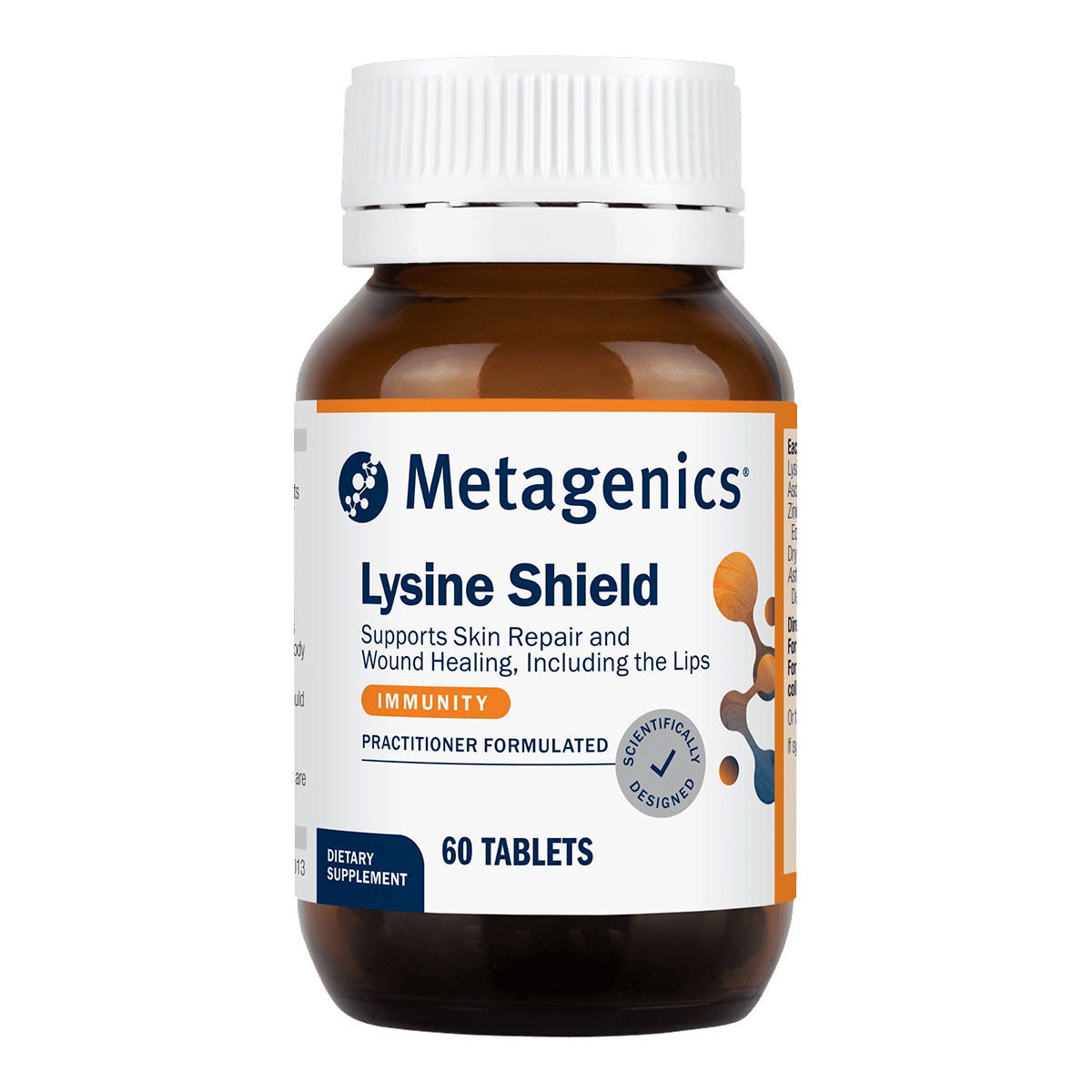
$12.05
Members Save
• L-lysine at 3g daily effectively reduces HSV recurrence rates by competing with arginine, disrupting viral protein synthesis essential for replication
• Zinc supplementation (10.2mg) reduced both outbreak frequency and duration by over 50% through immune enhancement and direct viral glycoprotein inactivation
• Astragalus restores critical Th1/Th2 immune balance and activates CD8+ T cells positioned to prevent viral reactivation at nerve endings