Clinical Benefits
Clinical Benefits
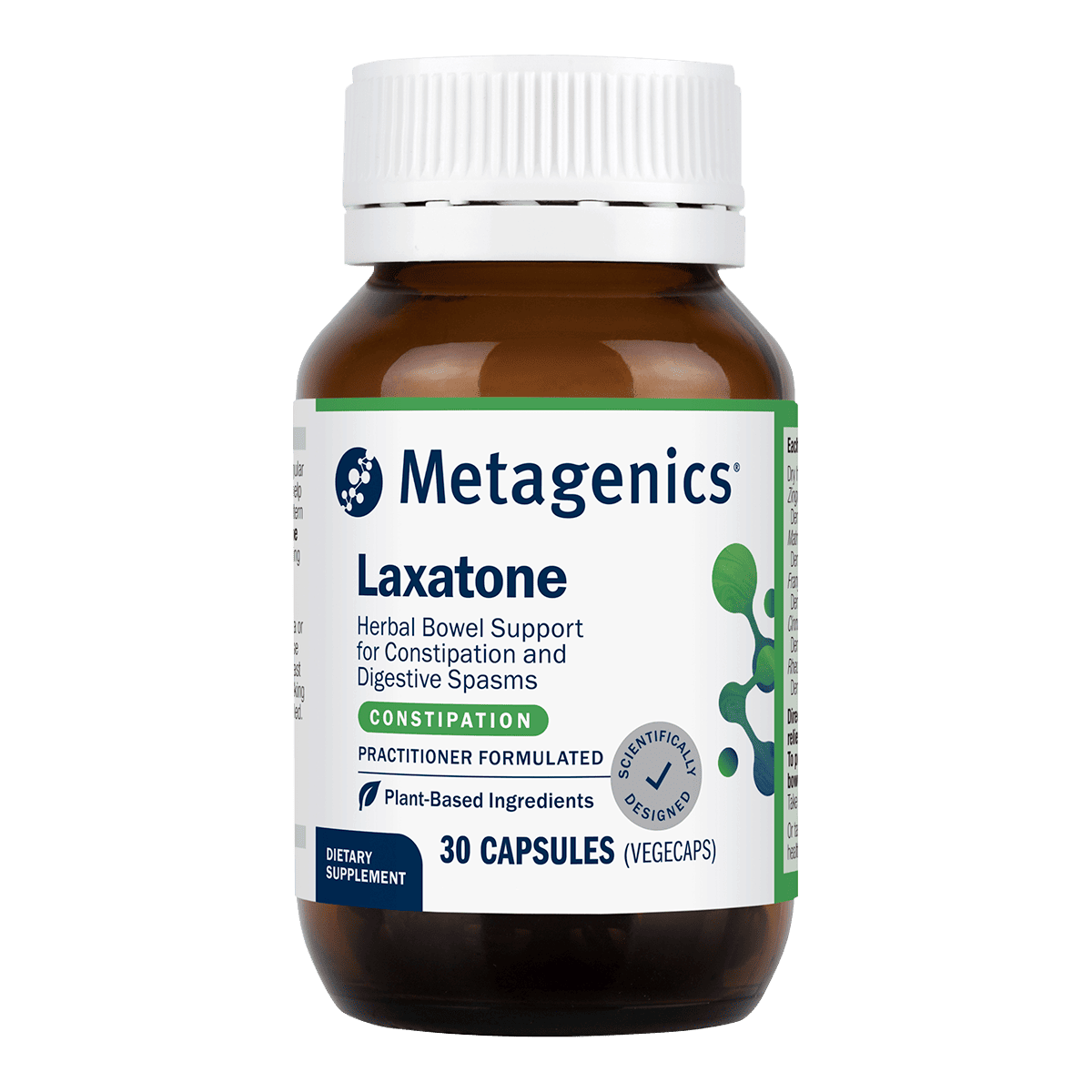
Metagenics Laxatone contains a combination of herbal ingredients formulated to support bowel regularity and alleviate constipation.
Cascara (Rhamnus purshiana) exerts stimulant laxative effects primarily through activation of enteric nervous system pathways and modulation of intestinal secretion. Its active anthraquinone glycosides increase colonic motility and promote fluid accumulation within the intestinal lumen. This effect is partly mediated by enhanced nitric oxide (NO) signalling, which facilitates smooth muscle relaxation and contributes to increased intestinal diameter, thereby supporting the forward propulsion of stool. Additionally, stimulation of electrolyte secretion into the lumen promotes water retention, reducing stool hardening and facilitating evacuation. Clinical data in elderly individuals with intestinal hypomotility demonstrate that cascara administration can increase bowel frequency by approximately 2–3 movements per week [45].
Ginger (Zingiber officinale) further supports gastrointestinal motility through prokinetic effects. Experimental data indicate that ginger accelerates intestinal transit, with studies demonstrating enhanced propulsion of luminal contents, potentially via modulation of cholinergic pathways and effects on enteric smooth muscle activity.
Key bioactive compounds in ginger, including (6)-gingerol and (10)-gingerol, have also been shown to stimulate bile secretion. This choleretic activity supports digestive function and may contribute to improved stool consistency and bowel regularity [22].
Ingredients
Zingiber officinale (Ginger) ext.
ext. equiv. dry (rhizome)
200 mg
1000 mg
Matricaria chamomilla (Chamomile) ext.
ext. equiv. dry (flower)
166.66 mg
1000 mg
Frangula purshiana (Cascara) ext.
ext. equiv. dry (bark)
200 mg
800 mg
Rheum officinale (Rhubarb) ext.
ext. equiv. dry (root)
50 mg
500 mg
Instructions
Instructions
Dosage
1 capsule before bed
Duration
4 weeks, then only as required
Warnings
Not for long-term use
Contraindications
Contraindications
This supplement may interact with the following categories of medications, as well as specific active ingredients.
• Corticosteroids
• Stimulant laxatives
• Diuretic drugs
• Warfarin
• Nephrotoxic Drugs
• Cyclosporine
• Digoxin
• Hepatotoxic Drugs
• Medications changed by the liver - see list
Further details are provided below.
Please note that medications may be sold under different brand names, so check the listed active ingredients against your medication packaging.
Major Interactions
Moderate Interactions
Corticosteroids
Cascara sagrada is a type of laxative called a stimulant laxative. Stimulant laxatives can cause diarrhea and decrease potassium levels. Some medications for inflammation, called corticosteroids, can also decrease potassium levels. Taking these products together might cause potassium levels to drop too low.
Stimulant laxatives
Cascara sagrada is a type of laxative called a stimulant laxative. Stimulant laxatives can cause diarrhea and decrease potassium levels. Taking cascara sagrada with other stimulant laxatives might cause more diarrhea and very low potassium levels.
Diuretic drugs
Cascara sagrada is a laxative. Some laxatives can cause diarrhea and decrease potassium levels. "Diuretics" can also decrease potassium levels. Taking cascara sagrada along with "Diuretics" might make potassium levels drop too low.
Laxative
Theoretically, rhubarb might increase the risk for fluid and electrolyte loss when taken with other stimulant laxatives.
Corticosteroids
Theoretically, frequent and high doses of rhubarb might increase the risk of hypokalemia when taken with corticosteroids.
Rhubarb has stimulant laxative effects. Overuse of rhubarb might compound corticosteroid-induced potassium loss
Diuretic Drugs
Rhubarb has stimulant laxative effects. Overuse of rhubarb might cause potassium depletion and compound diuretic-induced potassium loss (12,19).
Warfarin
Rhubarb has stimulant laxative effects and can cause diarrhea. Diarrhea can increase the effects of warfarin, increase international normalized ratio (INR), and increase the risk of bleeding. Advise patients who take warfarin not to take excessive amounts of rhubarb.
Nephrotoxic Drugs
Theoretically, long-term use of anthraquinones from rhubarb might increase the risk of nephrotoxicity when used with nephrotoxic drugs.
The anthraquinone constituents of rhubarb have been shown to induce nephrotoxicity in animal research.
Cyclosporine
Taking rhubarb with cyclosporine might reduce cyclosporine levels.
Digoxin
Overuse of rhubarb might increase the risk of adverse effects when taken with digoxin.
Hepatotoxic Drugs
Concomitant use of rhubarb with potentially hepatotoxic drugs might increase the risk of developing liver damage.
Minor Interactions
Medications changed by the liver
• Atorvastatin
• Simvastatin
• Amlodipine
• Diltiazem
• Cyclosporine
• Tacrolimus
• Midazolam
• Alprazolam
• Rivaroxaban
• Some HIV antiretrovirals
Some medications are changed and broken down by the liver. Cascara sagrada might change how quickly the liver breaks down these medications. If you are taking medications metabolised by the liver, monitor for any changes in how your medication affects you.