
Clinical Benefits
Clinical Benefits
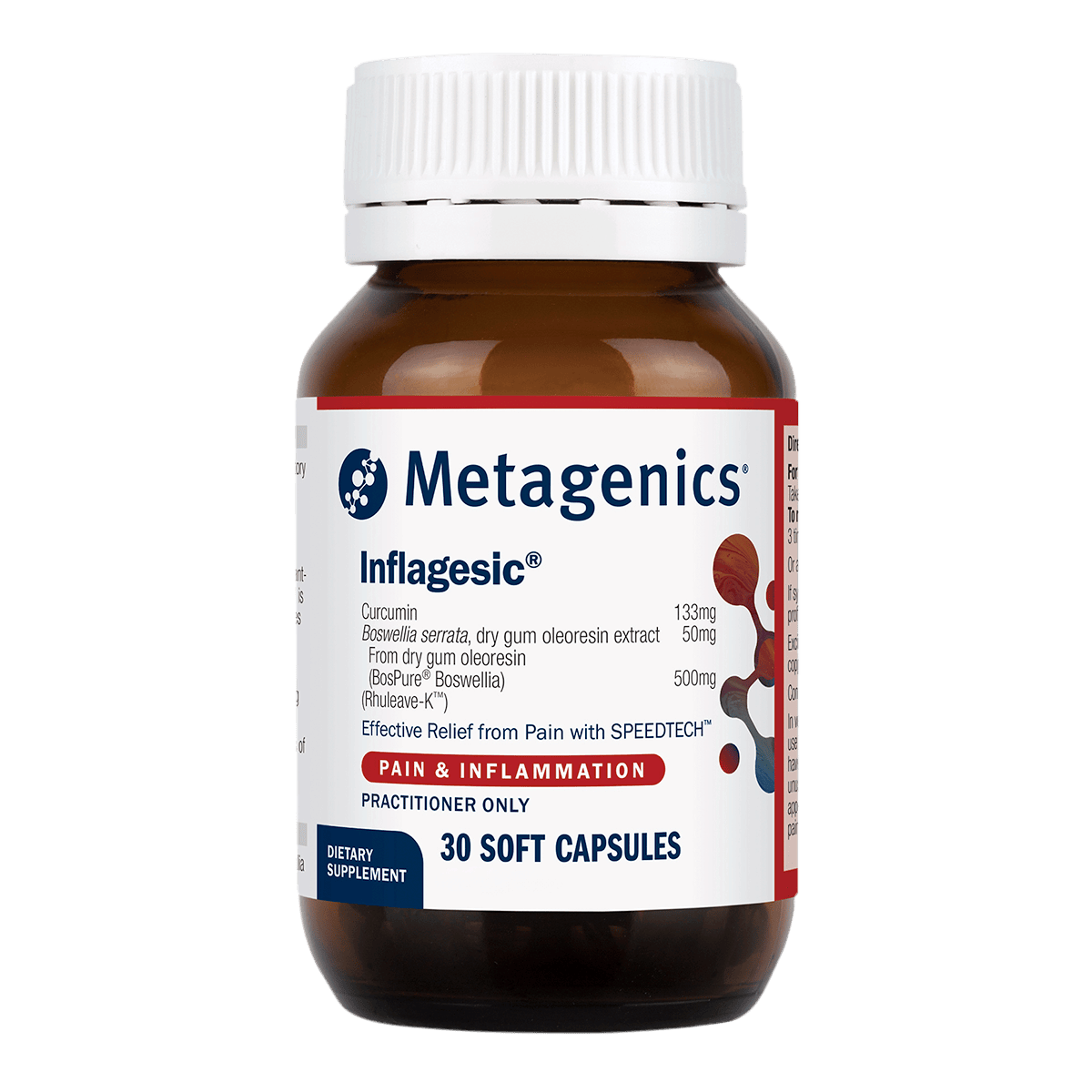
Inflagesic combines scientifically-validated botanicals to address musculoskeletal (MSK) inflammation through multiple pathways, targeting both the upstream drivers of inflammation and the tissue-degrading enzymes that perpetuate joint damage. Unlike conventional NSAIDs that only block prostaglandin production, this formulation works at earlier stages of the inflammatory cascade to provide comprehensive musculoskeletal support.
Curcumin, the principal bioactive compound in turmeric, exerts its anti-inflammatory effects by targeting multiple points in the inflammatory cascade. It begins at stage 1 with inhibition of toll-like receptor (TLR) signaling, preventing early activation of pro-inflammatory pathways. Curcumin also activates the nuclear receptor PPAR-γ, a counter-regulatory factor that suppresses stage 2 of inflammation, which is NFκB activation, thereby reducing the transcription of pro-inflammatory cytokines. Additionally, curcumin downregulates pro-inflammatory enzymes such as COX-2 and LOX, limiting the production of prostaglandins that drive pain and swelling. Importantly, curcumin also inhibits tissue-degrading matrix metalloproteinases, specifically MMP‑1, MMP‑3, and MMP‑13, helping preserve extracellular matrix integrity in cartilage and connective tissues [49][50]. A meta-analysis of 29 studies on Turmeric extract vs pharmaceutical intervention with NSAIDs for pain relief demonstrated 1g per day of curcumin for 4-12 weeks produced pain and function improvements in arthritis comparable to NSAIDs [3][21][49]. In a comprehensive meta-analysis of 23 randomized controlled trials involving 2,175 patients with knee osteoarthritis, participants administered 500-2000 mg per day of curcumin for 4-12 weeks demonstrated pain relief comparable to NSAIDs with fewer adverse effects, 31% improvement in function and mobility, and an 83% reduction in the likelihood of needing extra medication [11].
Boswellia serrata extract contains bioactive compounds collectively known as boswellic acids which inhibit the messenger known as IKK in step 2 of inflammation. This thereby limits its effect on step 3 of inflammation, which is promoting NFκB activation, and as such downregulates the production of all inflammatory cytokine mediators. Furthermore, Boswellia has also clinically demonstrated to inhibit the production of MMP-3 and MMP13, which not only slows cartilage breakdown but also promotes an environment conducive to tissue repair [51]. In one study, 88 adults with musculoskeletal strain received 266 mg curcumin plus 1,000 mg boswellia or 1g paracetamol for seven days. The results demonstrated relief in musculoskeletal pain within 63 minutes and 53% reduction in pain relief, comparable to paracetamol and NSAIDs [1][3]. A study in patients with ankylosing spondylitis compared 400 mg per day Boswellia extract plus curcumin over 28 days, with reported outcomes showing 30-40% estimated reduction in pain and stiffness versus placebo [46].
The BosPure® standardization of Boswellia serrata ensures optimal concentrations of the key boswellic acids responsible for these therapeutic effects, providing consistent and reliable anti-inflammatory activity that addresses both the symptoms and underlying tissue degradation processes in musculoskeletal inflammation.
[3]>https://pubmed.ncbi.nlm.nih.gov/27533649/
[11]>https://www.sciencedirect.com/science/article/pii/S0378874123013636
[21]>https://pubmed.ncbi.nlm.nih.gov/32114280/
[46]>https://pmc.ncbi.nlm.nih.gov/articles/PMC9143056/
[49]>https://www.sciencedirect.com/science/article/abs/pii/S0367326X24000534
Ingredients
Curcumin (Turmeric)
133 mg
BosPure® Boswellia serrata ext.
ext. equiv. dry (gum oleoresin)
50 mg
500 mg
Instructions
Instructions
Dosage
1 - 2 capsules, dependant on pain
Duration
Suitable for long-term use, with dosing adjusted according to symptoms
Warnings
Contains sesame seeds
Always read the label
Dietary supplements should not replace a balanced diet
If symptoms persist, worsen or change unexpectedly, consult your healthcare professional
Contraindications
Contraindications
This supplement may interact with the following categories of medications, as well as specific active ingredients.
• Medications changed by the liver - refer list
• Medications for cancer
• Medications for diabetes
• Medications moved by pumps in cells - refer list
• Medications that can harm the liver
• Medications that slow blood clotting
• Methotrexate
• Sulfasalazine
• Tacrolimus
• Talinolol
• Tamoxifen
• Tramadol
• Warfarin
• Docetaxel
• Estrogens
• Glyburide
• Losartan
• Norfloxacin
• Paclitaxel
Further details are provided below.
Please note that medications may be sold under different brand names, so check the listed active ingredients against your medication packaging.
Major Interactions
Moderate Interactions
Medications changed by the liver
• Atorvastatin
• Simvastatin
• Amlodipine
• Diltiazem
• Cyclosporine
• Tacrolimus
• Midazolam
• Alprazolam
• Rivaroxaban
• Some HIV antiretrovirals
Some medications are changed and broken down by the liver. Turmeric might change how quickly the liver breaks down these medications. If you are taking medications metabolised by the liver, monitor for any changes in how your medication affects you.
Medications for cancer
• Cyclophosphamide
• Chlorambucil
• Melphalan
• Busulfan
• Temozolomide
Turmeric is an antioxidant. There is some concern that antioxidants might decrease the effects of some medications used for cancer. If you are taking medications for cancer, check with your healthcare provider before taking turmeric.
• Doxorubicin
• Bleomycin
• Daunorubicin
• Mitomycin
• Epirubicin
Turmeric is an antioxidant. There is some concern that antioxidants might decrease the effects of medications used for cancer. If you are taking medications for cancer, check with your healthcare provider before taking turmeric.
Medications for diabetes
• Glyburide
• Glipizide
• Insulin
• Sitagliptin
• Empagliflozin
• Semaglutide
• Dapagliflozin
Turmeric might lower blood sugar levels. Taking turmeric along with diabetes medications might cause blood sugar to drop too low. Monitor your blood sugar closely.
Medications moved by pumps in cells
• Rosuvastatin
• Atorvastatin
• Simvastatin
• Methotrexate
• Fexofenadine
• Levothyroxine
Some medications are moved in and out of cells by pumps. Turmeric might change how these pumps work and change how much medication stays in the body. In some cases, this might change the effects and side effects of a medication.
Medications that can harm the liver
• Acetaminophen / Paracetamol
• Methotrexate
• Atorvastatin
• Simvastatin
• Isoniazid
Turmeric might harm the liver. Some medications can also harm the liver. Taking turmeric along with a medication that can harm the liver might increase the risk of liver damage.
Medications that slow blood clotting
• Heparin
• Rivaroxaban
• Apixaban
• Dabigatran
• Clopidogrel
Turmeric might slow blood clotting. Taking turmeric along with medications that also slow blood clotting might increase the risk of bruising and bleeding.
Methotrexate
• Trexall
• Otrexup
• Rasuvo
• Used for: rheumatoid arthritis, psoriasis, certain cancers
Turmeric might harm the liver. Methotrexate can also harm the liver. Taking turmeric along with methotrexate might increase the risk of liver damage.
Sulfasalazine
• Azulfidine
• Used for: Crohn's disease, ulcerative colitis, rheumatoid arthritis
Turmeric might increase how much sulfasalazine the body absorbs. Taking turmeric while taking sulfasalazine might increase the effects and side effects of sulfasalazine.
Tacrolimus
• Astagraf
• Used for: organ transplant anti-rejection
Turmeric might increase the amount of tacrolimus in the body. This can increase the side effects of tacrolimus and even damage the kidneys.
Talinolol
• Cordanum
• Used for: angina, heart conditions
Turmeric might decrease how much talinolol the body absorbs. Taking turmeric while taking talinolol might decrease the effects of talinolol.
Tamoxifen
• Soltamox
• Used for: breast cancer treatment and prevention
Turmeric might decrease how much tamoxifen is in the body. Taking turmeric with tamoxifen might decrease the effects of tamoxifen.
Tramadol
• ConZip
• Used for: moderate to severe pain
Turmeric might decrease or increase how much tramadol is in the body. Taking turmeric with tramadol might increase or decrease the effects of tramadol.
• Jantoven
• Used for: blood thinning, clot prevention
Warfarin is used to slow blood clotting. Taking turmeric while taking warfarin might increase the effects of warfarin and increase the risk of bleeding and bruising.
Minor Interactions
Docetaxel
• Taxotere
• Used for: breast, lung, prostate cancer
Turmeric might increase how much docetaxel the body absorbs. Taking turmeric while taking docetaxel might increase the effects and side effects of docetaxel.
Estrogens
• Oral contraceptive pill
• Estradiol
• Conjugated estrogens
• HRT combination products
Large amounts of turmeric might interfere with the effects of estrogen. Taking turmeric along with estrogen might decrease the effects of estrogens. Some estrogen pills include conjugated equine estrogens, ethinyl estradiol, estradiol, and others.
Glyburide
• Diabeta
• Micronase
• Glynase
• Used for: type 2 diabetes
Turmeric contains curcumin. Curcumin might lower blood sugar. Glyburide is also used to lower blood sugar. Taking curcumin or turmeric along with glyburide might cause your blood sugar to go too low. Monitor your blood sugar closely. Your dose of glyburide might need to be changed.
Losartan
• Cozaar
• Hyzaar
• Used for: high blood pressure, heart failure
Taking turmeric while taking losartan might increase the effects and side effects of losartan.
Medications changed by the liver
• Caffeine
• Clozapine
• Olanzapine
• Theophylline
• Tizanidine
• Duloxetine
• Ramelteon
Some medications are changed and broken down by the liver. Turmeric might change how quickly the liver breaks down these medications. If you are taking medications metabolised by the liver, monitor for any changes in how your medication affects you.
Medications moved by pumps in cells
• Digoxin
• Dabigatran
• Cyclosporine
• Fexofenadine
• Loperamide
• Some HIV antiretrovirals
Some medications are moved in and out of cells by pumps. Turmeric might change how these pumps work and change how much medication stays in the body. In some cases, this might change the effects and side effects of a medication.
Norfloxacin
• Noroxin
• Used for: urinary tract infections
Turmeric might increase how much norfloxacin the body absorbs. Taking turmeric while taking norfloxacin might increase the effects and side effects of norfloxacin.
Paclitaxel
• Abraxane
• Onxol
• Taxol
• Used for: various cancers
Turmeric might change how much paclitaxel stays in the body. Taking turmeric while taking paclitaxel might change the effects and side effects of paclitaxel. However, this doesn't seem to be a big concern.
$10.74
Members Save
• Pain relief comparable to NSAIDs: Clinical trials show curcumin provides arthritis pain relief equivalent to pharmaceutical anti-inflammatories with fewer side effects
• Rapid onset musculoskeletal pain relief: Combined curcumin and boswellia demonstrated pain relief within 63 minutes in clinical studies
• Prevents cartilage breakdown: Inhibits tissue-degrading enzymes MMP-1, MMP-3, and MMP-13 that accelerate joint deterioration