
Clinical Benefits
Clinical Benefits
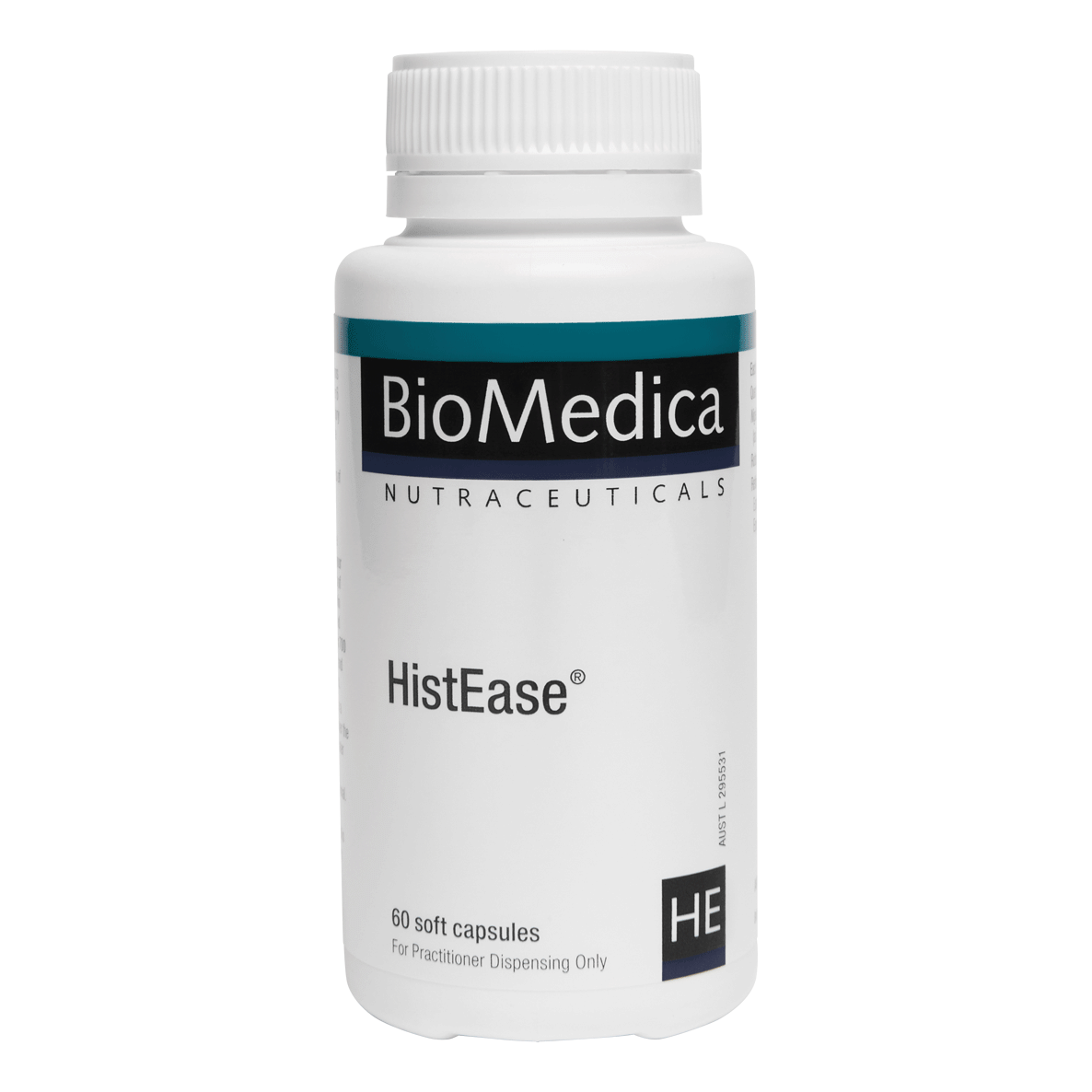
Histease targets mast cell activation, a condition where immune cells release excessive histamine and inflammatory mediators, causing symptoms ranging from digestive issues and skin reactions to neurological symptoms and respiratory problems. This comprehensive formula combines research-backed ingredients that work synergistically to stabilize mast cells, reduce histamine release, and restore immune balance.
Quercetin serves as the foundation of this formula with its potent mast cell-stabilizing properties. This naturally occurring flavonoid inhibits intracellular calcium influx, a crucial trigger for mast cell degranulation, effectively preventing the release of histamine and other pro-inflammatory mediators even in the presence of allergens [22]. Quercetin also demonstrates immunomodulatory effects by downregulating Th2 cytokines such as IL-4, IL-5, and IL-13 - key drivers of IgE production and mast cell priming - while promoting a more balanced Th1/Th2 immune profile. Clinical evidence shows remarkable results: rats sensitized to peanuts treated with 50 mg/kg quercetin showed complete inhibition of anaphylactic reactions after 4 weeks [22]. In human studies, 200 mg per day of quercetin phytosome for 4 weeks demonstrated significant improvement in nasal and eye symptoms including itching, sneezing, and nasal discharge, along with better sleep and enhanced quality of life [18].
The inclusion of Thymocid® Nigella sativa (Black seed oil) adds another layer of mast cell stabilization through its active compound thymoquinone. This powerful botanical exhibits multiple therapeutic properties by inhibiting calcium influx necessary for mast cell degranulation, thereby reducing the release of histamine, tryptase, and leukotrienes [30]. Nigella sativa demonstrates additional antihistamine activity by downregulating histamine receptors and suppressing histidine decarboxylase, which leads to decreased histamine synthesis. Clinical trials validate its effectiveness: patients with allergic rhinitis receiving 500 mg twice daily for 4 weeks showed significant improvements in nasal congestion, itching, and rhinorrhea, with histamine and IgE levels also declining [30]. For asthma management, supplementation with 2g per day for 3 months significantly improved peak expiratory flow and asthma control in adults [31].
Rutin (Rutoside) complements these primary ingredients as a flavonoid glycoside that provides additional antioxidant and anti-inflammatory support. Its structural similarity to quercetin allows it to work synergistically in stabilizing blood vessels and reducing inflammatory responses associated with mast cell activation. The antioxidant properties of rutin help protect against oxidative stress that can trigger mast cell degranulation, while its vascular-protective effects help minimize the swelling and inflammation characteristic of histamine release.
Vitamin A (as Retinol palmitate) plays a crucial role in immune regulation and maintaining healthy mucosal barriers - the primary sites where mast cells encounter environmental triggers. Adequate vitamin A levels support proper immune function and help maintain the integrity of respiratory and digestive tract linings, potentially reducing the likelihood of inappropriate mast cell activation. As an essential fat-soluble vitamin, vitamin A also supports overall immune system balance and cellular health, contributing to the formula's comprehensive approach to managing mast cell-related symptoms.
Ingredients
Quercetin dihydrate
300 mg
Thymocid® Nigella sativa (Black seed) (seed) oil
450 mg
Rutin (Rutoside)
125 mg
Retinol palmitate (Vitamin A)
equiv. Vitamin A
equiv. Vitamin A
103 μg
187 IU
Instructions
Instructions
Dosage
2 capsules in the morning
Duration
Suitable for long-term mast cell stabilsation support
Warnings
Contains soy, sulfites
Dietary supplements should not replace a balanced diet
The recommended daily amount of vitamin A from all sources is 700 µg retinol equivalents for women and 900 µg equivalents for men
If you are pregnant or considering becoming pregnant, do not take vitamin A supplements without consulting your healthcare practitioner or pharmacist
When taken in excess of 3000 µg retinol equivalents, vitamin A can cause birth defects
Contraindications
Contraindications
This supplement may interact with the following categories of medications, as well as specific active ingredients.
• Medications for skin conditions
• Medications that can harm the liver
• Warfarin
• Clopidogrel
• Cyclosporine
• Medications changed by the liver - refer list
• Medications for diabetes
• Medications for high blood pressure
• Medications that decrease the immune system
• Medications that increase serotonin levels in the brain
• Medications that slow blood clotting
• Phenytoin
• Sedative medications
• Sildenafil
• Diuretics
• Prednisolone
Further details are provided below.
Please note that medications may be sold under different brand names, so check the listed active ingredients against your medication packaging.
Major Interactions
Medications for skin conditions
• Retinoids
Some medications for skin conditions are made from vitamin A. Taking vitamin A and these medications together could cause toxic effects.
Moderate Interactions
Medications that can harm the liver
• Acetaminophen / Paracetamol
• Methotrexate
• Atorvastatin
• Simvastatin
• Isoniazid
Taking large amounts of vitamin A might harm the liver. Some medications can also harm the liver. Taking high doses of vitamin A along with a medication that can harm the liver might increase the risk of liver damage.
• Jantoven
• Used for: blood thinning, clot prevention
Warfarin is used to slow blood clotting. Large amounts of vitamin A can also slow blood clotting. Taking vitamin A along with warfarin can increase the chances of bruising and bleeding. Be sure to have your blood checked regularly. The dose of your warfarin might need to be changed.
Clopidogrel
Clopidogrel can slow blood clotting. Black seed might also slow blood clotting. Taking black seed along with clopidogrel might increase the chances of bruising and bleeding.
Cyclosporine
• Restasis
• Used for: organ transplant, autoimmune conditions
Black seed might decrease levels of cyclosporine in the blood. This might reduce how well cyclosporine is able to work.
Medications changed by the liver
• Glipizide
• Phenytoin
• Losartan
Some medications are changed and broken down by the liver. Black seed might change how quickly the liver breaks down these medications. If you are taking medications metabolised by the liver, monitor for any changes in how your medication affects you.
Medications for diabetes
• Glyburide
• Glipizide
• Insulin
• Sitagliptin
• Empagliflozin
• Semaglutide
• Dapagliflozin
Black seed might lower blood sugar levels. Taking black seed along with diabetes medications might cause blood sugar to drop too low. Monitor your blood sugar closely.
Medications for high blood pressure
• Amlodipine
• Ramipril
• Perindopril
• Metoprolol
• Losartan
• Hydrochlorothiazide
Black seed might lower blood pressure. Taking black seed along with medications that lower blood pressure might cause blood pressure to go too low. Monitor your blood pressure closely.
Medications that decrease the immune system
• Cyclosporine
• Tacrolimus
• Mycophenolate
• Prednisone
• Methotrexate
• Azathioprine
Black seed can increase the activity of the immune system. Some medications, such as those used after a transplant, decrease the activity of the immune system. Taking black seed along with these medications might decrease the effects of these medications.
Medications that increase serotonin levels in the brain
• Serotonergic Drugs
Black seed might increase a brain chemical called serotonin. Some medications also have this effect. Taking black seed along with these medications might increase serotonin too much. This might cause serious side effects including heart problems, seizures, and vomiting.
Medications that slow blood clotting
• Heparin
• Rivaroxaban
• Apixaban
• Dabigatran
• Clopidogrel
Black seed might slow blood clotting. Taking black seed along with medications that also slow blood clotting might increase the risk of bruising and bleeding.
Phenytoin
Phenytoin is used to control some types of seizures. Black seed may increase or decrease levels of phenytoin in the blood. Taking black seed with phenytoin might reduce the effects or increase the risk of having side effects to phenytoin.
Sedative medications
• Diazepam
• Alprazolam
• Temazepam
• Zolpidem
• Zopiclone
• Promethazine
Black seed might cause sleepiness and slowed breathing. Some medications, called sedatives, can also cause sleepiness and slowed breathing. Taking black seed with sedative medications might cause breathing problems and/or too much sleepiness.
Sildenafil
Black seed might reduce levels of sildenafil in the body. Taking black seed with sildenafil might reduce the effects of sildenafil.
Warfarin is used to slow blood clotting. Black seed might increase the effects of warfarin, which could increase the risk of bleeding.
Diuretics
• Diuretic drugs
Black seed can decrease potassium levels. "Diuretics" can also decrease potassium levels. Taking black seed along with "Diuretics" might make potassium levels drop too low.
Minor Interactions
Prednisolone
Black seed might decrease levels of prednisolone in the blood. This might reduce the effects of prednisolone.
$18.57
Members Save
• Quercetin completely prevented anaphylactic reactions in sensitized animals and significantly improved nasal and eye allergy symptoms in human trials
• Nigella sativa reduced histamine and IgE levels while improving allergic rhinitis symptoms including nasal congestion and itching
• Clinical evidence shows improved peak expiratory flow and asthma control with black seed oil supplementation