
Clinical Benefits
Clinical Benefits
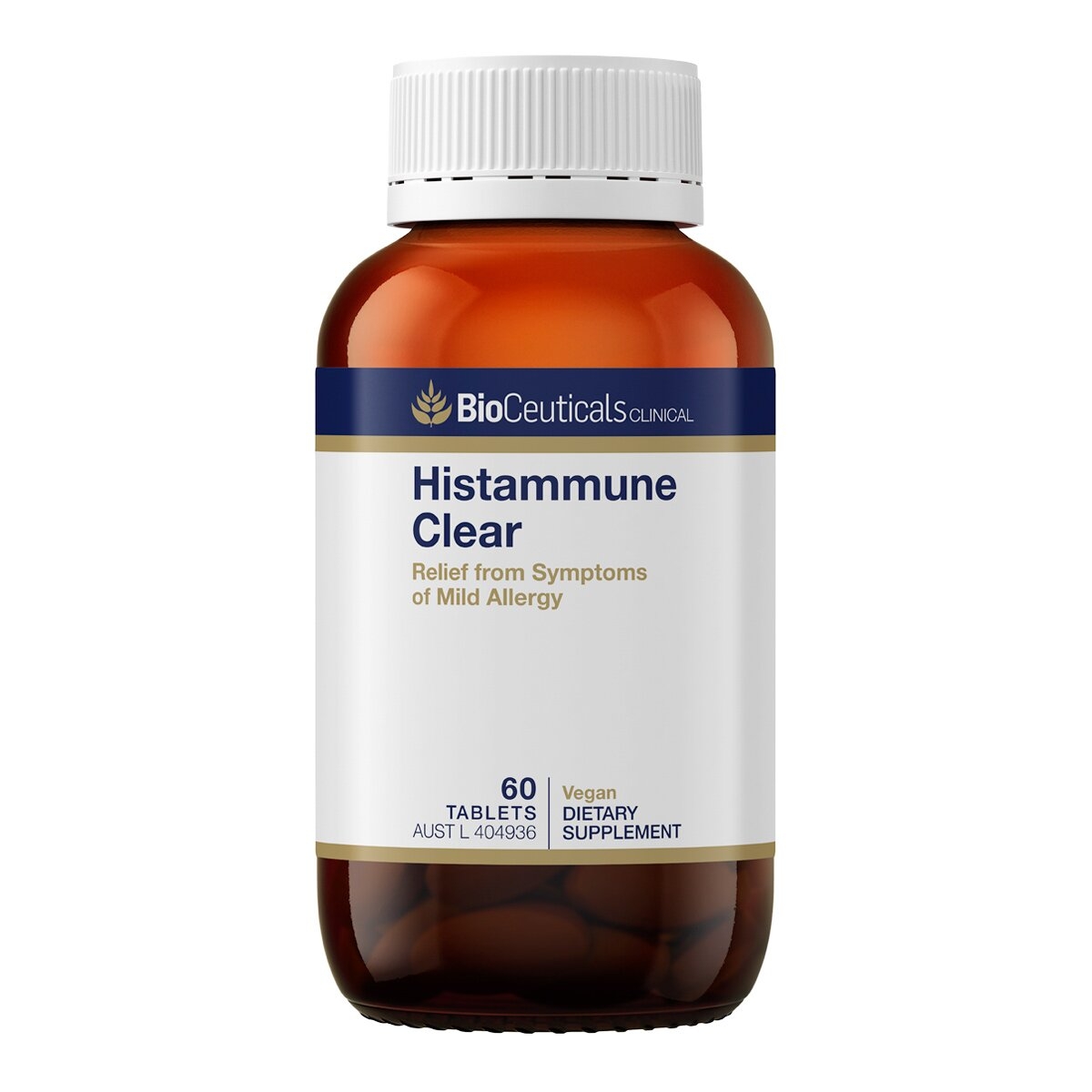
Histammune Clear is specifically formulated to support individuals managing elevated histamine levels and histamine intolerance (HIT), a condition affecting approximately 1-3% of the population where histamine accumulates due to impaired breakdown capacity [1]. This comprehensive formula targets the key mechanisms underlying histamine intolerance through synergistic ingredients that support histamine degradation, reduce inflammation, and enhance enzymatic function.
Quercetin dihydrate serves as a cornerstone ingredient, functioning as a powerful flavonoid that directly reduces histamine production at the cellular level. Research demonstrates that quercetin reduces the expression of the gene responsible for producing histidine decarboxylase, the key enzyme that converts the amino acid histidine into histamine [23]. In a randomized, double-blind study, 200 mg/day of quercetin for four weeks significantly improved histamine intolerance symptoms including nasal congestion, eye itching, and sneezing [6]. For broader anti-inflammatory benefits, dosages of 500-2000 mg/day are commonly used, with quercetin also playing a multifaceted role through its strong anti-inflammatory and antihistamine actions that help lower intestinal inflammation and support the enterocytes responsible for diamine oxidase (DAO) production.
Ascorbic acid (Vitamin C) provides dual benefits for histamine management, serving both as an antioxidant and by directly reducing circulating histamine levels [6]. This essential nutrient supports DAO enzyme function and helps counteract the oxidative stress associated with histamine overload. The inclusion of citrus bioflavonoids extract (Hesperidin) and Rutin (Rutoside) works synergistically with quercetin to enhance bioavailability and provide additional anti-inflammatory support [6]. These flavonoids help stabilize mast cells and reduce histamine release while supporting vascular integrity.
Pyridoxal 5-phosphate (P5P), the active form of Vitamin B6, is crucial for optimal histamine breakdown as DAO is a copper-dependent enzyme whose functional structure and activity rely on adequate B6 levels acting as a coenzyme in DAO synthesis [6]. Research demonstrated that even when subjects were supplemented with DAO enzymes, minimal benefits were achieved unless B6 levels were adequate, with sufficient B6 shown to improve histamine elimination by 20% [22]. This highlights the essential role of B6 in supporting the body's natural histamine degradation pathways.
Bromelain from Ananas comosus (pineapple) and Protease 6 provide enzymatic support that complements the formula's histamine-targeting approach. These proteolytic enzymes help reduce inflammation and support digestive function, which is particularly important since DAO is produced by intestinal epithelial cells and gastrointestinal health directly impacts histamine tolerance [2][8]. The combination of these enzymes helps address the inflammatory component often present in histamine intolerance while supporting overall digestive wellness and nutrient absorption essential for maintaining adequate cofactor levels.
[1]>https://www.sciencedirect.com/science/article/pii/S0002916523280533
[2]>https://pmc.ncbi.nlm.nih.gov/articles/PMC7463562/
[6]>https://www.bioceuticals.com.au/education/technical-guides/histamine-metabolism-support
[8]>https://pmc.ncbi.nlm.nih.gov/articles/PMC8069563/
[22]>https://academic.oup.com/clinchem/article/70/Supplement_1/hvae106.433/7760954
Ingredients
Quercetin dihydrate
500 mg
Ascorbic acid (Vitamin C)
166.7 mg
Rutin (Rutoside)
133.3 mg
Citrus bioflavonoids extract (Hesperidin)
100 mg
Ananas comosus (Bromelain)
80 mg
Protease 6
equiv. Protease
200000 HUT
32 mg
Pyridoxal 5-phosphate monohydrate (P5P)
equiv. Pyridoxine
7.8 mg
5 mg
Instructions
Instructions
Dosage
1 tablet, twice daily
Duration
Suitable for long-term histamine support, with dosing adjusted according to symptoms
Warnings
Contains gluten, galactose, phenylalanine
Do not use during pregnancy or lactation
If you have any pre-existing conditions or are on any medications, consult your health professional before use
Always read the label
Dietary supplements should not replace a balanced diet
If symptoms persist, worsen or change unexpectedly, consult your healthcare professional
Contains vitamin B6; stop taking this medication if you experience tingling, burning or numbness and see your healthcare practitioner as soon as possible
Contraindications
Contraindications
This supplement may interact with the following categories of medications, as well as specific active ingredients.
• Diltiazem
• Medications for high blood pressure
• Medications moved by pumps in cells - refer list
• Medications that slow blood clotting
• Sedative medications
• Verapamil
• Estrogens
• Fluphenazine
• Indinavir
• Levothyroxine
• Medications for cancer
• Warfarin
• Choline Magnesium Trisalicylate
• Salsalate
• Aspirin
Further details are provided below.
Please note that medications may be sold under different brand names, so check the listed active ingredients against your medication packaging.
Major Interactions
Moderate Interactions
Diltiazem
• Cardizem, others
Hesperidin may reduce how much diltiazem the body absorbs. This might decrease the effects of diltiazem.
Medications for high blood pressure
• Amlodipine
• Ramipril
• Perindopril
• Metoprolol
• Losartan
• Hydrochlorothiazide
Hesperidin might lower blood pressure. Taking hesperidin along with medications that lower blood pressure might cause blood pressure to go too low. Monitor your blood pressure closely.
Medications moved by pumps in cells
• P-glycoprotein substrates
Some medications are moved in and out of cells by pumps. Hesperidin might change how these pumps work and change how much medication stays in the body. In some cases, this might change the effects and side effects of a medication.
Medications that slow blood clotting
• Heparin
• Rivaroxaban
• Apixaban
• Dabigatran
• Clopidogrel
Hesperidin might slow blood clotting. Taking hesperidin along with medications that also slow blood clotting might increase the risk of bruising and bleeding and others.
Sedative medications
• Diazepam
• Alprazolam
• Temazepam
• Zolpidem
• Zopiclone
• Promethazine
Hesperidin might cause sleepiness and slowed breathing. Some medications, called sedatives, can also cause sleepiness and slowed breathing. Taking hesperidin with sedative medications might cause breathing problems and/or too much sleepiness.
Verapamil
• Calan, others
Hesperidin may increase how much verapamil the body absorbs. This might increase the effects and side effects of verapamil.
Bromelain might slow blood clotting. Taking bromelain along with medications that also slow blood clotting might increase the risk of bruising and bleeding.
Aluminum
Aluminum is found in most antacids. Vitamin C can increase how much aluminum the body absorbs. However, it is not clear if this interaction is a big concern. Take vitamin C two hours before or four hours after antacids.
Estrogens
• Oral contraceptive pill
• Estradiol
• Conjugated estrogens
• HRT combination products
Vitamin C might decrease how quickly the body gets rid of estrogens. Taking vitamin C along with estrogens might increase the effects and side effects of estrogens.
Fluphenazine
• Prolixin
Large amounts of vitamin C might decrease how much fluphenazine is in the body. Taking vitamin C along with fluphenazine might decrease the effectiveness of fluphenazine.
Indinavir
• Crixivan
Taking large amounts of vitamin C along with indinavir might decrease how much indinavir stays in the body. It's not clear if this interaction is a big concern.
Levothyroxine
• Synthroid, others
Taking vitamin C along with levothyroxine might increase how much levothyroxine the body absorbs. This can increase the amount of levothyroxine in the body and increase its effects and side effects.
Medications for cancer
• Cyclophosphamide
• Chlorambucil
• Melphalan
• Busulfan
• Temozolomide
Vitamin C is an antioxidant. There is some concern that antioxidants might decrease the effects of some medications used for cancer. If you are taking medications for cancer, check with your healthcare provider before taking vitamin C.
• Doxorubicin
• Bleomycin
• Daunorubicin
• Mitomycin
• Epirubicin
Vitamin C is an antioxidant. There is some concern that antioxidants might decrease the effects of medications used for cancer. If you are taking medications for cancer, check with your healthcare provider before taking vitamin C.
Niacin
Taking niacin with vitamin C and other antioxidants can decrease the effects of niacin on good cholesterol levels. It is unknown if vitamin C alone decreases the effects of niacin on good cholesterol levels.
• Jantoven
• Used for: blood thinning, clot prevention
Warfarin is used to slow blood clotting. Large amounts of vitamin C might decrease the effects of warfarin. Decreasing the effects of warfarin might increase the risk of clotting. Be sure to have your blood checked regularly. The dose of your warfarin might need to be changed.
Minor Interactions
Aspirin
Aspirin is removed by the body through the kidneys and in the urine. Vitamin C might decrease how the body removes aspirin and could potentially increase the amount of aspirin in the body. But it's not clear if this is a big concern.
Choline Magnesium Trisalicylate
• Trilisate
Vitamin C might decrease how quickly the body gets rid of choline magnesium trisalicylate. It is not clear if this interaction is a big concern.
Salsalate
• Disalcid
Vitamin C might decrease how quickly the body gets rid of salsalate. Taking vitamin C along with salsalate might cause too much salsalate in the body, and increase the effects and side effects of salsalate.
$15.09
Members Save
• Clinical study showed 200mg quercetin daily significantly improved histamine intolerance symptoms including nasal congestion and eye itching within 4 weeks
• Vitamin B6 supplementation improved histamine elimination by 20% when DAO enzyme levels were adequate
• Quercetin reduces histamine production by inhibiting the gene expression of histidine decarboxylase enzyme