
Clinical Benefits
Clinical Benefits
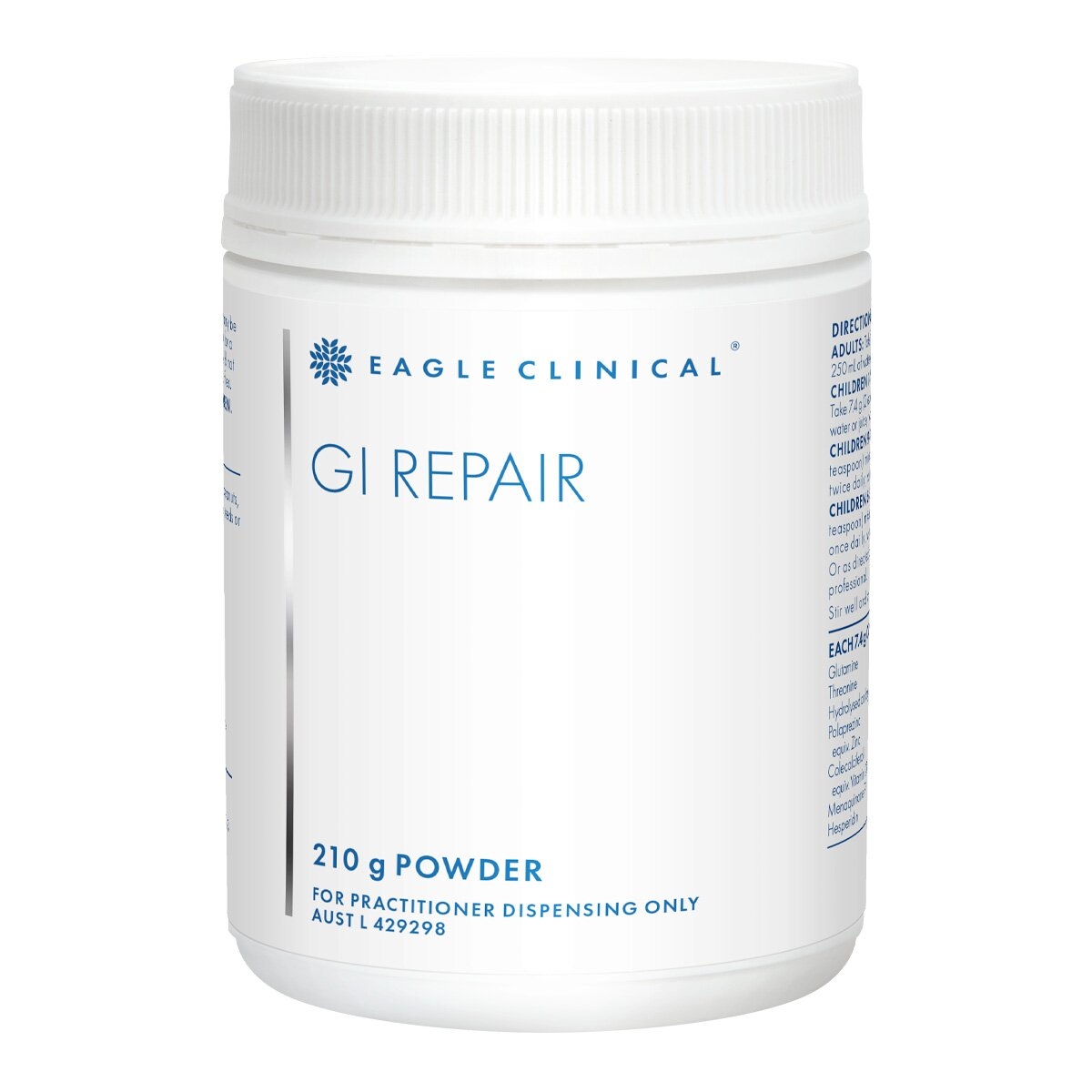
Intestinal permeability, often called "leaky gut," occurs when the protective barrier of the intestinal lining becomes compromised, allowing harmful substances like bacterial toxins, undigested food particles, and inflammatory compounds to enter systemic circulation. This barrier dysfunction has been linked to numerous health conditions including autoimmune diseases, skin disorders, food sensitivities, and chronic fatigue. GI Repair combines clinically-researched nutrients specifically targeted to restore and strengthen intestinal barrier function.
Glutamine serves as a critical fuel source for intestinal epithelial cells, supporting their growth, differentiation, and the structural integrity of tight junctions between cells. Research demonstrates that glutamine deprivation leads to decreased claudin levels in tight junctions, while restoration of epithelial glutamine increases claudin levels through regulation of the PI3K pathway, making it essential for healthy intestinal structure [29]. Human studies show glutamine effectively ameliorates mucositis associated with radiation and chemotherapy, enhances recovery of normal tissues, and normalizes intestinal hyperpermeability in patients with irritable bowel syndrome and inflammatory bowel disease [30].
Zinc carnosine (Polaprezinc) plays a unique role in epithelial wound healing through a process called epithelial cell restitution. Epithelial cells deficient in zinc show decreased expression of tight junction proteins zonulin and occludin, compromising intestinal barrier integrity. Zinc is also necessary for proper dendritic cell function and helps attenuate the pro-inflammatory mediator TNF-alpha, both reducing inflammation and permeability [13]. Zinc carnosine has superior properties over other zinc forms due to its higher affinity for damaged mucosa, where it adheres directly to sites of inflammation and releases zinc locally to promote mucosal repair [21][31]. Zinc deficiency is reported in up to 40% of inflammatory bowel disease cases, highlighting its critical role in moderating intestinal inflammation [13].
Vitamin D3 (Cholecalciferol) binds to vitamin D receptors highly expressed throughout the gut, regulating genes involved in gut immunity and barrier protection, including tight junction proteins like claudins, zonulin, and occludins. Vitamin D deficiency compromises intestinal barrier function and promotes intestinal permeability, while adequate levels support epithelial cell restitution and maintain healthy barrier function [21][24]. Citrus bioflavonoids, particularly hesperidin, are metabolized by intestinal bacteria into beneficial compounds like hesperetin and naringenin, which influence microbiota composition to improve intestinal barrier function and lower inflammation [25].
L-threonine and hydrolyzed collagen support the structural foundation of intestinal health, as the gastrointestinal tract accounts for 25-50% of whole-body protein turnover despite representing only 4-6% of total body mass. These amino acids provide essential building blocks for epithelial cell proliferation, repair, and differentiation, while supporting the synthesis of secretory proteins like mucin that protect the intestinal mucosa [19]. Vitamin K2 (Menaquinone 7) works synergistically with vitamin D to support proper calcium utilization and cellular function throughout the digestive system, contributing to overall intestinal tissue integrity.
[19]>https://www.biomedica.com.au/media/contentmanager/content/Gastrointestinal_Tissue_Integrity.pdf
[24]>https://academic.oup.com/ecco-jcc/article/18/10/1672/7673983#google_vignette
[25]>https://www.lifestylematrix.com/blog/post/polyphenols-the-new-prebiotic-frontier
[29]>https://www.metagenicsinstitute.com.au/tech-data/glutamine-boswellia-bospure-intestinal
Ingredients
Glutamine
3.75 g
L-threonine
750 mg
Hydrolysed collagen
1.5 g
Zinc carnosine (Polaprezinc)
equiv. Zinc
75 mg
17 mg
Cholecalciferol (Vitamin D3)
equiv. Vitamin D3
12.5 μg
500 IU
Menaquinone 7 (Vitamin K2)
45 μg
Citrus bioflavonoids extract (Hesperidin)
125 mg
Instructions
Instructions
Dosage
Adults and children from 14 years: 2 level teaspoons (7.4 g) twice daily, in 250 mL water or juice, with meals
Duration
4 weeks
Suitable for long-term managment in cases of inflammatory bowel disease
Warnings
Contains sucrose
Always read the label
Dietary supplements should not replace a balanced diet
If symptoms persist, worsen or change unexpectedly, consult your healthcare professional
Contains zinc which may be dangerous if taken in large amounts or for a long period
Do not take while on warfarin therapy without medical advice
Contraindications
Contraindications
This supplement may interact with the following categories of medications, as well as specific active ingredients.
• Diltiazem
• Medications for high blood pressure
• Medications moved by pumps in cells - refer list
• Medications that slow blood clotting
• Sedative medications
• Verapamil
• Atorvastatin
• Calcipotriene
• Digoxin
• Diuretics
• Medications changed by the liver - refer list
• Antibiotics
• Bictegravir/emtricitabine/tenofovir alafenamide
• Cephalexin
• Cisplatin
• Medications for HIV/AIDS
• Penicillamine
• Ritonavir
• Atazanavir
Further details are provided below.
Please note that medications may be sold under different brand names, so check the listed active ingredients against your medication packaging.
Major Interactions
Moderate Interactions
Diltiazem
• Cardizem, others
Hesperidin may reduce how much diltiazem the body absorbs. This might decrease the effects of diltiazem.
Medications for high blood pressure
• Amlodipine
• Ramipril
• Perindopril
• Metoprolol
• Losartan
• Hydrochlorothiazide
Hesperidin might lower blood pressure. Taking hesperidin along with medications that lower blood pressure might cause blood pressure to go too low. Monitor your blood pressure closely.
Medications moved by pumps in cells
• P-glycoprotein substrates
Some medications are moved in and out of cells by pumps. Hesperidin might change how these pumps work and change how much medication stays in the body. In some cases, this might change the effects and side effects of a medication.
Medications that slow blood clotting
• Heparin
• Rivaroxaban
• Apixaban
• Dabigatran
• Clopidogrel
Hesperidin might slow blood clotting. Taking hesperidin along with medications that also slow blood clotting might increase the risk of bruising and bleeding and others.
Sedative medications
• Diazepam
• Alprazolam
• Temazepam
• Zolpidem
• Zopiclone
• Promethazine
Hesperidin might cause sleepiness and slowed breathing. Some medications, called sedatives, can also cause sleepiness and slowed breathing. Taking hesperidin with sedative medications might cause breathing problems and/or too much sleepiness.
Verapamil
• Calan, others
Hesperidin may increase how much verapamil the body absorbs. This might increase the effects and side effects of verapamil.
Atorvastatin
Vitamin D might decrease how much atorvastatin the body absorbs. Taking vitamin D with atorvastatin might decrease the effects of atorvastatin.
Calcipotriene
• Dovonex
Taking vitamin D along with calcipotriene might increase the effects and side effects of calcipotriene.
• Used for: heart failure, atrial fibrillation
Taking vitamin D along with digoxin might increase the effects and side effects of digoxin. If you are taking digoxin, talk to your doctor before taking vitamin D supplements.
Vitamin D helps your body absorb calcium. Calcium can affect the heart. Diltiazem can also affect the heart. Taking large amounts of vitamin D along with diltiazem might decrease the effects of diltiazem.
Vitamin D helps the body absorb calcium. Calcium can affect the heart. Verapamil can also affect the heart. Do not take large amounts of vitamin D if you are taking verapamil.
Diuretics
• Thiazide diuretics
Vitamin D helps the body absorb calcium. Some "Diuretics" increase the amount of calcium in the body. Taking large amounts of vitamin D along with some "Diuretics" might cause too much calcium in the body. This could cause serious side effects, including kidney problems.
Antibiotics
• Doxycycline
• Ciprofloxacin
• Amoxicillin
• Azithromycin
• Norfloxacin
• Trimethoprim
Zinc might decrease how much antibiotic the body absorbs from the gut. Taking zinc along with quinolone antibiotics might decrease the effects of these antibiotics. To avoid this interaction, take antibiotics at least 2 hours before or 4-6 hours after zinc supplements.
Zinc can decrease the amount of tetracyclines the body absorbs. Taking zinc with tetracyclines might decrease the effects of tetracyclines. To avoid this interaction, take tetracyclines 2 hours before or 4-6 hours after taking zinc supplements.
Bictegravir/emtricitabine/tenofovir alafenamide
• Biktarvy
In theory, zinc might decrease how much bictegravir/emtricitabine/tenofovir alafenamide the body absorbs from the stomach. To avoid this interaction, take bictegravir/emtricitabine/tenofovir alafenamide at least 2 hours before or 6 hours after zinc containing products.
Cephalexin
• Keflex
Zinc can reduce how much cephalexin the body absorbs. This might decrease how well cephalexin works for treating infections. To avoid this interaction, take zinc 3 hours after taking cephalexin.
Cisplatin
• Platinol-AQ
Cisplatin is used to treat cancer. Taking zinc along with cisplatin might inactivate cisplatin therapy. But it's not clear if this is a big concern.
Medications for HIV/AIDS
• Integrase inhibitors
Taking zinc along with integrase inhibitors might decrease blood levels of integrase inhibitors. This might decrease the effects of these medications. Talk to your healthcare provider if you are using integrase inhibitors and want to start taking zinc.
Penicillamine
• Cuprimine, Depen
Zinc might decrease how much penicillamine the body absorbs. Taking zinc with penicillamine might decrease the effects of penicillamine. Take zinc and penicillamine at least 2 hours apart.
Ritonavir
• Norvir
Ritonavir is a drug used for HIV infection. Zinc can reduce how much ritonavir the body absorbs. But it isn't clear if this is a big concern.
Minor Interactions
Medications changed by the liver
• Atorvastatin
• Simvastatin
• Amlodipine
• Diltiazem
• Cyclosporine
• Tacrolimus
• Midazolam
• Alprazolam
• Rivaroxaban
• Some HIV antiretrovirals
Some medications are changed and broken down by the liver. Vitamin D might change how quickly the liver breaks down these medications. If you are taking medications metabolised by the liver, monitor for any changes in how your medication affects you.
Atazanavir
• Reyataz
Atazanavir is a drug used for HIV infection. Zinc decreases how much atazanavir the body absorbs. But the body still absorbs enough atazanavir for it to work for treating HIV. So this interaction is probably not a big concern.
$14.21
Members Save
• Glutamine normalizes intestinal hyperpermeability in IBS and IBD patients while supporting tight junction protein expression
• Zinc carnosine shows superior mucosal healing properties with targeted delivery to sites of intestinal inflammation
• Vitamin D3 regulates critical tight junction genes and epithelial cell restitution for optimal barrier function