
Clinical Benefits
Clinical Benefits
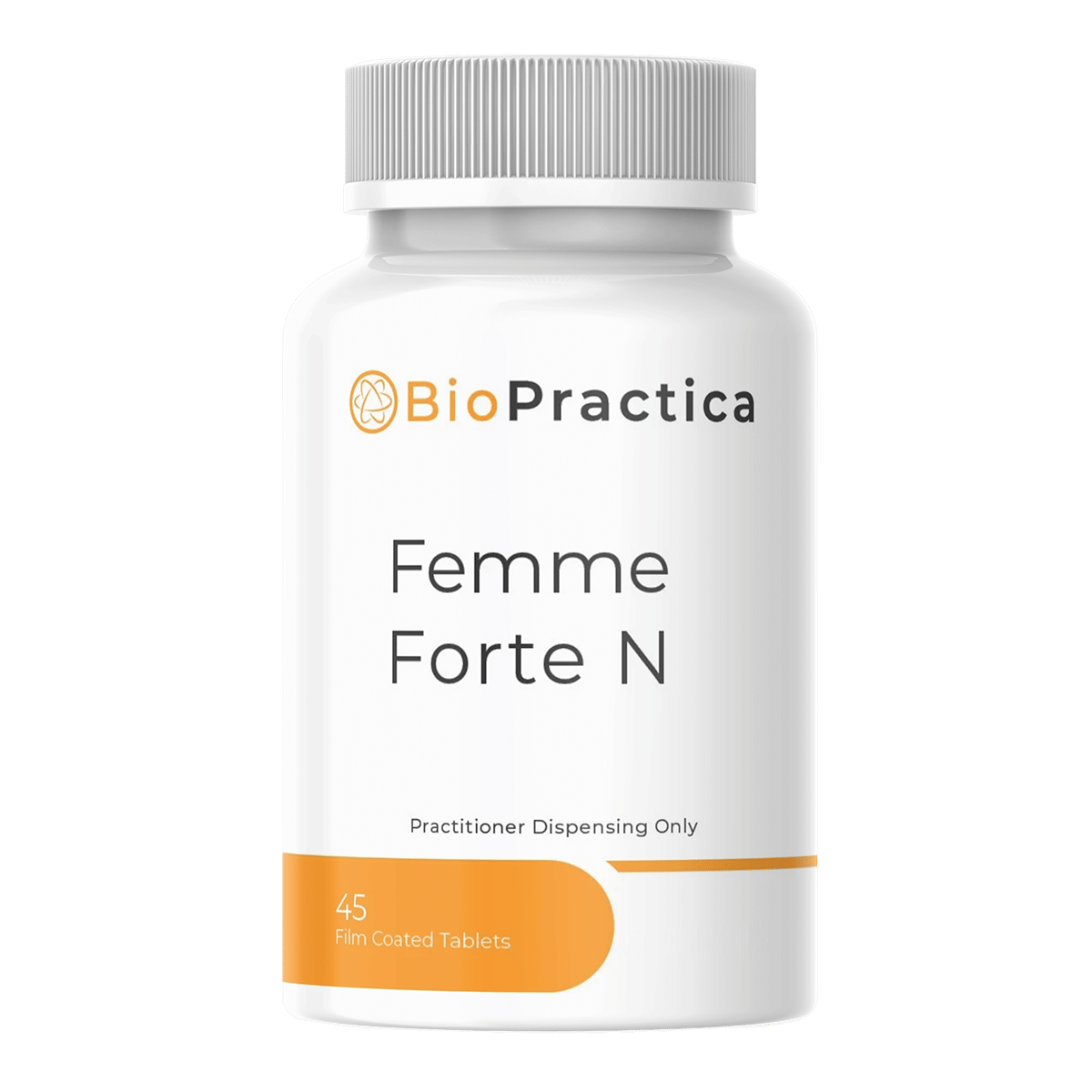
Femme Forte N targets low progesterone through a carefully selected blend of hormonal support herbs, adaptogenic compounds, and essential nutrients. Low progesterone affects approximately 47.8% of women worldwide and can manifest as PMS symptoms, menstrual irregularities, fertility challenges, and emotional instability due to disrupted GABA and serotonin neurotransmitter systems [63][4][5]. This comprehensive formula addresses multiple pathways involved in progesterone production and hormonal balance.
Vitex agnus-castus (Chasteberry) serves as the cornerstone ingredient, working through dopaminergic pathways to suppress prolactin release and restore normal GnRH activity. This leads to more balanced secretion of luteinizing hormone (LH) and follicle-stimulating hormone (FSH), which are critical for healthy follicular development, ovulation, and corpus luteum formation. Clinical studies demonstrate that Chaste Tree effectively treats PMS and PMDD symptoms, particularly somatic, depressive, and anxiety-related manifestations, with systematic reviews of over 1,700 participants showing symptom improvement at doses ranging from 4-41 mg per day [42]. Some research suggests Vitex may also mildly increase LH levels, further promoting luteinization of granulosa cells and supporting stronger progesterone production.
Withania somnifera (Ashwagandha) addresses stress-induced progesterone deficiency by targeting cortisol dysregulation. Chronic cortisol elevation disrupts reproductive function through multiple mechanisms including GnRH suppression, pregnenolone steal, and decreased ovarian sensitivity to reproductive hormones [35][36][37]. Clinical research shows that 300 mg of Ashwagandha taken twice daily significantly reduces serum cortisol levels by 27.9% compared to only 7.9% in placebo groups over 60 days [56]. Additionally, Withania enhances LH and FSH activity while supporting follicle growth and decreasing both estrogen and prolactin levels through aromatase inhibition [42].
The formula's targeted nutrients play crucial enzymatic roles in progesterone synthesis. Pyridoxal 5-phosphate (P5P), the active form of Vitamin B6, acts as a coenzyme for 3β-HSD, the key enzyme converting pregnenolone into progesterone, while also supporting estrogen clearance to keep prolactin levels balanced. Clinical evidence with 40mg of B6 twice daily demonstrates significant improvements in PMS symptoms including irritability, tension, sleep problems, mood swings, and depression [42]. Zinc citrate supports pituitary release of LH and FSH, with research showing 50mg daily elemental zinc for three consecutive menstrual cycles resulted in an 18% total reduction in PMS symptoms [42]. Potassium iodide provides essential iodine for thyroid hormone production, addressing hypothyroidism-induced progesterone deficiency, as thyroid receptors in ovarian tissue directly stimulate progesterone synthesis and work synergistically with FSH to enhance granulosa cell function [43][44].
Bupleurum falcatum and Rhodiola rosea provide additional adaptogenic support for stress resilience and hormonal balance, while mixed tocopherols (Vitamin E) offer antioxidant protection for reproductive tissues. Selenomethionine supports thyroid function alongside iodine, as both nutrients are essential for thyroid hormone production that directly influences progesterone synthesis through ovarian thyroid receptors.
[4]>https://pmc.ncbi.nlm.nih.gov/articles/PMC7231988/
[5]>https://www.sciencedirect.com/science/article/pii/S0091302220300479
[35]>https://pubmed.ncbi.nlm.nih.gov/31461711/
[36]>https://pubmed.ncbi.nlm.nih.gov/105533/
[37]>https://pmc.ncbi.nlm.nih.gov/articles/PMC10068287/
[42]>https://www.metagenicsinstitute.com.au/tech-data/vitex-ginger-withania
[43]>https://pubmed.ncbi.nlm.nih.gov/19298732/
[44]>https://www.thejgog.com/wp-content/uploads/securepdfs/2021/12/06_JGOG_Thyroid_article_final.pdf
Ingredients
Vitex agnus-castus (Chasteberry) ext.
ext. equiv. dry (fruit)
100 mg
1 g
Bupleurum falcatum ext.
ext. equiv. dry (root)
150 mg
1.5 g
Withania somnifera ext.
ext. equiv. dry (root)
208.3 mg
2.5 g
Rhodiola rosea ext.
ext. equiv. dry (root)
75 mg
600 mg
Tocopherols concentrate - mixed (low-alpha type) (Vitamin E)
75 mg
Pyridoxal 5-phosphate monohydrate (P5P)
equiv. Pyridoxine
23.5 mg
15 mg
Zinc citrate dihydrate
equiv. Zinc
46.6 mg
15 mg
Potassium iodide (Iodine)
equiv. Iodine
194.9 µg
149 µg
Selenomethionine (Selenium)
equiv. Selenium
187.5 µg
75 µg
Instructions
Instructions
Dosage
1 tablet daily
Duration
Minimum duration of 6 weeks, with continuation guided by symptoms
Suitable for long-term PMS + PMDD management
Warnings
Always read the label
Dietary supplements should not replace a balanced diet
If symptoms persist, worsen or change unexpectedly, consult your healthcare professional
Vitex agnus-castus may affect hormones and medicines such as oral contraceptives
Contains vitamin B6; stop taking this medication if you experience tingling, burning or numbness and see your healthcare practitioner as soon as possible
Contains zinc which may be dangerous if taken in large amounts or for a long period
Contains iodine; caution in concurrent use with thyroid medication
Contains selenium which is toxic in high doses; a daily dose of 150 µg for adults of selenium from dietary supplements should not be exceeded
Contraindications
Contraindications
This supplement may interact with the following categories of medications, as well as specific active ingredients.
• Medications that decrease the immune system
• Medications that slow blood clotting
• Sedative medications
• Warfarin
• Medications for diabetes
• Medications for high blood pressure
• Medications that can harm the liver
• Medications changed by the liver - refer list
• Medications for an overactive thyroid
• Lithium
• Medications moved by pumps in cells - refer list
• Medications for depression
• Cyclosporine
• Medications for cancer
• Selumetinib
• Estrogens
• Medications for mental conditions
• Medications used for Parkinson disease
• Metoclopramide
• Antibiotics
• Bictegravir/emtricitabine/tenofovir alafenamide
• Cephalexin
• Cisplatin
• Medications for HIV/AIDS
• Penicillamine
• Ritonavir
• Atazanavir
Further details are provided below.
Please note that medications may be sold under different brand names, so check the listed active ingredients against your medication packaging.
Major Interactions
Moderate Interactions
Medications that decrease the immune system
• Cyclosporine
• Tacrolimus
• Mycophenolate
• Prednisone
• Methotrexate
• Azathioprine
Selenium can increase the activity of the immune system. Some medications, such as those used after a transplant, decrease the activity of the immune system. Taking selenium along with these medications might decrease the effects of these medications.
Medications that slow blood clotting
• Heparin
• Rivaroxaban
• Apixaban
• Dabigatran
• Clopidogrel
Selenium might slow blood clotting. Taking selenium along with medications that also slow blood clotting might increase the risk of bruising and bleeding.
Niacin
Taking niacin along with the drug simvastatin can increase good cholesterol levels. Taking niacin plus simvastatin along with selenium and other antioxidants can decrease the effects of niacin and simvastatin on good cholesterol levels. It is unknown if selenium alone decreases the effects of niacin plus simvastatin on good cholesterol levels.
Sedative medications
• Diazepam
• Alprazolam
• Temazepam
• Zolpidem
• Zopiclone
• Promethazine
Selenium might reduce how quickly the body breaks down sedative medications. Taking selenium with these medications might increase the effects and side effects of these medications.
• Jantoven
• Used for: blood thinning, clot prevention
Selenium might slow blood clotting. Selenium might also increase the effects of warfarin in the body. Taking selenium along with warfarin might increase the chances of bruising and bleeding.
Medications for diabetes
• Glyburide
• Glipizide
• Insulin
• Sitagliptin
• Empagliflozin
• Semaglutide
• Dapagliflozin
Ashwagandha might lower blood sugar levels. Taking ashwagandha along with diabetes medications might cause blood sugar to drop too low. Monitor your blood sugar closely.
Medications for high blood pressure
• Amlodipine
• Ramipril
• Perindopril
• Metoprolol
• Losartan
• Hydrochlorothiazide
Ashwagandha might lower blood pressure. Taking ashwagandha along with medications that lower blood pressure might cause blood pressure to go too low. Monitor your blood pressure closely.
Medications that can harm the liver
• Acetaminophen / Paracetamol
• Methotrexate
• Atorvastatin
• Simvastatin
• Isoniazid
Ashwagandha might harm the liver. Some medications can also harm the liver. Taking ashwagandha along with a medication that can harm the liver might increase the risk of liver damage.
Ashwagandha can increase the activity of the immune system. Some medications, such as those used after a transplant, decrease the activity of the immune system. Taking ashwagandha along with these medications might decrease the effects of these medications.
Ashwagandha might cause sleepiness and slowed breathing. Some medications, called sedatives, can also cause sleepiness and slowed breathing. Taking ashwagandha with sedative medications might cause breathing problems and/or too much sleepiness.
Thyroid hormone
The body naturally produces thyroid hormones. Ashwagandha might increase how much thyroid hormone the body produces. Taking ashwagandha with thyroid hormone pills might cause too much thyroid hormone in the body, and increase the effects and side effects of thyroid hormone.
Large amounts of iodine can decrease thyroid function. Lithium can also decrease thyroid function. Taking iodine along with lithium might decrease thyroid function too much. Do not take large amounts of iodine if you are taking lithium.
Medications for an overactive thyroid
• Antithyroid drugs
Iodine can increase or decrease thyroid function. Taking iodine along with medications for an overactive thyroid might change the effects of these medications. Do not take iodine supplements if you are taking medications for an overactive thyroid, unless recommended by a healthcare provider.
Medications changed by the liver
• Glipizide
• Phenytoin
• Losartan
Some medications are changed and broken down by the liver. Rhodiola might change how quickly the liver breaks down these medications. If you are taking medications metabolised by the liver, monitor for any changes in how your medication affects you.
Rhodiola might lower blood sugar levels. Taking rhodiola along with diabetes medications might cause blood sugar to drop too low. Monitor your blood sugar closely.
Rhodiola might lower blood pressure. Taking rhodiola along with medications that lower blood pressure might cause blood pressure to go too low. Monitor your blood pressure closely.
Medications moved by pumps in cells
• P-glycoprotein substrates
Some medications are moved in and out of cells by pumps. Rhodiola might change how these pumps work and change how much medication stays in the body. In some cases, this might change the effects and side effects of a medication.
Rhodiola can increase the activity of the immune system. Some medications, such as those used after a transplant, decrease the activity of the immune system. Taking rhodiola along with these medications might decrease the effects of these medications.
Cyclosporine
• Restasis
• Used for: organ transplant, autoimmune conditions
Taking large amounts of vitamin E along with cyclosporine might increase how much cyclosporine the body absorbs. This might increase the effects and side effects of cyclosporine.
• Atorvastatin
• Simvastatin
• Amlodipine
• Diltiazem
• Cyclosporine
• Tacrolimus
• Midazolam
• Alprazolam
• Rivaroxaban
• Some HIV antiretrovirals
Some medications are changed and broken down by the liver. Vitamin E might change how quickly the liver breaks down these medications. If you are taking medications metabolised by the liver, monitor for any changes in how your medication affects you.
Medications for cancer
• Cyclophosphamide
• Chlorambucil
• Melphalan
• Busulfan
• Temozolomide
Vitamin E is an antioxidant. There is some concern that antioxidants might decrease the effects of some medications used for cancer. If you are taking medications for cancer, check with your healthcare provider before taking vitamin E.
Vitamin E might slow blood clotting. Taking vitamin E along with medications that also slow blood clotting might increase the risk of bruising and bleeding.
Taking niacin along with the drug simvastatin can increase good cholesterol levels. Taking niacin plus simvastatin along with vitamin E and other antioxidants can decrease the effects of niacin and simvastatin on good cholesterol levels. It is unknown if vitamin E alone decreases the effects of niacin plus simvastatin on good cholesterol levels.
Selumetinib
• Koselugo
Selumetinib, a drug used for cancer, contains vitamin E. Taking selumetinib with vitamin E-containing supplements can result in an unsafe dose of vitamin E. This could increase the risk of bleeding.
Warfarin is used to slow blood clotting. Vitamin E can also slow blood clotting. Taking vitamin E along with warfarin can increase the chances of bruising and bleeding. Be sure to have your blood checked regularly. The dose of your warfarin might need to be changed.
Estrogens
• Oral contraceptive pill
• Estradiol
• Conjugated estrogens
• HRT combination products
Vitex agnus-castus seems to change hormone levels in the body. Taking vitex agnus-castus along with estrogen pills might decrease the effects of estrogen pills.
Medications for mental conditions
• Olanzapine
• Quetiapine
• Risperidone
• Clozapine
• Haloperidol
• Aripiprazole
Vitex agnus-castus seems to affect a chemical in the brain called dopamine. Some medications for mental disorders help to decrease dopamine. Taking vitex agnus-castus along with these medications might decrease the effects of these medications.
Medications used for Parkinson disease
• Dopamine agonists
Vitex agnus-castus contains chemicals that affect the brain. These chemicals affect the brain similarly to some medications used for Parkinson disease. Taking vitex agnus-castus with these medications might increase the effects and side effects of the medications used for Parkinson disease.
Metoclopramide
Vitex agnus-castus seems to affect a certain brain chemical called dopamine. Metoclopramide also affects dopamine. Taking vitex agnus-castus along with metoclopramide might decrease the effects of metoclopramide.
Antibiotics
• Doxycycline
• Ciprofloxacin
• Amoxicillin
• Azithromycin
• Norfloxacin
• Trimethoprim
Zinc might decrease how much antibiotic the body absorbs from the gut. Taking zinc along with quinolone antibiotics might decrease the effects of these antibiotics. To avoid this interaction, take antibiotics at least 2 hours before or 4-6 hours after zinc supplements.
Zinc can decrease the amount of tetracyclines the body absorbs. Taking zinc with tetracyclines might decrease the effects of tetracyclines. To avoid this interaction, take tetracyclines 2 hours before or 4-6 hours after taking zinc supplements.
Bictegravir/emtricitabine/tenofovir alafenamide
• Biktarvy
In theory, zinc might decrease how much bictegravir/emtricitabine/tenofovir alafenamide the body absorbs from the stomach. To avoid this interaction, take bictegravir/emtricitabine/tenofovir alafenamide at least 2 hours before or 6 hours after zinc containing products.
Cephalexin
• Keflex
Zinc can reduce how much cephalexin the body absorbs. This might decrease how well cephalexin works for treating infections. To avoid this interaction, take zinc 3 hours after taking cephalexin.
Cisplatin
• Platinol-AQ
Cisplatin is used to treat cancer. Taking zinc along with cisplatin might inactivate cisplatin therapy. But it's not clear if this is a big concern.
Medications for HIV/AIDS
• Integrase inhibitors
Taking zinc along with integrase inhibitors might decrease blood levels of integrase inhibitors. This might decrease the effects of these medications. Talk to your healthcare provider if you are using integrase inhibitors and want to start taking zinc.
Penicillamine
• Cuprimine, Depen
Zinc might decrease how much penicillamine the body absorbs. Taking zinc with penicillamine might decrease the effects of penicillamine. Take zinc and penicillamine at least 2 hours apart.
Ritonavir
• Norvir
Ritonavir is a drug used for HIV infection. Zinc can reduce how much ritonavir the body absorbs. But it isn't clear if this is a big concern.
Bupleurum can increase the activity of the immune system. Some medications, such as those used after a transplant, decrease the activity of the immune system. Taking bupleurum along with these medications might decrease the effects of these medications.
Bupleurum might slow blood clotting. Taking bupleurum along with medications that also slow blood clotting might increase the risk of bruising and bleeding.
Minor Interactions
Medications changed by the liver
• Atorvastatin
• Simvastatin
• Amlodipine
• Diltiazem
• Cyclosporine
• Tacrolimus
• Midazolam
• Alprazolam
• Rivaroxaban
• Some HIV antiretrovirals
Some medications are changed and broken down by the liver. Ashwagandha might change how quickly the liver breaks down these medications. If you are taking medications metabolised by the liver, monitor for any changes in how your medication affects you.
• Caffeine
• Clozapine
• Olanzapine
• Theophylline
• Tizanidine
• Duloxetine
• Ramelteon
Some medications are changed and broken down by the liver. Rhodiola might change how quickly the liver breaks down these medications. If you are taking medications metabolised by the liver, monitor for any changes in how your medication affects you.
Medications for depression
• Antidepressant drugs
Rhodiola might increase the risk of side effects from antidepressant drugs.
Sedative medications
• Diazepam
• Alprazolam
• Temazepam
• Zolpidem
• Zopiclone
• Promethazine
Rhodiola might cause sleepiness and slowed breathing. Some medications, called sedatives, can also cause sleepiness and slowed breathing. Taking rhodiola with sedative medications might cause breathing problems and/or too much sleepiness.
Atazanavir
• Reyataz
Atazanavir is a drug used for HIV infection. Zinc decreases how much atazanavir the body absorbs. But the body still absorbs enough atazanavir for it to work for treating HIV. So this interaction is probably not a big concern.
$14.29
Members Save
• Vitex agnus-castus demonstrated effective PMS and PMDD symptom relief in systematic reviews of over 1,700 participants
• Withania somnifera reduced cortisol levels by 27.9% in clinical trials, addressing stress-induced progesterone deficiency
• Vitamin B6 (P5P) acts as a coenzyme for progesterone synthesis while zinc supports essential reproductive hormone release