
Clinical Benefits
Clinical Benefits
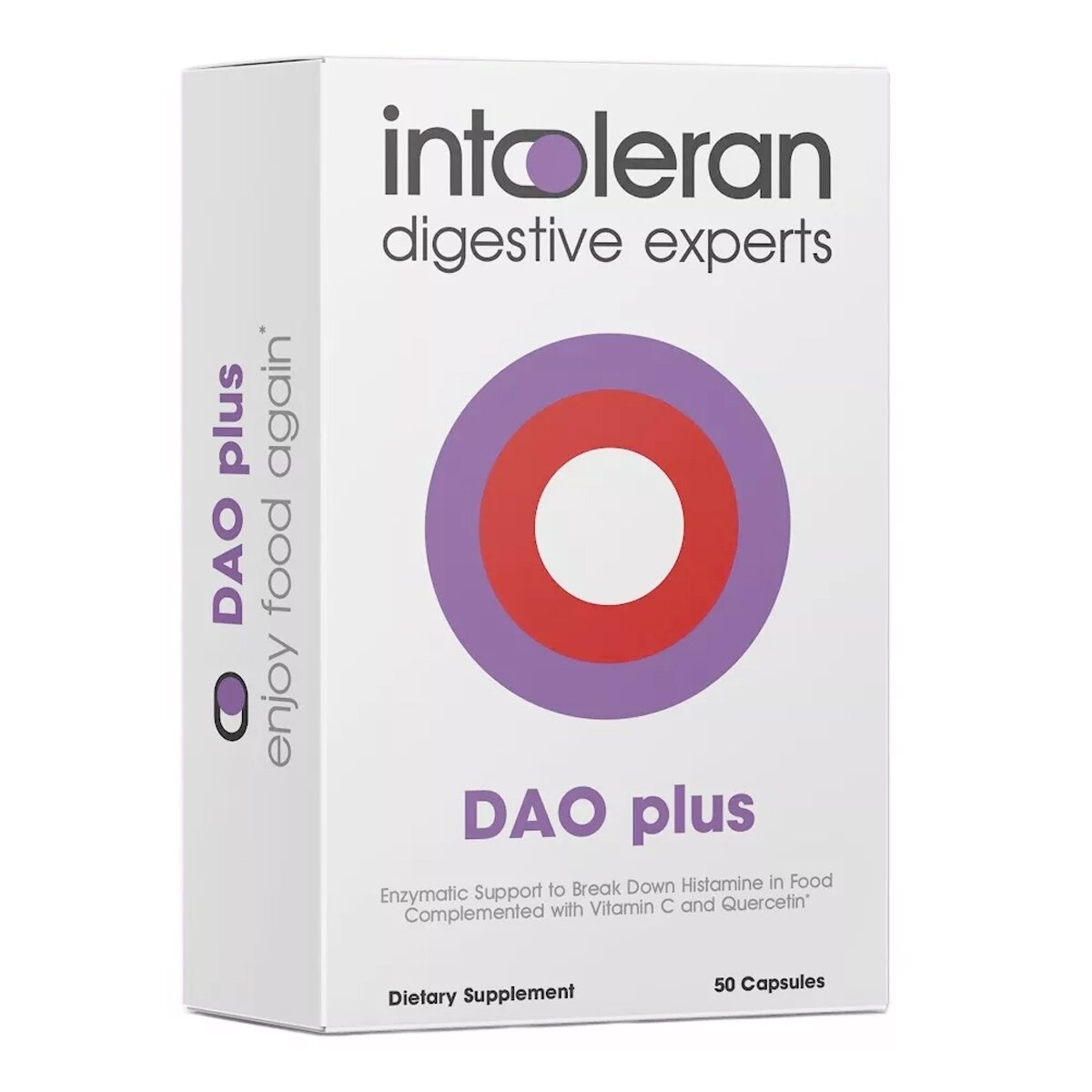
DAO Plus is specifically formulated to support individuals with Histamine Intolerance (HIT), a condition where the accumulation of histamine in the body occurs due to poor histamine elimination capacity. Unlike Mast Cell Activation which involves IgE antibodies, Histamine Intolerance is identified by immediate onset of symptoms after consuming certain foods or drinks, including post-meal flushing, itching, bloating, digestive discomfort, fatigue, and brain fog [1].
The primary active ingredient, porcine kidney protein extract providing diamine oxidase (DAO), directly addresses the root cause of Histamine Intolerance. DAO is the key enzyme responsible for breaking down histamine, particularly from food sources or histamine released from bacteria within the intestinal lumen [1][2]. When DAO function is impaired, histamine accumulates in the bloodstream and tissues, triggering a broad array of symptoms [4][7]. Clinical studies using 0.3 to 0.9 mg of DAO per day, taken 15 to 20 minutes before meals, have shown significant reductions in symptoms commonly associated with DAO deficiency, including migraines, hives, abdominal discomfort, and skin rashes. In one study, DAO supplementation led to a 61% reduction in symptoms, along with mild increases in plasma DAO levels, indicating a restoration of enzymatic activity [3].
Quercetin, a powerful flavonoid in this formula, provides multi-faceted support for histamine management. Research demonstrates that quercetin reduces the expression of the gene responsible for producing histidine decarboxylase, the key enzyme that converts the amino acid histidine into histamine [23]. A randomized, double-blind study showed that 200 mg/day of quercetin for four weeks significantly improved histamine intolerance symptoms such as nasal congestion, eye itching, and sneezing [6]. Additionally, quercetin plays a crucial role in supporting DAO production through its strong anti-inflammatory and antihistamine actions. At therapeutic doses, quercetin significantly lowers intestinal inflammation, modulates gut microbial balance, and improves intestinal motility, all of which reduce inflammatory burden and support the enterocytes responsible for DAO production.
Vitamin C (Ascorbic acid) serves dual functions in histamine management as both an antioxidant and by directly reducing circulating histamine levels. DAO is dependent on vitamin C for optimal activity, and deficiencies in this essential nutrient impair histamine degradation [5][6]. Vitamin C supports the production of DAO and helps maintain the enzyme's functionality under various stress conditions. For broader anti-inflammatory benefits, vitamin C is commonly used alongside other compounds like quercetin to enhance bioavailability and therapeutic effectiveness [6].
This scientifically-formulated combination addresses Histamine Intolerance through multiple mechanisms: direct enzyme replacement via DAO supplementation, reduction of histamine production through quercetin's action on histidine decarboxylase, and optimization of the body's natural histamine degradation pathways through essential cofactor support with vitamin C. Together, these ingredients work synergistically to help restore proper histamine balance and reduce the symptoms that significantly impair quality of life in those with HIT.
[1]>https://www.sciencedirect.com/science/article/pii/S0002916523280533
[2]>https://pmc.ncbi.nlm.nih.gov/articles/PMC7463562/
[3]>https://www.mdpi.com/2072-6643/13/7/2228
[4]>https://www.mdpi.com/2077-0383/13/16/4583
[5]>https://www.bioceuticals.com.au/education/articles/histamine-intolerance
[6]>https://www.bioceuticals.com.au/education/technical-guides/histamine-metabolism-support
[7]>https://www.biomedica.com.au/media/contentmanager/content/Histamine_Technical_Sheet.pdf
Ingredients
Porcine kidney protein extract (DAO)
equiv. Diamine oxidase
4.2 mg
0.3 mg
Quercetin
38 mg
Ascorbic acid (Vitamin C)
20 mg
Instructions
Instructions
Dosage
1 capsule only with histamine rich foods
Duration
Long-term management of histamine intolerance
Warnings
Do not exceed the maximum daily dosage
Always read the label
Dietary supplements should not replace a balanced diet
If symptoms persist, worsen or change unexpectedly, consult your healthcare professional
Contraindications
Contraindications
This supplement may interact with the following categories of medications, as well as specific active ingredients.
• Estrogens
• Fluphenazine
• Indinavir
• Levothyroxine
• Medications for cancer
• Warfarin
• Choline Magnesium Trisalicylate
• Salsalate
• Aspirin
Further details are provided below.
Please note that medications may be sold under different brand names, so check the listed active ingredients against your medication packaging.
Major Interactions
Moderate Interactions
Aluminum
Aluminum is found in most antacids. Vitamin C can increase how much aluminum the body absorbs. However, it is not clear if this interaction is a big concern. Take vitamin C two hours before or four hours after antacids.
Estrogens
• Oral contraceptive pill
• Estradiol
• Conjugated estrogens
• HRT combination products
Vitamin C might decrease how quickly the body gets rid of estrogens. Taking vitamin C along with estrogens might increase the effects and side effects of estrogens.
Fluphenazine
• Prolixin
Large amounts of vitamin C might decrease how much fluphenazine is in the body. Taking vitamin C along with fluphenazine might decrease the effectiveness of fluphenazine.
Indinavir
• Crixivan
Taking large amounts of vitamin C along with indinavir might decrease how much indinavir stays in the body. It's not clear if this interaction is a big concern.
Levothyroxine
• Synthroid, others
Taking vitamin C along with levothyroxine might increase how much levothyroxine the body absorbs. This can increase the amount of levothyroxine in the body and increase its effects and side effects.
Medications for cancer
• Cyclophosphamide
• Chlorambucil
• Melphalan
• Busulfan
• Temozolomide
Vitamin C is an antioxidant. There is some concern that antioxidants might decrease the effects of some medications used for cancer. If you are taking medications for cancer, check with your healthcare provider before taking vitamin C.
• Doxorubicin
• Bleomycin
• Daunorubicin
• Mitomycin
• Epirubicin
Vitamin C is an antioxidant. There is some concern that antioxidants might decrease the effects of medications used for cancer. If you are taking medications for cancer, check with your healthcare provider before taking vitamin C.
Niacin
Taking niacin with vitamin C and other antioxidants can decrease the effects of niacin on good cholesterol levels. It is unknown if vitamin C alone decreases the effects of niacin on good cholesterol levels.
• Jantoven
• Used for: blood thinning, clot prevention
Warfarin is used to slow blood clotting. Large amounts of vitamin C might decrease the effects of warfarin. Decreasing the effects of warfarin might increase the risk of clotting. Be sure to have your blood checked regularly. The dose of your warfarin might need to be changed.
Minor Interactions
Aspirin
Aspirin is removed by the body through the kidneys and in the urine. Vitamin C might decrease how the body removes aspirin and could potentially increase the amount of aspirin in the body. But it's not clear if this is a big concern.
Choline Magnesium Trisalicylate
• Trilisate
Vitamin C might decrease how quickly the body gets rid of choline magnesium trisalicylate. It is not clear if this interaction is a big concern.
Salsalate
• Disalcid
Vitamin C might decrease how quickly the body gets rid of salsalate. Taking vitamin C along with salsalate might cause too much salsalate in the body, and increase the effects and side effects of salsalate.
$8.26
Members Save
• Clinical studies show DAO supplementation achieved a 61% reduction in histamine intolerance symptoms including migraines, hives, and digestive discomfort
• Quercetin demonstrated significant improvement in nasal congestion, eye itching, and sneezing in a randomized controlled trial over four weeks
• Reduces histamine production by inhibiting histidine decarboxylase, the key enzyme that converts histidine to histamine