top of page

Clinical Benefits
Clinical Benefits
BioMatrix combines clinically-researched amino acids and compounds specifically targeted at restoring intestinal barrier function and addressing increased intestinal permeability. This comprehensive formula addresses the complex structural and functional needs of the gut lining, which relies on intact tight junctions and a healthy basement membrane to prevent unwanted substances from entering systemic circulation.
N-acetyl glucosamine (NAG) serves as an essential precursor in the synthesis of glycosaminoglycans (GAGs), which are critical components of the basement membrane supporting the architecture and structure of the gut lining [19]. GAGs play vital roles in supporting cellular proliferation, cellular migration, and wound healing processes. The degradation of GAGs has been directly associated with inflammatory bowel disease (IBD) and intestinal permeability, with clinical evidence supporting oral N-acetyl glucosamine supplementation at 3-6g per day for significant improvement of symptoms and recovery [19].
L-glutamine functions as a crucial fuel source for intestinal epithelial cells, supporting epithelial cell growth and differentiation while maintaining the structure and integrity of tight junctions [29]. This amino acid serves as a precursor for nucleotide synthesis in rapidly dividing intestinal cells, supporting healthy cellular reproduction and therefore decreasing intestinal permeability. Research has revealed that glutamine deprivation leads to decreased claudin levels in tight junctions, while restoration of epithelial glutamine increases claudin levels through regulation of the PI3K pathway, demonstrating glutamine's essential role in maintaining healthy intestinal structure [29]. Human studies have shown that glutamine ameliorates mucositis associated with radiation and chemotherapy, enhances recovery of normal tissues, and normalizes intestinal hyperpermeability in patients with irritable bowel syndrome and inflammatory bowel disease [30].
The amino acids L-threonine, L-proline, and L-serine work synergistically to support the structural integrity of the intestinal barrier. Although the gastrointestinal tract represents only 4-6% of total body mass, the intestines account for 25-50% of whole protein turnover, making adequate amino acid availability crucial for barrier function [19]. These amino acids are utilized by the intestine to support intestinal mucosa integrity and function by providing fuel to enterocytes for metabolic processes such as active nutrient transport, supplying essential amino acids for polyamine synthesis involved in cellular proliferation, repair, and differentiation, and providing amino acids for incorporation in secretory proteins like mucin, which supports the intestinal mucosa for epithelial protection [19].
L-threonine and L-serine are particularly important as they are major components of mucin proteins, which form the protective mucus layer overlying the intestinal epithelium. L-proline contributes to collagen synthesis, supporting the structural framework of the basement membrane that anchors epithelial cells and provides additional barrier protection against unwanted permeability between cells.
Ingredients
N-acetyl glucosamine (NAG)
1.5 g
L-glutamine
1 g
L-threonine
1 g
L-proline
750 mg
L-serine
750 mg
Instructions
Instructions
Dosage
1 heaped teaspoon (6 g) once or twice daily in water or juice
Duration
4 weeks
Warnings
Always read the label
Dietary supplements should not replace a balanced diet
If symptoms persist, worsen or change unexpectedly, consult your healthcare professional
Contraindications
Contraindications
Major Interactions
Moderate Interactions
Minor Interactions
$14.41
Members Save
• N-acetyl glucosamine supports GAG synthesis essential for basement membrane structure, with clinical evidence showing 3-6g daily improves IBD symptoms and intestinal permeability recovery
• L-glutamine normalizes intestinal hyperpermeability in IBS and IBD patients while supporting tight junction integrity through claudin protein regulation
• Amino acid complex provides 25-50% of intestinal protein turnover needs, supporting epithelial cell proliferation, repair, and protective mucin synthesis
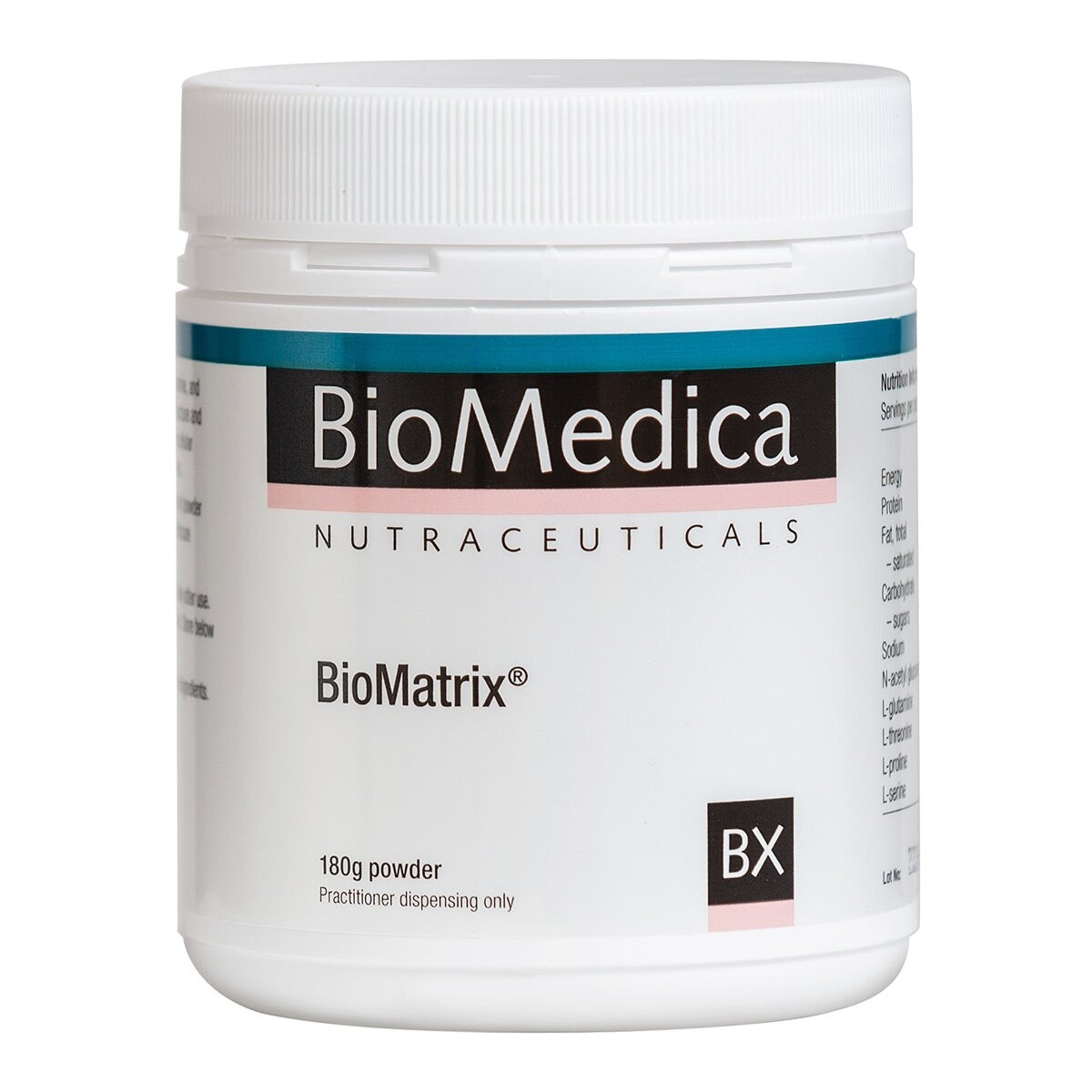
BioMatrix
BioMedica
bottom of page