
Clinical Benefits
Clinical Benefits
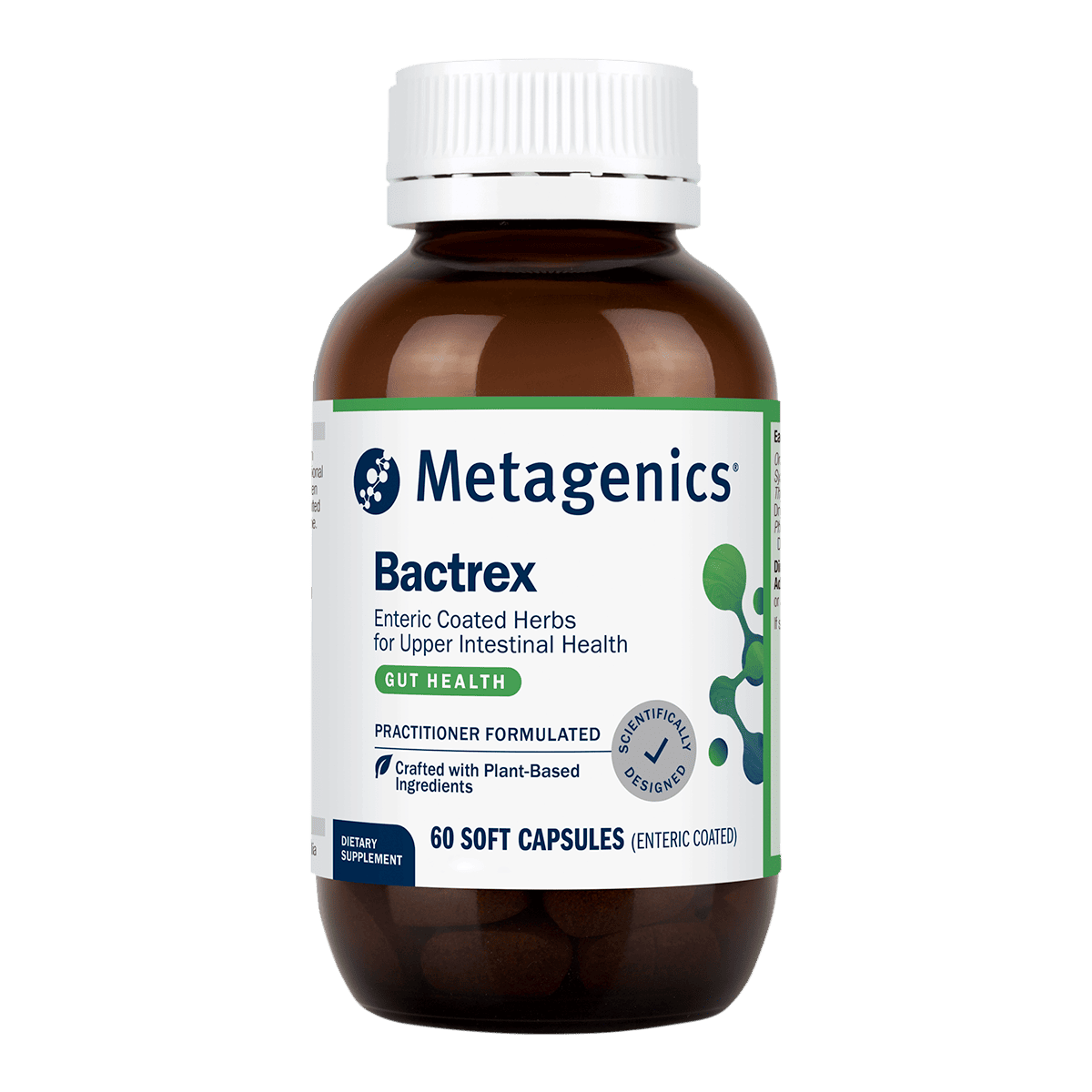
Bactrex is formulated to target Small Intestinal Bacterial Overgrowth (SIBO), a condition where excessive bacteria in the small intestine leads to uncomfortable bloating, gas production, and digestive dysfunction. SIBO affects up to 81% of individuals with bloating symptoms, creating a cycle of bacterial fermentation that produces hydrogen and methane gases while interfering with normal nutrient absorption [20].
Phellodendron amurense provides potent antimicrobial support through its high concentration of berberine, a plant alkaloid that directly targets pathogenic bacteria commonly implicated in SIBO. Berberine works by disrupting bacterial cellular processes, interfering with DNA and protein synthesis to suppress replication and colony formation. Additionally, it compromises bacterial cell membrane integrity, increasing permeability and causing leakage of intracellular contents that ultimately leads to bacterial death. These mechanisms have proven effective against a range of opportunistic gram-positive and gram-negative bacteria, including Clostridium perfringens, Escherichia coli, and Streptococcus mutans [42].
Oregano essential oil contains carvacrol, a volatile aromatic compound with demonstrated antimicrobial properties that disrupts bacterial cell membranes, increases permeability, and causes cell wall disintegration leading to bacterial death. Clinical trials have shown oregano oil's effectiveness against a broad spectrum of pathogenic bacteria including Escherichia coli, Salmonella species, Staphylococcus, and Enterococcus. In a comparative clinical trial, 100mg of oregano oil combined with thyme essential oils proved more effective than the antibiotic rifaximin for SIBO treatment, achieving 46% breath test normalization in 4 weeks compared to rifaximin's 34% in 2 weeks, with fewer reported adverse effects [2][3].
Thyme essential oil works synergistically with oregano through its active compound thymol, which possesses similar antimicrobial mechanisms. The combination of oregano and thyme oils has demonstrated complete or partial eradication of enteric pathogens while improving gastrointestinal symptoms such as gas, bloating, abdominal pain, and altered bowel habits. When rifaximin non-responders switched to the oil combination, they achieved 57-60% breath test normalization [3].
Clove essential oil contributes eugenol, a phenolic compound with potent antibacterial effects that works by damaging proteins inside bacterial cells and binding to fatty membrane components. This disrupts key enzymes such as ATPase that produce cellular energy, alters membrane permeability causing cellular leakage, and prevents microbial reproduction. These mechanisms have shown effectiveness against Escherichia coli, Staphylococcus aureus, Klebsiella pneumoniae, and Proteus vulgaris. Beyond its antimicrobial action, clove oil provides antispasmodic effects that relax gastrointestinal smooth muscle, reducing involuntary contractions and spasms that contribute to SIBO-related cramping, abdominal tension, and gas retention [2].
Ingredients
Phellodendron amurense ext.
ext. equiv. dry (stem bark)
150 mg
750 mg
Origanum vulgare (Oregano) (leaf) essential oil
100 mg
Syzygium aromaticum (Clove) (leaf) essential oil
50 mg
Thymus vulgaris (Thyme) (herb flowering) essential oil
50 mg
Instructions
Instructions
Dosage
2 capsules twice daily with meals
Duration
4 weeks
Warnings
Always read the label
Dietary supplements should not replace a balanced diet
If symptoms persist, worsen or change unexpectedly, consult your healthcare professional
For short-term use only
Contraindications
Contraindications
This supplement may interact with the following categories of medications, as well as specific active ingredients.
• Medications changed by the liver - refer list
• Medications for diabetes
• Medications that slow blood clotting
• Estrogens
• Dextromethorphan
• Losartan
• Medications for high blood pressure
• Metformin
• Midazolam
• Pentobarbital
• Sedative medications
• Tacrolimus
Further details are provided below.
Please note that medications may be sold under different brand names, so check the listed active ingredients against your medication packaging.
Major Interactions
Moderate Interactions
Medications changed by the liver
• Caffeine
• Clozapine
• Olanzapine
• Theophylline
• Tizanidine
• Duloxetine
• Ramelteon
• Glipizide
• Phenytoin
• Losartan
• Tramadol
• Metoprolol
• Fluoxetine
• Paroxetine
• Tamoxifen
• Amitriptyline
• Atorvastatin
• Simvastatin
• Amlodipine
• Diltiazem
• Cyclosporine
• Tacrolimus
• Midazolam
• Alprazolam
• Rivaroxaban
• Some HIV antiretrovirals
Some medications are changed and broken down by the liver. Clove might change how quickly the liver breaks down these medications. If you are taking medications metabolised by the liver, monitor for any changes in how your medication affects you.
Medications for diabetes
• Glyburide
• Glipizide
• Insulin
• Sitagliptin
• Empagliflozin
• Semaglutide
• Dapagliflozin
Clove might lower blood sugar levels. Taking clove along with diabetes medications might cause blood sugar to drop too low. Monitor your blood sugar closely.
Medications that slow blood clotting
• Heparin
• Rivaroxaban
• Apixaban
• Dabigatran
• Clopidogrel
Oregano might slow blood clotting. Taking oregano along with medications that also slow blood clotting might increase the risk of bruising and bleeding. Phellodendron contains a chemical called berberine. Berberine might slow blood clotting. Taking phellodendron along with medications that also slow blood clotting might increase the risk of bruising and bleeding.
Estrogens
• Oral contraceptive pill
• Estradiol
• Conjugated estrogens
• HRT combination products
Thyme might act like estrogen in the body. Taking thyme along with estrogen might decrease the effects of estrogen.
Cholinergic drugs
Thyme can increase a chemical in the body called acetylcholine. Some medications that are used for glaucoma, Alzheimer disease, and other conditions, also increase acetylcholine levels. Taking thyme with these medications might increase the chance of side effects.
Dextromethorphan
Phellodendron contains a chemical called berberine. Berberine might decrease how quickly the body breaks down dextromethorphan. This might increase the effects and side effects of dextromethorphan.
Losartan
The liver activates losartan to make it work. Phellodendron might decrease how quickly the body activates losartan, which might decrease the effects of losartan.
Some medications are changed and broken down by the liver. Phellodendron might change how quickly the liver breaks down these medications. If you are taking medications metabolised by the liver, monitor for any changes in how your medication affects you.
Phellodendron contains a chemical called berberine. Berberine might lower blood sugar levels. Taking phellodendron along with diabetes medications might cause blood sugar to drop too low. Monitor your blood sugar closely.
Medications for high blood pressure
• Amlodipine
• Ramipril
• Perindopril
• Metoprolol
• Losartan
• Hydrochlorothiazide
Metformin
Phellodendron contains a chemical called berberine. Berberine might increase the amount of metformin in the body. This may increase its effects and side effects. This interaction seems to occur when berberine is taken around 2 hours before metformin. Taking berberine and metformin at the same time doesn't seem to increase the amount of metformin in the body.
Midazolam
The body breaks down midazolam to get rid of it. Phellodendron contains a chemical called berberine. Berberine can decrease how quickly the body breaks it down. This might increase the effects and side effects of midazolam.
Pentobarbital
Pentobarbital is a medication that can cause sleepiness. Phellodendron might also cause sleepiness and drowsiness. Taking phellodendron with pentobarbital might cause too much sleepiness.
Sedative medications
• Diazepam
• Alprazolam
• Temazepam
• Zolpidem
• Zopiclone
• Promethazine
Phellodendron might cause sleepiness and slowed breathing. Some medications, called sedatives, can also cause sleepiness and slowed breathing. Taking phellodendron with sedative medications might cause breathing problems and/or too much sleepiness.
Tacrolimus
Tacrolimus is removed from the body by the liver. Phellodendron contains a chemical called berberine. Berberine might slow down the body's ability to remove tacrolimus. This might increase the effects and side effects of tacrolimus.
Minor Interactions
Medications that slow blood clotting
• Warfarin
• Heparin
• Rivaroxaban
• Apixaban
• Dabigatran
• Aspirin
• Clopidogrel
Clove might slow blood clotting. Taking clove along with medications that also slow blood clotting might increase the risk of bruising and bleeding.
$14.30
Members Save
• Oregano and thyme oils achieved 46% SIBO breath test normalization in 4 weeks, outperforming antibiotic rifaximin's 34% success rate
• Berberine from Phellodendron directly targets key SIBO bacteria including E. coli and Clostridium perfringens through cellular membrane disruption
• Essential oil combination showed 57-60% success rate in patients who failed antibiotic treatment, with fewer adverse effects