
Clinical Benefits
Clinical Benefits
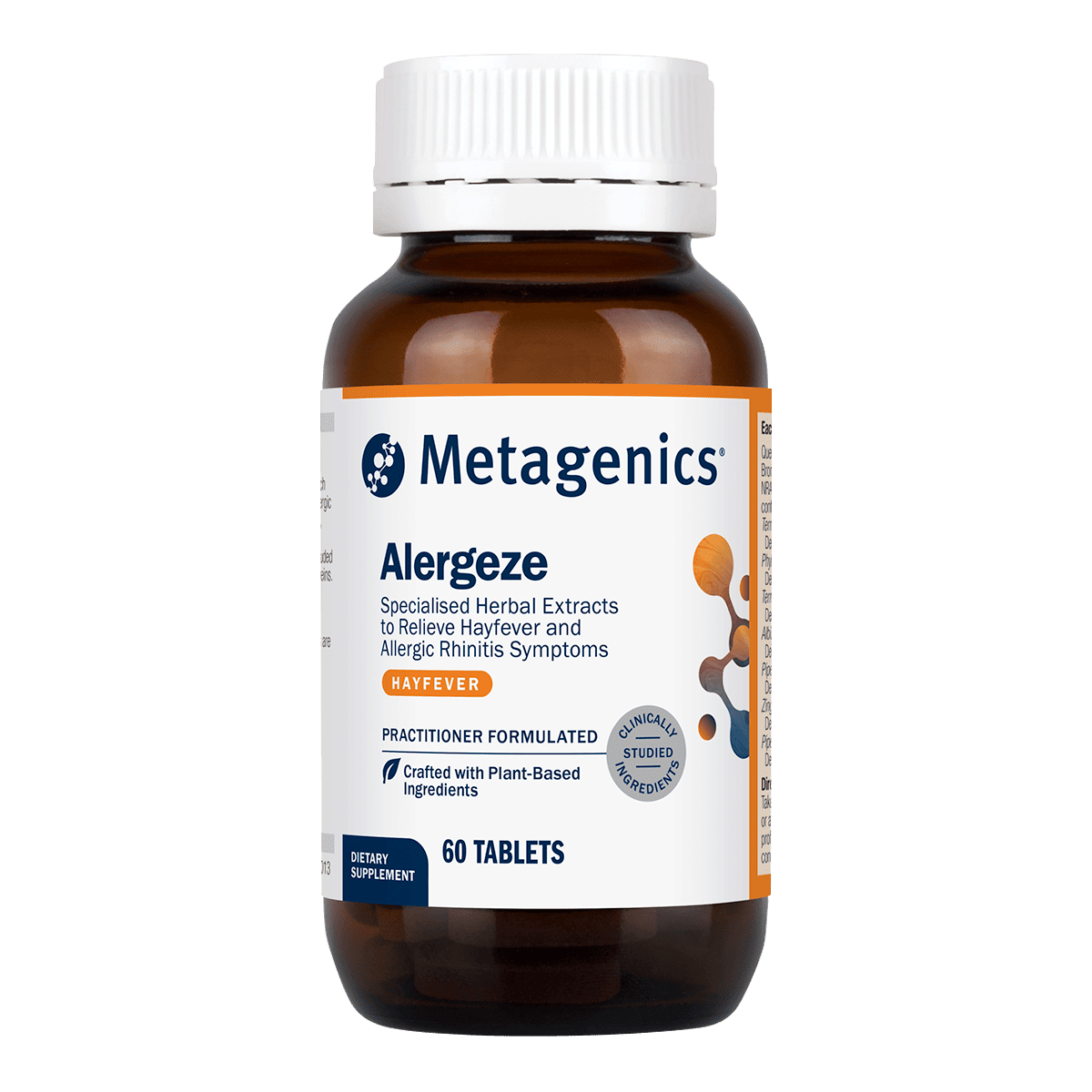
Allergeze is a comprehensive formulation designed to address elevated histamine levels and mast cell activation, combining traditional Ayurvedic herbs with scientifically-validated compounds. Mast cells are immune cells that release histamine and other inflammatory mediators when activated, leading to symptoms ranging from digestive discomfort and skin reactions to respiratory issues and neurological symptoms. This formulation targets multiple pathways involved in mast cell regulation and histamine management.
The quercetin dihydrate in this formula serves as a potent mast cell stabilizer by inhibiting intracellular calcium influx, a crucial trigger for mast cell degranulation. By blocking calcium channels and interfering with calcium-dependent signaling pathways, quercetin prevents the release of histamine and other pro-inflammatory mediators, effectively keeping mast cells inactive even when exposed to allergens [22]. Human studies with 200 mg per day of quercetin for 4 weeks demonstrated significant improvement in nasal and eye symptoms including itching, sneezing, and nasal discharge, along with better sleep and enhanced quality of life [18]. The formula's inclusion of bromelain from Ananas comosus (pineapple) enhances quercetin's bioavailability, as bromelain specifically improves quercetin absorption.
The traditional Ayurvedic combination of Terminalia chebula, Phyllanthus emblica, and Terminalia bellirica works synergistically to support immune balance and gastrointestinal health. Terminalia chebula offers multiple therapeutic benefits by strengthening gut barrier integrity and reducing mast cell activation in the intestinal lining, which helps alleviate inflammation and hypersensitivity reactions in the gut [4]. This herb exhibits strong immunomodulatory properties, helping to balance Th1/Th2 cytokine responses and boosting IL-10 expression, a crucial anti-inflammatory cytokine that helps regulate immune overactivity. Clinical evidence shows that a single oral dose of 50 mg per kg of Terminalia chebula significantly reduced coughing within 30 minutes, with effects lasting up to 300 minutes, demonstrating activity greater than codeine [36].
Albizia lebbeck provides additional mast cell stabilization by inhibiting degranulation and blocking histamine release through suppression of calcium influx into cells. This herb also exhibits anti-inflammatory properties by downregulating mast cell-generated inflammatory cytokines such as IL-4, IL-5, and TNF-α, which helps reduce eosinophilic inflammation commonly found in asthma and allergic rhinitis [33]. In vivo studies demonstrate that Albizia lebbeck prevents allergen-induced bronchoconstriction and reduces eosinophilic infiltration. When combined with Terminalia chebula, this combination significantly reduced allergic symptoms and histamine levels in seasonal allergy patients after 6 weeks of treatment [4].
The warming spices Piper longum, Zingiber officinale, and Piper nigrum not only enhance the bioavailability of other compounds but provide their own anti-inflammatory and digestive support benefits. These traditional herbs work synergistically to improve absorption and utilization of the primary active compounds while supporting overall digestive function and reducing inflammatory responses throughout the body.
Ingredients
Terminalia chebula ext.
ext. equiv. dry (fruit pericarp)
258 mg
1288 mg
Phyllanthus emblica (Amlalaki) ext.
ext. equiv. dry (fruit pericarp)
156 mg
782 mg
Terminalia bellirica ext.
ext. equiv. dry (fruit pericarp)
152 mg
760 mg
Albizia lebbeck ext.
ext. equiv. dry (stem bark)
48 mg
378 mg
Piper longum (Long pepper) ext.
ext. equiv. dry (fruit)
22 mg
30 mg
Zingiber officinale (Ginger) ext.
ext. equiv. dry (rhizome)
11 mg
30 mg
Piper nigrum (Black pepper) ext.
ext. equiv. dry (fruit)
14.2 mg
30 mg
Quercetin dihydrate
1000 mg
564 mg
Ananas comosus (Bromelain)
Instructions
Instructions
Dosage
2 tablets in the morning
Duration
Suitable for long-term mast cell stabilsation support
Warnings
Not to be used in children under two years of age without medical advice
Dietary supplements should not replace a balanced diet
Contraindications
Contraindications
This supplement may interact with the following categories of medications, as well as specific active ingredients.
• CNS Depressants
• Clopidogrel
• Medications for diabetes
• Medications that slow blood clotting
• Cyclosporine
• Medications changed by the liver - refer list
• Medications moved by pumps in cells - refer list
• Nevirapine
• Pentobarbital
• Phenytoin
• Propranolol
• Rifampin
• Carbamazepine
• Cefotaxime
• Theophylline
• Omeprazole
• Atorvastatin
• Losartan
• Nifedipine
• Phenprocoumon
• Warfarin
• Medications for high blood pressure
• Metronidazole
Further details are provided below.
Please note that medications may be sold under different brand names, so check the listed active ingredients against your medication packaging.
Major Interactions
Moderate Interactions
CNS Depressants
• pentobarbital
• phenobarbital
• secobarbital
• clonazepam
• lorazepam
• zolpidem
• others
Animal research suggests that certain constituents from Albizia julibrissin flowers can potentiate pentobarbital-induced sleeping time in mice. Theoretically, Albizia julibrissin might enhance the therapeutic and adverse effects of CNS depressants.
Some CNS depressants include
Clopidogrel
Clopidogrel can slow blood clotting. Indian gooseberry might also slow blood clotting. Taking Indian gooseberry along with clopidogrel might increase the chances of bruising and bleeding.
Medications for diabetes
• Glyburide
• Glipizide
• Insulin
• Sitagliptin
• Empagliflozin
• Semaglutide
• Dapagliflozin
Indian gooseberry might lower blood sugar levels. Taking Indian gooseberry along with diabetes medications might cause blood sugar to drop too low. Monitor your blood sugar closely.
Medications that slow blood clotting
• Heparin
• Rivaroxaban
• Apixaban
• Dabigatran
• Clopidogrel
Indian gooseberry might slow blood clotting. Taking Indian gooseberry along with medications that also slow blood clotting might increase the risk of bruising and bleeding.
Cyclosporine
• Restasis
• Used for: organ transplant, autoimmune conditions
Indian long pepper contains a chemical called piperine. Piperine might increase levels of cyclosporine in the body. This might increase the effects and side effects of cyclosporine. But it's not clear if this is a big concern.
Medications changed by the liver
• Atorvastatin
• Simvastatin
• Amlodipine
• Diltiazem
• Cyclosporine
• Tacrolimus
• Midazolam
• Alprazolam
• Rivaroxaban
• Some HIV antiretrovirals
Some medications are changed and broken down by the liver. Indian long pepper might change how quickly the liver breaks down these medications. If you are taking medications metabolised by the liver, monitor for any changes in how your medication affects you.
Indian long pepper might lower blood sugar levels. Taking Indian long pepper along with diabetes medications might cause blood sugar to drop too low. Monitor your blood sugar closely.
Medications moved by pumps in cells
• P-glycoprotein substrates
Some medications are moved in and out of cells by pumps. Indian long pepper might change how these pumps work and change how much medication stays in the body. In some cases, this might change the effects and side effects of a medication.
Indian long pepper might slow blood clotting. Taking Indian long pepper along with medications that also slow blood clotting might increase the risk of bruising and bleeding.
Nevirapine
• Viramune
Indian long pepper contains a chemical called piperine. Piperine might increase levels of nevirapine in the body. Taking Indian long pepper with nevirapine might increase the effects and side effects of nevirapine. But it's not clear if this is a big concern.
Pentobarbital
• Nembutal
Indian long pepper contains a chemical called piperine. The piperine in Indian long pepper might increase the sleepiness caused by pentobarbital.
Phenytoin
Indian long pepper contains a chemical called piperine. The piperine in Indian long pepper might increase how much phenytoin the body absorbs. This might increase the effects and side effects of phenytoin.
Propranolol
• Inderal
Indian long pepper contains a chemical called piperine. The piperine in Indian long pepper might increase how much propranolol the body absorbs. This might increase the effects and side effects of propranolol.
Rifampin
• Rifadin
Indian long pepper contains a chemical called piperine. The piperine in Indian long pepper might increase how much rifampin the body absorbs. This might increase the effects and side effects of rifampin.
Theophylline
Indian long pepper contains a chemical called piperine. The piperine in Indian long pepper might increase how much theophylline the body absorbs. This might increase the effects and side effects of theophylline.
Terminalia chebula might lower blood sugar levels. Taking Terminalia chebula along with diabetes medications might cause blood sugar to drop too low. Monitor your blood sugar closely.
Omeprazole
The body breaks down omeprazole to get rid of it. Terminalia chebula might decrease how quickly the body breaks down omeprazole. Taking Terminalia chebula along with omeprazole might increase the effects and side effects of omeprazole.
Atorvastatin
Black pepper might increase levels of atorvastatin in the blood. Taking black pepper with atorvastatin might increase the effects and side effects of atorvastatin.
Black pepper might increase levels of cyclosporine in the body. Taking black pepper with cyclosporine might increase the effects and side effects of cyclosporine. But it's not clear if this is a big concern.
Taking black pepper might decrease how well the body gets rid of lithium. This could increase how much lithium is in the body and result in serious side effects. Talk with your healthcare provider before using this product if you are taking lithium. Your lithium dose might need to be changed.
• Tramadol
• Metoprolol
• Fluoxetine
• Paroxetine
• Tamoxifen
• Amitriptyline
Some medications are changed and broken down by the liver. Black pepper might change how quickly the liver breaks down these medications. If you are taking medications metabolised by the liver, monitor for any changes in how your medication affects you.
Black pepper might lower blood sugar levels. Taking black pepper along with diabetes medications might cause blood sugar to drop too low. Monitor your blood sugar closely.
• Dabigatran
• Cyclosporine
• Fexofenadine
• Loperamide
• Some HIV antiretrovirals
Some medications are moved in and out of cells by pumps. Black pepper might change how these pumps work and change how much medication stays in the body. In some cases, this might change the effects and side effects of a medication.
Black pepper might slow blood clotting. Taking black pepper along with medications that also slow blood clotting might increase the risk of bruising and bleeding.
Black pepper might increase levels of nevirapine in the body. Taking black pepper with nevirapine might increase the effects and side effects of nevirapine. But it's not clear if this is a big concern.
Black pepper might increase sleepiness caused by pentobarbital. Taking black pepper with pentobarbital might increase the sedative side effects of pentobarbital.
Black pepper might increase how much phenytoin the body absorbs. Taking black pepper along with phenytoin might increase the effects and side effects of phenytoin.
Black pepper might increase how much propranolol the body absorbs. Taking black pepper along with propranolol might increase the effects and side effects of propranolol.
Black pepper might increase how much rifampin the body absorbs. Taking black pepper along with rifampin might increase the effects and side effects of rifampin.
Black pepper can increase how much theophylline the body absorbs. This might cause increased effects and side effects of theophylline.
Losartan
• Cozaar
• Hyzaar
• Used for: high blood pressure, heart failure
Ginger can increase how much losartan the body absorbs. Taking ginger along with losartan might increase the effects and side effects of losartan.
Ginger might lower blood sugar levels. Taking ginger along with diabetes medications might cause blood sugar to drop too low. Monitor your blood sugar closely.
Ginger might slow blood clotting. Taking ginger along with medications that also slow blood clotting might increase the risk of bruising and bleeding.
Nifedipine
• Procardia
Taking ginger along with nifedipine might slow blood clotting and increase the chances of bruising and bleeding.
Phenprocoumon
• Marcoumar, others
Phenprocoumon is used to slow blood clotting. Ginger can also slow blood clotting. Taking ginger along with phenprocoumon might increase the chances of bruising and bleeding. Be sure to have your blood checked regularly. The dose of your phenprocoumon might need to be changed.
• Jantoven
• Used for: blood thinning, clot prevention
Warfarin is used to slow blood clotting. Ginger can also slow blood clotting. Taking ginger along with warfarin might increase the chances of bruising and bleeding. Be sure to have your blood checked regularly. The dose of your warfarin might need to be changed.
Bromelain might slow blood clotting. Taking bromelain along with medications that also slow blood clotting might increase the risk of bruising and bleeding.
Minor Interactions
Carbamazepine
• Tegretol
Indian long pepper contains a chemical called piperine. Piperine might increase the amount of carbamazepine absorbed by the body. This might increase the chance of side effects. But it's not clear if this is a big concern.
Cefotaxime
• Claforan
Indian long pepper contains a chemical called piperine. Piperine might increase levels of cefotaxime in the blood. This might increase the effects and side effects of cefotaxime. But it's not clear if this is a big concern.
Black pepper might increase the amount of carbamazepine absorbed by the body. This could increase the chance of side effects. But it's not clear if this is a big concern.
Medications changed by the liver
• Caffeine
• Clozapine
• Olanzapine
• Theophylline
• Tizanidine
• Duloxetine
• Ramelteon
Some medications are changed and broken down by the liver. Black pepper might change how quickly the liver breaks down these medications. If you are taking medications metabolised by the liver, monitor for any changes in how your medication affects you.
Some medications are changed and broken down by the liver. Ginger might change how quickly the liver breaks down these medications. If you are taking medications metabolised by the liver, monitor for any changes in how your medication affects you.
• Cytochrome P450 2B6 substrates
• Warfarin
• Ibuprofen
• Diclofenac
• Glipizide
• Phenytoin
• Losartan
• Celecoxib
• Atorvastatin
• Simvastatin
• Amlodipine
• Diltiazem
• Cyclosporine
• Tacrolimus
• Midazolam
• Alprazolam
• Rivaroxaban
• Some HIV antiretrovirals
Medications for high blood pressure
• Amlodipine
• Diltiazem
• Verapamil
• Felodipine
• Nifedipine
Ginger might lower blood pressure. Taking ginger along with medications that lower blood pressure might cause blood pressure to go too low. Monitor your blood pressure closely.
Medications moved by pumps in cells
• Digoxin
• Dabigatran
• Cyclosporine
• Fexofenadine
• Loperamide
• Some HIV antiretrovirals
Some medications are moved in and out of cells by pumps. Ginger might change how these pumps work and change how much medication stays in the body. In some cases, this might change the effects and side effects of a medication.
Metronidazole
• Flagyl
Ginger can increase how much metronidazole the body absorbs. Taking ginger along with metronidazole might increase the effects and side effects of metronidazole.
$17.59
Members Save
• Quercetin prevents mast cell activation by blocking calcium channels, with clinical studies showing significant improvement in nasal and eye allergy symptoms within 4 weeks
• Albizia lebbeck combined with Terminalia chebula reduced allergic symptoms and histamine levels in seasonal allergy patients after 6 weeks of treatment
• Terminalia chebula demonstrated superior cough suppression compared to codeine, with effects lasting up to 5 hours from a single dose