
Clinical Benefits
Clinical Benefits
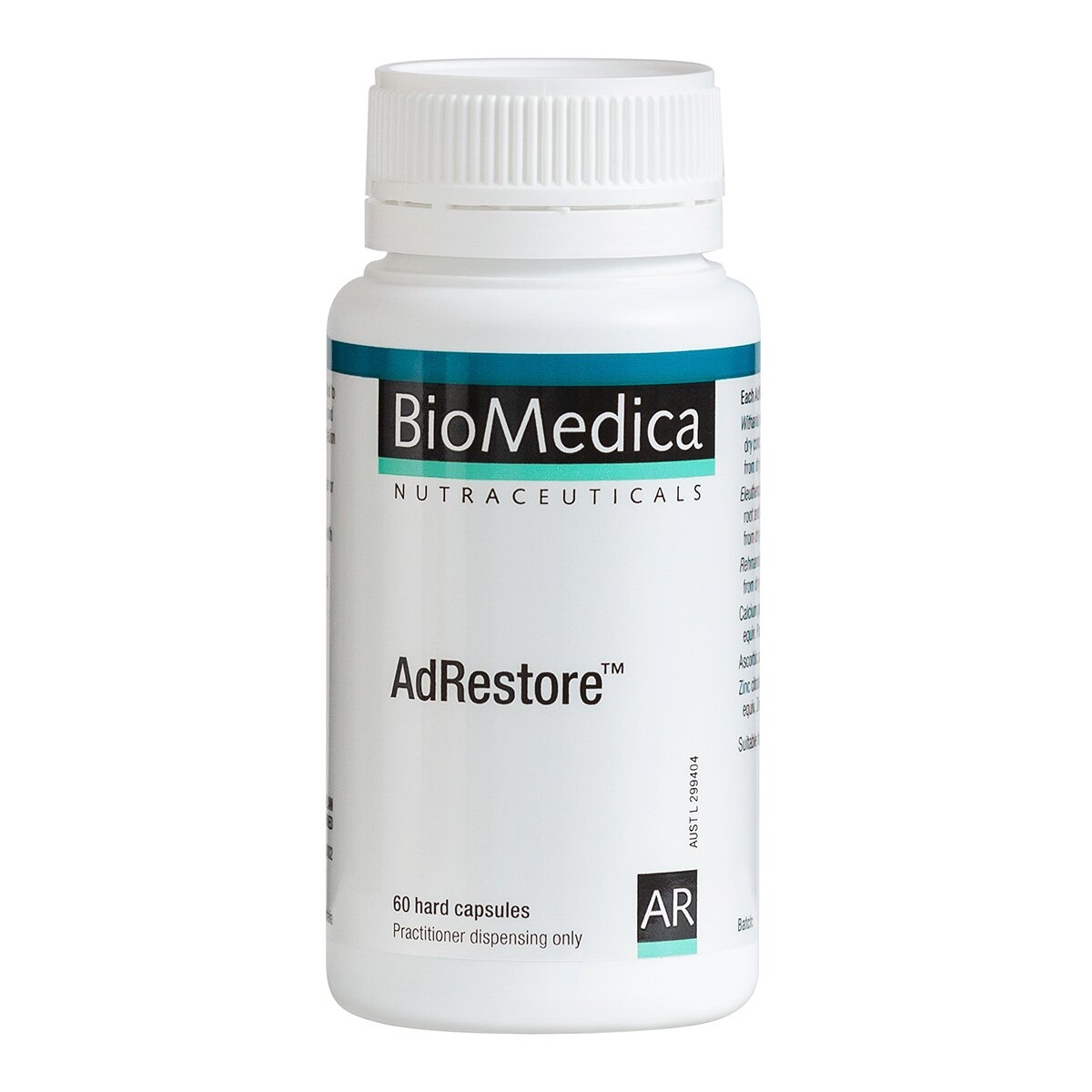
Adrestore is a comprehensive herbal and nutritional formulation designed to support healthy HPA (hypothalamic-pituitary-adrenal) axis function, particularly in states of hypofunction characterized by low cortisol output, reduced stress resilience, and chronic fatigue. The HPA axis serves as the body's master stress response system, orchestrating the release of cortisol and other hormones essential for maintaining energy balance, immune regulation, and physiological adaptation to stress [6][21]. When this system becomes blunted or hypoactive due to chronic stress, inflammation, or other triggers, it can lead to widespread symptoms including morning fatigue, cognitive fog, exercise intolerance, and mood disturbances.
Withania somnifera (ashwagandha) stands as one of the most well-researched adaptogens for HPA axis support, though specific clinical data for this herb was not detailed in the current research. Similarly, Eleutherococcus senticosus (Siberian ginseng) has been traditionally used to enhance stress resilience and energy levels, while Rehmannia glutinosa primarily supports the structure and function of the adrenal glands. Rehmannia appears to enhance glucocorticoid receptor activity and modulate hypothalamic and pituitary signaling during periods of chronic stress, making it widely regarded as a restorative tonic for individuals experiencing adrenal insufficiency or functional burnout [14]. In adrenal-insufficient models, Rehmannia has been shown to restore cortisol levels without inducing hyperactivation of the HPA axis, suggesting a regulatory mechanism that promotes recovery rather than overstimulation [14]. An animal study involving adrenal-exhausted rats treated with Rehmannia extract over 21 days reported a significant rise in serum cortisol and a reversal of adrenal hypertrophy, further reinforcing its role in supporting adrenal recovery and HPA axis stability [14].
Vitamin B5 (pantothenic acid) serves as an essential precursor for Coenzyme A (CoA), a molecule critical to cortisol synthesis. Without adequate B5, mitochondrial acetylation processes are impaired, resulting in reduced cortisol output, particularly under stress [4]. The role of B5 in maintaining adrenal tone and functional resilience is well-documented, with animal studies showing that B5 deficiency leads to adrenal atrophy and reduced corticosterone production [4]. B5 is especially relevant in recovery from chronic stress or illness, where adrenal gland integrity and hormonal output are diminished but the HPA axis remains structurally intact. While human data is limited, supplementation with 500 to 1,000 mg per day during periods of high stress or adrenal recovery has been associated with improved energy, reduced fatigue, and enhanced stress resilience [4].
Vitamin C plays a direct enzymatic and regulatory role in cortisol synthesis within the adrenal cortex, where it accumulates in high concentrations. While vitamin C does not increase cortisol levels directly as ACTH does, it enhances adrenal responsiveness to ACTH and ensures the glands possess the nutritional capacity to synthesize cortisol when stimulated [4]. Additionally, vitamin C helps protect the hippocampus and hypothalamus from cortisol-induced damage by neutralizing reactive oxygen species, thereby indirectly supporting HPA axis function [4]. Clinical studies demonstrate that vitamin C supplementation reduces stress-related biomarkers during periods of psychological strain. In one study, supplementation with 1 gram of vitamin C daily over two weeks resulted in improved mood scores in participants experiencing psychological stress, while another trial showed that vitamin C supplementation attenuated cortisol spikes and improved physiological recovery markers [4].
Zinc serves as a cofactor for over 300 enzymatic reactions integral to neuroendocrine signaling and plays a pivotal role in regulating the HPA axis. It has been shown to inhibit corticotropin-releasing hormone (CRH) hypersecretion from the hypothalamus during periods of elevated stress, while maintaining ACTH sensitivity in the pituitary gland [4][8]. This dual action confers benefits across both hyperactive and hypoactive states of the HPA axis. Moreover, zinc enhances stress resilience by mitigating oxidative stress within the central nervous system, reducing glutamate-induced excitotoxicity, and modulating NMDA receptor activity, which collectively contribute to improved mood stability, reduced anxiety-like behaviors, and enhanced neuroadaptation to repeated stress exposures [4][8].
Ingredients
Withania somnifera ext.
ext. equiv. dry (root)
166.67 mg
2 g
Eleutherococcus senticosus (Siberian ginseng) ext.
ext. equiv. dry (root & rhizome)
100 mg
1.5 g
Rehmannia glutinosa ext.
ext. equiv. dry (root)
200 mg
2 g
Calcium pantothenate (Vitamin B5)
equiv. Pantothenic acid
150 mg
137 mg
Ascorbic acid (Vitamin C)
100 mg
Zinc citrate dihydrate
equiv. Zinc
31 mg
10 mg
Instructions
Instructions
Dosage
2 capsules in the morning
Duration
Minimum 4 weeks
Suitable for continued support in periods of high stress or physical demand
Warnings
Always read the label
Dietary supplements should not replace a balanced diet
If symptoms persist, worsen or change unexpectedly, consult your healthcare professional
Contains zinc which may be dangerous if taken in large amounts or for a long period
Contraindications
Contraindications
This supplement may interact with the following categories of medications, as well as specific active ingredients.
• Medications for diabetes
• Medications for high blood pressure
• Medications that can harm the liver
• Medications that decrease the immune system
• Sedative medications
• Medications changed by the liver - refer list
• Medications moved by pumps in cells - refer list
• Medications that slow blood clotting
• Estrogens
• Fluphenazine
• Indinavir
• Levothyroxine
• Medications for cancer
• Warfarin
• Choline Magnesium Trisalicylate
• Salsalate
• Aspirin
• Antibiotics
• Bictegravir/emtricitabine/tenofovir alafenamide
• Cephalexin
• Cisplatin
• Medications for HIV/AIDS
• Penicillamine
• Ritonavir
• Atazanavir
Further details are provided below.
Please note that medications may be sold under different brand names, so check the listed active ingredients against your medication packaging.
Major Interactions
Moderate Interactions
Medications for diabetes
• Glyburide
• Glipizide
• Insulin
• Sitagliptin
• Empagliflozin
• Semaglutide
• Dapagliflozin
Ashwagandha might lower blood sugar levels. Taking ashwagandha along with diabetes medications might cause blood sugar to drop too low. Monitor your blood sugar closely.
Medications for high blood pressure
• Amlodipine
• Ramipril
• Perindopril
• Metoprolol
• Losartan
• Hydrochlorothiazide
Ashwagandha might lower blood pressure. Taking ashwagandha along with medications that lower blood pressure might cause blood pressure to go too low. Monitor your blood pressure closely.
Medications that can harm the liver
• Acetaminophen / Paracetamol
• Methotrexate
• Atorvastatin
• Simvastatin
• Isoniazid
Ashwagandha might harm the liver. Some medications can also harm the liver. Taking ashwagandha along with a medication that can harm the liver might increase the risk of liver damage.
Medications that decrease the immune system
• Cyclosporine
• Tacrolimus
• Mycophenolate
• Prednisone
• Methotrexate
• Azathioprine
Ashwagandha can increase the activity of the immune system. Some medications, such as those used after a transplant, decrease the activity of the immune system. Taking ashwagandha along with these medications might decrease the effects of these medications.
Sedative medications
• Diazepam
• Alprazolam
• Temazepam
• Zolpidem
• Zopiclone
• Promethazine
Ashwagandha might cause sleepiness and slowed breathing. Some medications, called sedatives, can also cause sleepiness and slowed breathing. Taking ashwagandha with sedative medications might cause breathing problems and/or too much sleepiness.
Thyroid hormone
The body naturally produces thyroid hormones. Ashwagandha might increase how much thyroid hormone the body produces. Taking ashwagandha with thyroid hormone pills might cause too much thyroid hormone in the body, and increase the effects and side effects of thyroid hormone.
Medications changed by the liver
• Caffeine
• Clozapine
• Olanzapine
• Theophylline
• Tizanidine
• Duloxetine
• Ramelteon
Some medications are changed and broken down by the liver. Eleuthero might change how quickly the liver breaks down these medications. If you are taking medications metabolised by the liver, monitor for any changes in how your medication affects you.
• Glipizide
• Phenytoin
• Losartan
Eleuthero might lower blood sugar levels. Taking eleuthero along with diabetes medications might cause blood sugar to drop too low. Monitor your blood sugar closely.
Medications moved by pumps in cells
• Organic anion-transporting polypeptide substrates
Some medications are moved in and out of cells by pumps. Eleuthero might change how these pumps work and change how much medication stays in the body. In some cases, this might change the effects and side effects of a medication.
Medications moved by pumps in cells
• P-glycoprotein substrates
Eleuthero can increase the activity of the immune system. Some medications, such as those used after a transplant, decrease the activity of the immune system. Taking eleuthero along with these medications might decrease the effects of these medications.
Medications that slow blood clotting
• Heparin
• Rivaroxaban
• Apixaban
• Dabigatran
• Clopidogrel
Eleuthero might slow blood clotting. Taking eleuthero along with medications that also slow blood clotting might increase the risk of bruising and bleeding.
Rehmannia might lower blood pressure. Taking rehmannia along with medications that lower blood pressure might cause blood pressure to go too low. Monitor your blood pressure closely.
Aluminum
Aluminum is found in most antacids. Vitamin C can increase how much aluminum the body absorbs. However, it is not clear if this interaction is a big concern. Take vitamin C two hours before or four hours after antacids.
Estrogens
• Oral contraceptive pill
• Estradiol
• Conjugated estrogens
• HRT combination products
Vitamin C might decrease how quickly the body gets rid of estrogens. Taking vitamin C along with estrogens might increase the effects and side effects of estrogens.
Fluphenazine
• Prolixin
Large amounts of vitamin C might decrease how much fluphenazine is in the body. Taking vitamin C along with fluphenazine might decrease the effectiveness of fluphenazine.
Indinavir
• Crixivan
Taking large amounts of vitamin C along with indinavir might decrease how much indinavir stays in the body. It's not clear if this interaction is a big concern.
Levothyroxine
• Synthroid, others
Taking vitamin C along with levothyroxine might increase how much levothyroxine the body absorbs. This can increase the amount of levothyroxine in the body and increase its effects and side effects.
Medications for cancer
• Cyclophosphamide
• Chlorambucil
• Melphalan
• Busulfan
• Temozolomide
Vitamin C is an antioxidant. There is some concern that antioxidants might decrease the effects of some medications used for cancer. If you are taking medications for cancer, check with your healthcare provider before taking vitamin C.
• Doxorubicin
• Bleomycin
• Daunorubicin
• Mitomycin
• Epirubicin
Vitamin C is an antioxidant. There is some concern that antioxidants might decrease the effects of medications used for cancer. If you are taking medications for cancer, check with your healthcare provider before taking vitamin C.
Niacin
Taking niacin with vitamin C and other antioxidants can decrease the effects of niacin on good cholesterol levels. It is unknown if vitamin C alone decreases the effects of niacin on good cholesterol levels.
• Jantoven
• Used for: blood thinning, clot prevention
Warfarin is used to slow blood clotting. Large amounts of vitamin C might decrease the effects of warfarin. Decreasing the effects of warfarin might increase the risk of clotting. Be sure to have your blood checked regularly. The dose of your warfarin might need to be changed.
Antibiotics
• Doxycycline
• Ciprofloxacin
• Amoxicillin
• Azithromycin
• Norfloxacin
• Trimethoprim
Zinc might decrease how much antibiotic the body absorbs from the gut. Taking zinc along with quinolone antibiotics might decrease the effects of these antibiotics. To avoid this interaction, take antibiotics at least 2 hours before or 4-6 hours after zinc supplements.
Zinc can decrease the amount of tetracyclines the body absorbs. Taking zinc with tetracyclines might decrease the effects of tetracyclines. To avoid this interaction, take tetracyclines 2 hours before or 4-6 hours after taking zinc supplements.
Bictegravir/emtricitabine/tenofovir alafenamide
• Biktarvy
In theory, zinc might decrease how much bictegravir/emtricitabine/tenofovir alafenamide the body absorbs from the stomach. To avoid this interaction, take bictegravir/emtricitabine/tenofovir alafenamide at least 2 hours before or 6 hours after zinc containing products.
Cephalexin
• Keflex
Zinc can reduce how much cephalexin the body absorbs. This might decrease how well cephalexin works for treating infections. To avoid this interaction, take zinc 3 hours after taking cephalexin.
Cisplatin
• Platinol-AQ
Cisplatin is used to treat cancer. Taking zinc along with cisplatin might inactivate cisplatin therapy. But it's not clear if this is a big concern.
Medications for HIV/AIDS
• Integrase inhibitors
Taking zinc along with integrase inhibitors might decrease blood levels of integrase inhibitors. This might decrease the effects of these medications. Talk to your healthcare provider if you are using integrase inhibitors and want to start taking zinc.
Penicillamine
• Cuprimine, Depen
Zinc might decrease how much penicillamine the body absorbs. Taking zinc with penicillamine might decrease the effects of penicillamine. Take zinc and penicillamine at least 2 hours apart.
Ritonavir
• Norvir
Ritonavir is a drug used for HIV infection. Zinc can reduce how much ritonavir the body absorbs. But it isn't clear if this is a big concern.
Minor Interactions
Medications changed by the liver
• Atorvastatin
• Simvastatin
• Amlodipine
• Diltiazem
• Cyclosporine
• Tacrolimus
• Midazolam
• Alprazolam
• Rivaroxaban
• Some HIV antiretrovirals
Some medications are changed and broken down by the liver. Ashwagandha might change how quickly the liver breaks down these medications. If you are taking medications metabolised by the liver, monitor for any changes in how your medication affects you.
• Codeine
• Tramadol
• Metoprolol
• Fluoxetine
• Paroxetine
• Tamoxifen
• Amitriptyline
Some medications are changed and broken down by the liver. Eleuthero might change how quickly the liver breaks down these medications. If you are taking medications metabolised by the liver, monitor for any changes in how your medication affects you.
Aspirin
Aspirin is removed by the body through the kidneys and in the urine. Vitamin C might decrease how the body removes aspirin and could potentially increase the amount of aspirin in the body. But it's not clear if this is a big concern.
Choline Magnesium Trisalicylate
• Trilisate
Vitamin C might decrease how quickly the body gets rid of choline magnesium trisalicylate. It is not clear if this interaction is a big concern.
Salsalate
• Disalcid
Vitamin C might decrease how quickly the body gets rid of salsalate. Taking vitamin C along with salsalate might cause too much salsalate in the body, and increase the effects and side effects of salsalate.
Atazanavir
• Reyataz
Atazanavir is a drug used for HIV infection. Zinc decreases how much atazanavir the body absorbs. But the body still absorbs enough atazanavir for it to work for treating HIV. So this interaction is probably not a big concern.
$13.81
Members Save
• Contains Rehmannia glutinosa, clinically shown to restore cortisol levels and reverse adrenal hypertrophy in studies of adrenal insufficiency
• Provides essential B5 (pantothenic acid) for Coenzyme A production, critical for cortisol synthesis and preventing adrenal atrophy
• Features therapeutic vitamin C levels to enhance adrenal ACTH responsiveness and protect HPA axis structures from oxidative damage